Transit advertising: every out-of-home format that moves

Transit advertising covers formats on or around vehicles that move through a city: bus and rail exteriors, station panels, taxi and for-hire tops, wrapped fleets and mobile billboard trucks. It was the fastest-growing US out-of-home segment in 2025, up 9.8% by OAAA's category deck. Each format answers to a different regulator, and the rule text differs by city.
Transit is the fastest-growing part of out-of-home advertising in the US: up 9.8% in 2025 by the category figures in OAAA's Facts and Figures deck, its second consecutive year leading the category, against 3.6% growth for out-of-home overall. The association's press release for the same year prints 9.2%; the deck figure is the one that reconciles with the published total, so it is used here. Transit is also the part of the category with the messiest definition, because "transit" gets used for two things that plan very differently.
What counts as transit advertising?
Conventionally: advertising on or around public transport and other vehicles in circulation. Bus exteriors and interiors, rail and subway cars, station and platform panels, shelters, taxi and for-hire tops, wrapped commercial fleets, mobile billboard trucks.
The useful split inside that list is not vehicle type. It is whether the ad surface moves.
| Static site, moving audience | Moving surface | |
|---|---|---|
| Examples | Station panels, platform posters, shelters | Bus exteriors, rail cars, taxi tops, wraps, mobile billboards |
| Geography | Fixed at booking | Follows a route |
| Audience | People passing the site | People the surface passes |
| Measurement | Behaves like a fixed panel | Standard visibility inputs stop applying |
Does the route belong to you or to the operator?
Within moving surfaces there is a second division that decides how much control a planner has.
A bus wrap rides a route the transit authority set. You choose which routes to buy, and after that geography is fixed. A wrapped or screen-equipped fleet operated for advertising has no predetermined route, so the route is part of the media plan and can be changed mid-campaign.
That is the whole difference between inheriting geography and choosing it. Any impression figure quoted for the second kind is meaningless without the route it assumed; why that is so is worked through on how out-of-home impressions are measured, and what a planner can do with a route once it is a variable is the subject of location-based advertising.
Who regulates each moving format?
There is no single authority. Which body governs a format depends on what the vehicle is and what it is for, and this is where campaigns get cancelled after the creative has been produced. The pages that rank for this question do not quote the rule text; this table does, with the provision for each row. New York and Los Angeles are the worked examples because both publish their rules in full online and both appear in the archive behind this site. Rules for other cities differ and must be checked individually; the NYC-specific detail is kept to what illustrates the national pattern.
| Format | Who regulates it | What the rule says (verified example) | Source |
|---|---|---|---|
| Taxi tops (licensed medallion taxis) | The city’s for-hire vehicle licensing authority. In New York, the Taxi and Limousine Commission (TLC). | NYC: a rooftop advertising fixture must be tested and certified to MIL-STD-810F by a licensed professional engineer and approved by TLC’s Safety and Emissions Division; it must be two-sided, show advertising to the sides of the vehicle and not to the front or back, and the ad may not exceed the display surface (35 RCNY §67-16). The owner needs a permit to use it (§58-34(d)); the exterior advertising permit fee is $50 a year (§58-07(g)). | TLC rules, Chapter 67 TLC rules, Chapter 58 |
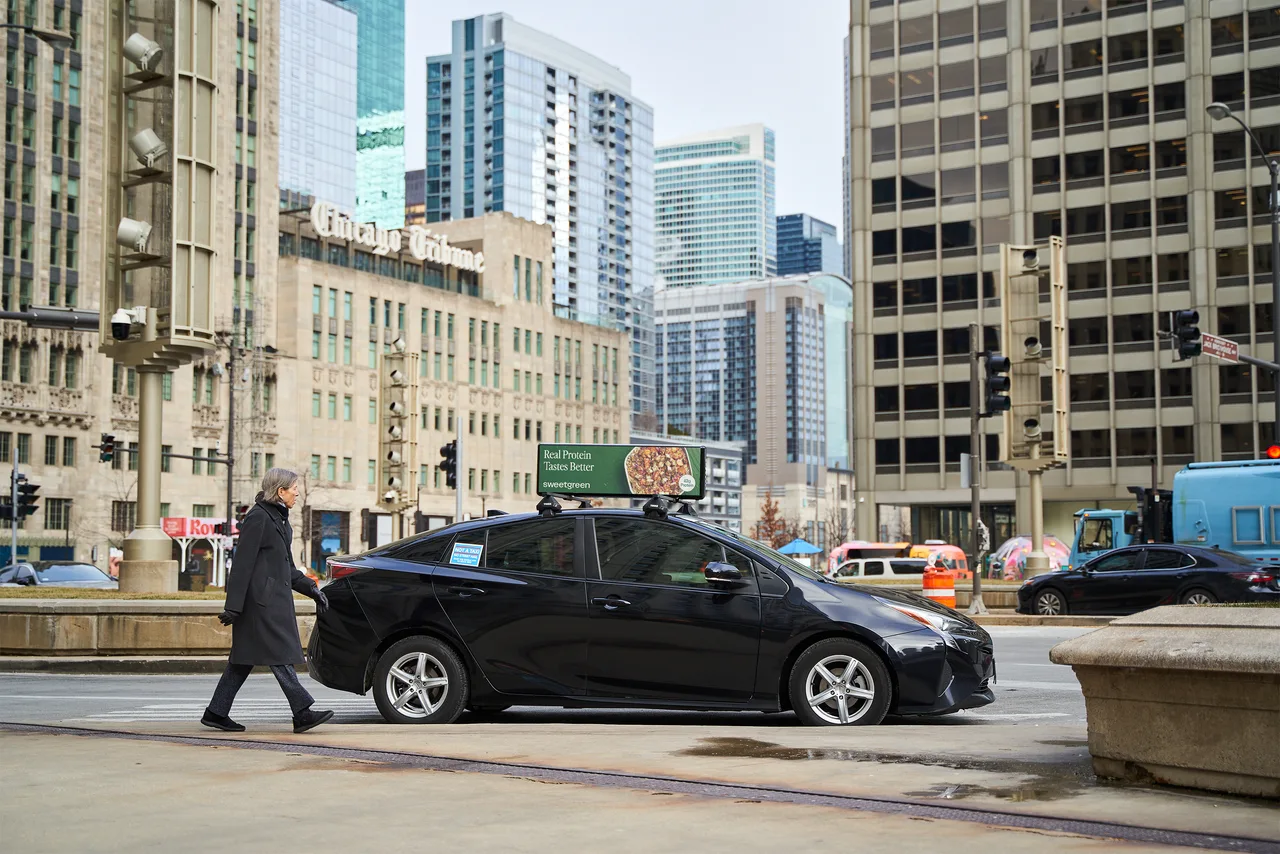
| Rideshare and other for-hire vehicle tops | The same city licensing authority, plus the platform’s own terms for its drivers. | NYC: “The Commission will not approve any advertising for the exterior of a For-Hire Vehicle that consists, in whole or in part, of roof top advertising” (35 RCNY §59A-29(e)(2)). Rooftop units in New York therefore run on medallion taxis and street hail liveries, not on app-dispatched cars. Other cities license differently; check the local for-hire rule, not the platform’s marketing. | TLC rules, Chapter 59 (59A-29) |
| In-car passenger screens | The city licensing authority, where one exists for the vehicle class. | NYC: advertising inside a for-hire vehicle needs TLC authorisation and a licence issued to the interior advertising provider under Sub-Chapter 59E (35 RCNY §59A-29(e)(3)). | TLC rules, Chapter 59 (59A-29) |
| Bus and rail exteriors, interiors and stations | The transit authority, through its advertising policy, sold by its concession holder. | NYC: the MTA Board updated its Advertising Policy on June 25, 2025. It permits only commercial advertising, specific governmental advertising and certain public service announcements, subject to review by the MTA Advertising Committee; OUTFRONT Media is the concessionaire. City traffic rules exempt franchised buses from the ban on advertising vehicles, including illuminated ads (34 RCNY §4-12(j)(2)). | MTA Advertising Policy 34 RCNY §4-12 |
| Bus shelters and street furniture | The municipality or authority that owns the furniture, under a separate street-furniture contract. | Often a different vendor from the buses that stop there. Boston: OUTFRONT Media handles MBTA stations and vehicles; Intersection manages MBTA street furniture, including bus and rail shelters. | MBTA, advertising vendors by asset |
| Wrapped commercial fleets (working vehicles) | FMCSA for commercial motor vehicles, the state vehicle code, and city rules on parked vehicles. | Federal: a CMV must show the carrier’s legal name and USDOT number on both sides, legible from 50 feet in daylight; if another name appears on the vehicle, the carrier’s name must follow it preceded by “operated by”, and other information may be displayed if not inconsistent with that marking (49 CFR §390.21). Los Angeles: a parked motor vehicle may carry advertising only if painted on, applied as a decal, or in a manufacturer-designed location, and not extending beyond the vehicle’s dimensions (LAMC §87.54). NYC: notices for the business the vehicle is used in are allowed when it is in use for that business, provided nothing is reflectorized, illuminated or animated, nothing is on the roof, and no special body is added (34 RCNY §4-12(j)(1)). | 49 CFR §390.21 LAMC §87.54 34 RCNY §4-12 |
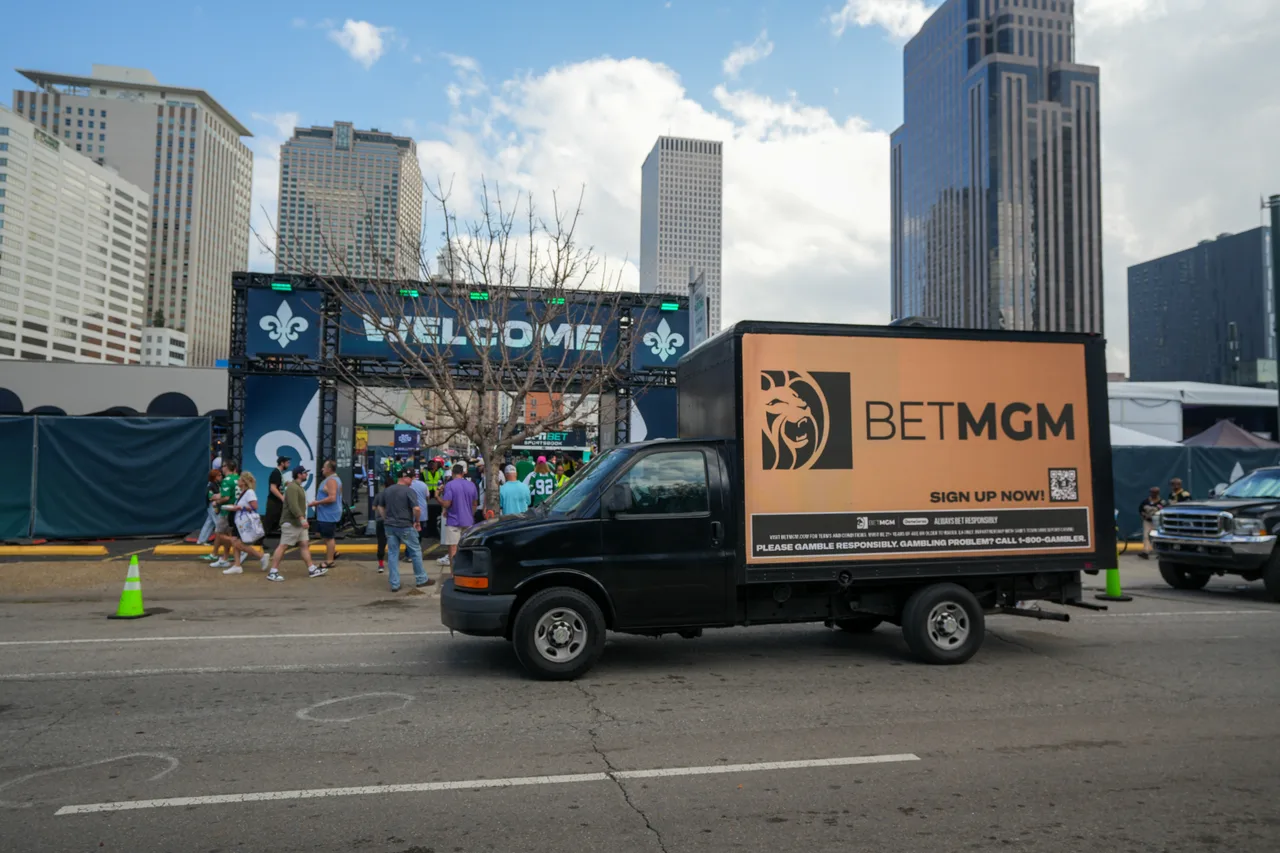
| Mobile billboard and LED trucks (advertising is the vehicle’s purpose) | City ordinance, with a state enabling statute in some states. | NYC: “No person shall operate, stand, or park a vehicle or bicycle on any street or roadway for the purpose of commercial advertising” (34 RCNY §4-12(j)(1)), repeated as a parking prohibition at §4-08(n)(3). California: the Vehicle Code defines a “mobile billboard advertising display” as one attached to a non-motorized vehicle, device or bicycle (§395.5) and lets local authorities regulate them, including removal and penalties (§21100(l)); Los Angeles makes parking one on any public street unlawful (LAMC §87.53). A motorised LED truck falls outside the California definition, which is why city rules for trucks read differently from city rules for towed signs. | 34 RCNY §4-08 California Vehicle Code §395.5 California Vehicle Code §21100 LAMC §87.53 |
Rule text read from the cited primary source on September 14, 2026. Section numbers are quoted as published; none is inferred. Rules change, and a permit office's reading of them can differ from a plain reading. Confirm in writing before production.
The rooftop rule most people get backwards
In New York the screen on top of a car is not a rideshare product. The TLC "will not approve any advertising for the exterior of a For-Hire Vehicle that consists, in whole or in part, of roof top advertising" (35 RCNY 59A-29(e)(2)). Rooftop units run on licensed medallion taxis and street hail liveries under an approved fixture: engineer-certified, TLC-approved, two-sided, sides only. A vendor offering "Uber tops in Manhattan" is describing something the rule does not allow. Other cities license differently, which is the point of the table: the format is national, the permission is municipal.
The mobile billboard trap
Mobile billboard trucks are the format where local law varies most and gets checked least. New York City prohibits operating, standing or parking a vehicle on any street or roadway for the purpose of commercial advertising, in both its traffic rules and its parking rules. Los Angeles bans parking a towed mobile billboard on any public street, under a state definition that covers non-motorized displays and not motorised trucks. A truck that is entirely legal in one city can be unlawful in the next one along the route, and the two cities may not even be regulating the same object.
Vehicles used in a business, carrying notices about that business, are treated differently from vehicles whose purpose is the advertising itself. New York spells out the test: the notice is allowed when the vehicle is in use for normal delivery or business purposes, provided it is not reflectorized, illuminated or animated, not on the roof, and not on a body added for the purpose. That distinction, working vehicle or advertising vehicle, is the one local rules tend to turn on. Check the specific city, in writing, before committing.

Which carrier suits which brief?
| Carrier | Best when | Weak when |
|---|---|---|
| Taxi and for-hire tops | You want dense street-level coverage of a city core | The target sits outside the licensed operating area |
| Transit exteriors | The audience follows fixed commuter corridors | You need to choose the geography yourself |
| LED trucks | A specific event, venue or corridor at a specific hour | The city restricts advertising vehicles |
| Wrapped fleets | Long flights where the vehicles were driving anyway | The creative needs to change mid-campaign |
| In-car screens | You need dwell time and a full message | Reach matters more than attention |
Who sells the moving rows, in each seller's own words: Firefly sells digital and static tops on taxis and rideshare vehicles, 360, 270 and 180 wraps, LED trucks and in-car TaxiTV, and names 15 markets for the tops. Blue Line Media resells taxi tops, digital rideshare tops and Taxi TV in the cities on its market pages. Carvertise sells wraps on rideshare and delivery drivers' cars. Can't Miss US runs LED trucks nationally. Transit exteriors are sold by whoever holds the authority's concession, OUTFRONT or Intersection in most large systems. None of them publishes a rate on the page read, and this site publishes none.
The companies that operate each carrier are different kinds of business, and the large billboard owners generally do not run the moving ones. Who sells what, and which layer to call for a single moving format across several cities, is on outdoor advertising companies.
Planning checklist
- Decide whether you need a corridor or a point. If the target area is a route, fixed panels approximate it badly.
- Confirm the regulator for the format, per city. Not per campaign: per city on the route, using the table above as the starting list.
- Ask who sets the route. Transit operator or you. This determines what you can change later.
- Match the measurement method to the format before comparing any two numbers.
- Design for speed and angle. A layout that reads head-on may be unreadable from a passing lane.
Where to go next
How impressions are measured explains why moving surfaces need a different chain, and how the market is structured covers why these formats rarely appear on a large media owner's rate card. For the rail half of the category, concession holders system by system, published unit sizes and the content standards that differ between authorities, see subway advertising. The category as a whole, fixed and moving, is on the guide to out-of-home advertising, and documented placements of every carrier above are in the campaign archive.
Frequently asked questions
- What is transit advertising?
- Advertising placed on or around public transport and other vehicles that move through a city: bus exteriors and interiors, rail and subway cars, station and shelter panels, taxi tops, and vehicle wraps. What unites the category is that either the audience or the ad surface is in motion.
- Is transit advertising growing?
- It is the fastest-growing out-of-home segment in the US for the second consecutive year, according to OAAA. The association's Facts and Figures deck puts 2025 transit growth at 9.8% and its press release at 9.2%; the 9.8% figure reconciles with the published $9.46 billion total. Out-of-home overall grew 3.6%.
- Can you give me an example of transit advertising?
- A printed rooftop unit on a New York medallion taxi, an LED truck parked at an event entrance in New Orleans, and a wrapped car crossing an intersection in San Jose are the three on this page, each photographed on the day it ran. Bus kings, rail car cards and platform posters are the fixed-route examples, covered on the subway page.
- Who regulates vehicle advertising?
- It depends on the vehicle. Taxi and for-hire tops fall under the city licensing authority (in New York the TLC, which approves the fixture and will not approve rooftop ads on for-hire vehicles); transit systems set their own advertising policies; commercial fleets sit under FMCSA marking rules and state vehicle codes; and advertising trucks are governed by city traffic rules that vary sharply between cities.
- Are mobile billboard trucks legal everywhere?
- No, and this is the single biggest trap in the format. New York City traffic rules prohibit operating, standing or parking a vehicle on a street for the purpose of commercial advertising (34 RCNY 4-12(j)). Los Angeles bans parking a towed mobile billboard on any public street (LAMC 87.53). Other cities permit trucks with restrictions. Check the specific city, in writing, before planning a route through it.
- Can I advertise on bus stops?
- Yes, through whoever holds the street-furniture contract for that city, which is often not the company selling the buses. In Boston, OUTFRONT Media sells MBTA vehicles and stations while Intersection manages the shelters. Ask the transit authority which vendor holds which asset before assuming one call covers both.
- How much does it cost to put an ad on a bus?
- This site publishes no rates. Bus advertising is priced by the concession holder for each system, by format (king, queen, tail, full wrap, interior card), by the number of buses and by flight length, and the rate card differs by authority. Ask the concession holder for the current card and read the authority's content policy before producing creative.
- What is the difference between transit advertising and mobile billboards?
- Transit advertising rides on vehicles that were going to make those journeys anyway, on routes set by the transit operator. A mobile billboard exists to advertise, so its route is a campaign decision. One inherits its geography; the other chooses it. The law makes the same distinction: a working vehicle carrying its own business notice is treated differently from a vehicle whose purpose is the advertising.
- How is transit advertising measured?
- Station and shelter panels are measured much like fixed panels, from circulation past the site. Surfaces on moving vehicles are harder, because Geopath's visibility inputs (road side, distance, road type) describe a fixed location and the circulation count is taken at a fixed point. That difference is covered in full on the measurement page.
Sources
- 2025 OOH Ad Spend Performance: Facts and Figures (slide 4: transit +9.8%) · Out of Home Advertising Association of America (OAAA), April 2026
- Out of Home Advertising Revenue Reaches Record $9.46 Billion (transit stated as 9.2%) · Out of Home Advertising Association of America (OAAA), March 17, 2026
- TLC Rules, Chapter 67: Rules for Taxicab Hack-Up and Maintenance, §67-16 Authorized Rooftop Advertising Fixture · New York City Taxi and Limousine Commission, Current rule book, accessed September 14, 2026
- TLC Rules, Chapter 58: Medallion Taxicab Service, §58-07(g) advertising permit fee and §58-34(d) rooftop fixture · New York City Taxi and Limousine Commission, Current rule book, accessed September 14, 2026
- TLC Rules, Chapter 59: For-Hire Vehicle Service, §59A-29(e) prohibited advertising · New York City Taxi and Limousine Commission, Current rule book, accessed September 14, 2026
- 34 RCNY §4-08 Parking, Stopping, Standing, (n)(3) parking for the purposes of commercial advertising prohibited · City of New York, via American Legal Publishing, Accessed September 14, 2026
- 34 RCNY §4-12 Miscellaneous, (j) commercial advertising vehicles · City of New York, via American Legal Publishing, Accessed September 14, 2026
- MTA Advertising Policy · Metropolitan Transportation Authority, Updated by the MTA Board June 25, 2025
- Advertising with the MBTA: vendors by asset type · Massachusetts Bay Transportation Authority, Accessed September 14, 2026
- 49 CFR §390.21 Marking of self-propelled CMVs and intermodal equipment · Federal Motor Carrier Safety Administration, via eCFR, Accessed September 14, 2026
- California Vehicle Code §395.5 (mobile billboard advertising display) and §21100(l) (local regulation) · California Legislative Information, Accessed September 14, 2026
- Los Angeles Municipal Code §87.53 (mobile billboard advertising displays) and §87.54 (advertising signs on parked motor vehicles) · City of Los Angeles, via American Legal Publishing, Accessed September 14, 2026
- On-Car Products: digital tops, static tops, car wraps (360°, 270°, 180°) · Firefly, Accessed September 14, 2026
About the author
Ercan Bozkurt writes the methodology pages on this site: how out-of-home inventory is counted, measured and bought, with a particular interest in screens that move. He works from the primary document in each case, the transit authority's own rulebook, the measurement body's own definitions, the company's own filing, and writes the page so that a media planner can check every figure against it.
Ercan Bozkurt on LinkedIn · Reviewed by Melih Koray, who publishes this site · How this site is edited and what it refuses to publish: about this site.