Subway advertising: who sells it, what the formats are, and how the audience is counted
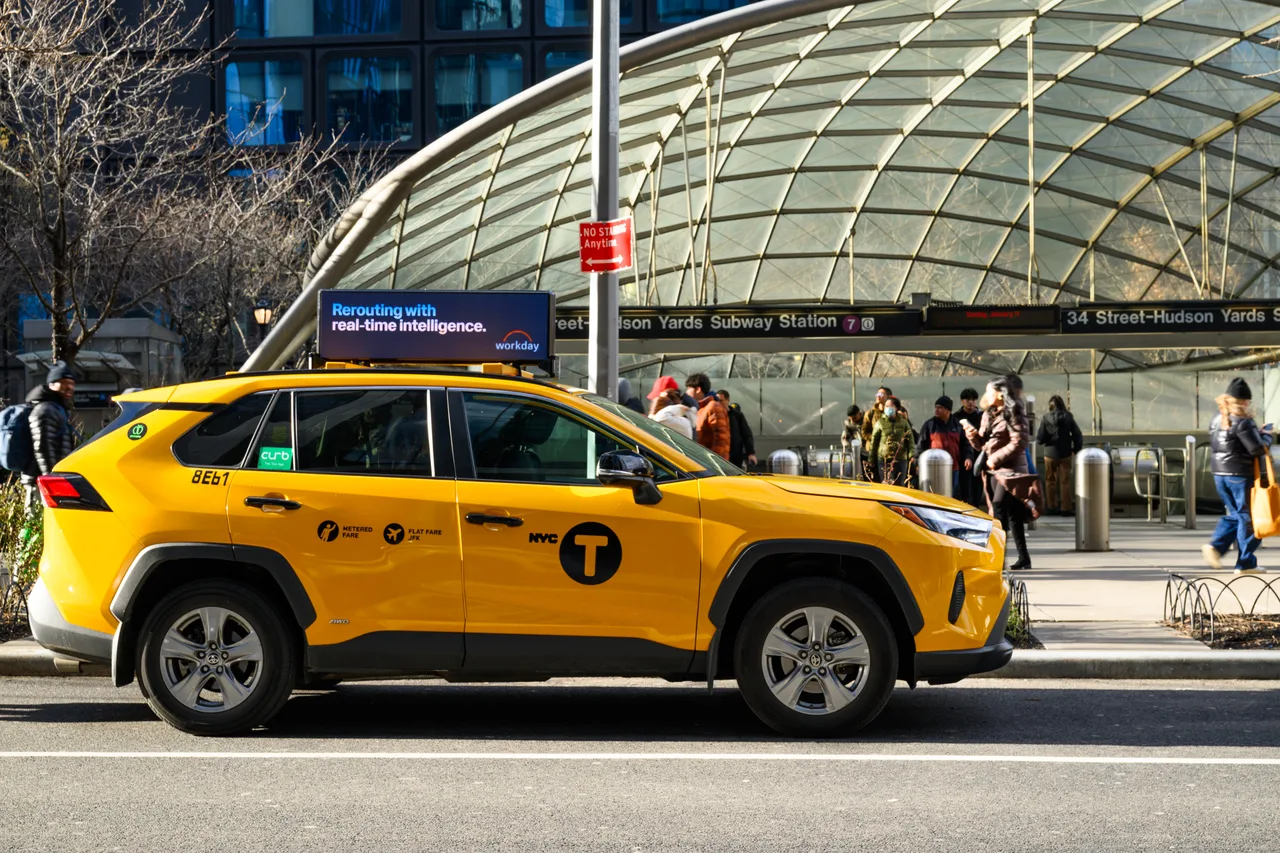
Subway advertising is bought from the system's advertising concessionaire, not from the transit authority. OUTFRONT Media holds New York, Washington and BART; Intersection holds Chicago, Philadelphia, Atlanta and SFMTA. Formats are specified in inches for static units and in pixels and loop seconds for digital ones.
Subway advertising sits inside the broader transit category, but it plans differently from anything else in it. The inventory is fixed in place while the audience moves through it, the specifications are published to the inch and the pixel, and the rules on what may be said are set by a public authority rather than by a media owner. Three things decide whether a plan survives contact with the system: who you are actually buying from, what the unit physically is, and what the authority will refuse to run.
Who actually sells subway advertising?
Almost never the transit authority. Systems award a concession, usually a decade or more and usually with a guaranteed minimum payment to the authority, and the concessionaire sells and installs the media. That is why two systems in the same city can have two different sales contacts, and why a national buy touches several vendors.
| System | Who sells the space | Contract |
|---|---|---|
| New York MTA: subway, bus, LIRR, Metro-North | OUTFRONT Media (exclusive) | Agreement effective November 2017; the initial ten-year term was extended in July 2021 to a thirteen-year base term, with an option for one further five-year period. |
| Chicago CTA: rail, bus, stations | Intersection (exclusive) | Five-year base from January 2020 with a five-year option; CTA valued it at up to $247.5M with $187M guaranteed to the authority, and 775 new digital screens. |
| Washington WMATA: rail, bus, stations | OUTFRONT Media | Ten-year base with two five-year options; WMATA put the decade at more than $336M, $325M of it guaranteed. |
| Boston MBTA | Three vendors, split by asset | OUTFRONT Media on vehicles, stations and billboards; Clear Channel Outdoor on billboards; Intersection on bus shelters and street furniture from February 2021. |
| Philadelphia SEPTA | Intersection (exclusive) | Partner since 2005; a nine-year extension covering static and digital was announced in June 2025. |
| San Francisco BART | OUTFRONT Media | Franchise awarded in 2018 for 10.75 years plus two one-year options. |
| San Francisco SFMTA: Muni bus, light rail, cable cars | Intersection (exclusive) | A different vendor from BART, in the same city, running to June 2029. |
| Los Angeles Metro | Split by mode | Intersection on rail (325 rail cars and 93 stations); OUTFRONT Media on the bus system under a ten-year contract. |
| Atlanta MARTA: bus, rail, stations | Intersection (exclusive) | Ten years from January 2022 plus two one-year options, on a 70% revenue share to MARTA. |
San Francisco is the clearest illustration. BART is sold by OUTFRONT Media; Muni buses, light rail and the cable cars are sold by Intersection. A brief that says "San Francisco transit" is two buys, two sets of specifications and two contracts. Boston and Los Angeles split the same way: Boston by asset type, Los Angeles between rail and bus.
What are the standard static subway ad sizes?
Static transit units are standardised across systems more than any other out-of-home format. The names travel with the sizes, which is why a creative team can build once for a multi-market transit buy in a way that is impossible for billboards.
| Unit | Published size | What it is |
|---|---|---|
| Interior car card (rail and bus) | 11" H × 28" W | The workhorse interior unit. |
| Commuter rail car card | 33.25" H × 21" W | Portrait, and a different unit from the transit car card. |
| Exterior King | 30" H × 144" W | The standard exterior side panel. |
| Exterior Mega King | 37.25" H × 514" W | Runs most of the vehicle length. |
| Platform 1-sheet | 46" H × 30" W | Station platform static. |
| Platform 2-sheet | 46" H × 60" W | Station platform static, landscape. |
| Platform 3-sheet | 82" H × 42" W | Tall portrait, usually backlit or framed. |
| Diorama | 43" H × 62" W | Backlit station unit. |
| Station King | 30" H × 144" W | Station equivalent of the exterior King. |
| Station Queen | 24" H × 65" W | Smaller station panel. |
Individual systems publish their own production sizes that differ slightly from the national kit. Los Angeles Metro, for instance, publishes rail poster sizes of 21" × 22.25" for light rail and 21" × 22.375" for heavy rail, and a King with a 27" × 141" live area inside the 30" × 144" trim. Always build to the specification sheet for the system you bought, not to the category name.
How are digital subway units specified?
Digital transit is bought as a share of a loop rather than as a site. Two numbers decide how much of the audience is yours: the spot length and the loop length. A network with an eight-second spot in a 64-second loop gives one advertiser one-eighth of every cycle.
| Unit | Specification | Spot and loop | Notes |
|---|---|---|---|
| MTA Digital Urban Panel | 1920 × 896 px, static creative only, no audio | 8-second spot in a 64-second loop | 448 screens above subway entrances, integrated with train arrival times. |
| MTA Video Urban Panel | 1920 × 1080 px, full-motion or static, no audio | 15-second spot in a 90-second loop | Same 448-screen network. |
| Digital rail interior | 19" screen, 1920 × 1080, 30 fps | 15-second spot | In-car digital, sold across systems. |
| SEPTA Digital Urban Panel | 55" screen, 1920 × 1080, 30 fps | 7.5-second spot | Philadelphia street-level network. |
| SEPTA Dilworth Park LED wall | 157" wall | 7.5-second ads in a 75-second loop, 20 spots | One-off placement rather than a network unit. |
Note what is missing from every one of those rows: audio. Transit digital is silent by specification, not by convention. Creative that needs a voiceover to make sense does not belong in a station.
Station dominations, which take an entire station with a combination of static, digital and direct-application media, are quoted custom. There is no published dimension because the unit is the station.
What will each system refuse to run?
Content standards are the part of a transit plan most likely to kill finished creative, and they are not consistent between authorities. The same advertisement can be accepted in one city and rejected in the next, and the legal footing underneath those decisions is itself different from system to system.
| System | What the standard says |
|---|---|
| New York MTA | Commercial advertising, specified government notices, and certain non-profit or government public service announcements only. Advertising space is designated a nonpublic forum. Advertising that predominantly advocates on pending legislation, or comments on international disputes or warfare between nations or religious or ethnic groups, is rejected even when it also promotes a product. |
| New York MTA, alcohol | Banned outright in 2018. The June 2025 policy created narrow carve-outs: fixed formats in the commuter-rail portions of Grand Central Terminal, Grand Central Madison, Jamaica and Penn Station, or in stations adjacent to venues licensed to serve alcohol seating 5,000 or more inside New York City and 1,500 or more elsewhere in the service area. |
| San Francisco SFMTA | No commercial advertising for alcohol, tobacco or firearms, and no political or public-issue advertising. SFMTA designates its space a limited public forum, a different legal footing from the MTA’s nonpublic forum, in the same country, for the same kind of media. |
| Boston MBTA | The MBTA advertising guidelines as amended 31 October 2022 permit alcohol advertising in bus shelters and are silent on bus exteriors. An earlier statement that the authority did not advertise alcohol at bus stops is no longer on mbta.com. Municipality-owned shelters make their own decision, so the rule can change on the same street. |
| Washington WMATA | The guideline banning advertising "intended to influence members of the public regarding an issue on which there are varying opinions" was preliminarily enjoined in WallBuilders v. WMATA in May 2024; the court found it lacked objective, workable standards. WMATA did not appeal and the rejected advertising ran. |
The forum designation is not a technicality. The MTA calls its advertising space a nonpublic forum, which gives it wide latitude to exclude categories of speech; SFMTA calls its space a limited public forum, which is a narrower position. In Washington, the restriction on issue advertising was preliminarily enjoined in 2024 for lacking workable standards. Any plan that assumes one national rule on what can be said in transit is wrong in at least one of its markets.
Why is ridership not an impression count?
This is where transit plans most often overstate themselves. Ridership counts journeys. An impression count estimates how many people were likely to notice a specific advertisement. Geopath, the industry's audience measurement body, keeps the two apart by definition: circulation measures traffic volume and estimates only the number of people with an opportunity to see a display, while impressions are the number likely to notice the advertisement. A visibility adjustment converts the first into the second, which means an impression figure is always a fraction of the circulation figure it came from.
Two practical consequences. First, a vendor deck quoting system ridership as "impressions" has skipped the adjustment. Second, the denominators themselves are worth checking: OUTFRONT's MTA marketing page cites 2.6 billion rides a year, while the MTA's own published totals for calendar 2025 are about 1.28 billion subway rides plus roughly 442 million across all MTA bus operations, of which New York City Transit buses carried 352,146,093. Ask which number a proposal is built on.
Transit stations only entered the current generation of measured out-of-home inventory with the 2023 forecast, which is recent enough that measurement coverage varies by system. How that measurement works, and why moving surfaces are harder than fixed ones, is covered in full on how out-of-home impressions are measured.
How big is each system, in its own published numbers?
These are published ridership figures, not audience estimates, and they cover different periods: authorities report on calendar years, fiscal years and months, and they are not directly comparable to each other.
| System | Published ridership | Period |
|---|---|---|
| New York subway | 1,281,883,362 rides; 4,001,735 average weekday | Calendar 2025 |
| MTA bus, all operations | 442 million rides | Calendar 2025 |
| New York City Transit bus only | 352,146,093 rides; 1,107,691 average weekday | Calendar 2025 |
| Chicago CTA | 338,041,687 system; 138,392,897 rail | Calendar 2025 |
| Washington WMATA | 264 million trips; 139 million Metrorail | Fiscal year 2025 |
| Los Angeles Metro | 26,260,796 boardings; 5,960,493 rail | September 2025 |
| Philadelphia SEPTA | 756,672 average daily unlinked trips, all modes | November 2025 |
| Atlanta MARTA | 6,626,102 unlinked boardings | May 2026 |
| Boston MBTA | "More than 1 million people ride the T every weekday" (authority's own figure) | Stated, undated |
For context on the category as a whole: transit was the fastest-growing out-of-home segment in the United States in 2025 for the second consecutive year, up 9.2%, against 3.6% growth for out-of-home overall on record revenue of $9.46 billion.
New York, specifically
New York is both the largest transit advertising market in the country and the one with the most format variety: car cards, platform posters, turnstiles, in-car and station digital, brand trains and full exterior wraps, all under one concession. It also has a second vehicle-side market alongside the subway, in taxis and for-hire vehicles, that answers to an entirely different regulator. Both are covered in depth at Advertise in NY, which is where the format-by-format New York comparison lives; this page stays national.
How do you reach the same riders at street level?
Every subway rider is a pedestrian at both ends of the trip, and the concession stops at the station door. The formats that carry on from there are on cars: Firefly sells digital and static tops on taxis and rideshare vehicles, routed by neighbourhood and daypart, and 360, 270 and 180 wraps, and names 15 markets for the tops; Carvertise sells wraps on rideshare drivers' cars; Can't Miss US runs LED trucks where the city allows them. A station domination and a fleet of tops around the same station are two contracts under two regulators, the transit authority and the city's for-hire licensing body, and the second is covered on transit advertising.
What should you establish before creative is produced?
- Which vendor holds the concession for the exact part of the system you want, and whether the city splits it.
- The unit's trim size and its live area. They are not the same, and the difference has eaten copy before.
- For digital: pixel dimensions, spot length, loop length, and whether the creative may move.
- Whether audio exists on the network. In transit, assume it does not.
- Whether the audience figure in the proposal is Geopath-measured or a vendor estimate, and which one the contract guarantees.
- The system's content standards, read in full, before the creative is signed off rather than after.
- Whether production and installation sit inside the quoted price or outside it.
Sitting above all of it, the category question of which format earns the budget in the first place is covered on out-of-home advertising, and the vendor map, who owns what and who to call, on outdoor advertising companies.
Frequently asked questions
- What is subway advertising?
- Advertising sold inside and around a rail transit system: interior car cards and digital screens on the trains, static and digital panels on platforms and in stations, station dominations, and full interior or exterior train wraps. In almost every major US system the space is sold by a private concessionaire rather than by the transit authority itself.
- Who do you buy subway advertising from?
- The system’s advertising concessionaire. OUTFRONT Media holds New York MTA, Washington WMATA and San Francisco BART. Intersection holds Chicago CTA, Philadelphia SEPTA, Atlanta MARTA and San Francisco SFMTA. Boston MBTA and Los Angeles Metro are split between vendors by asset or by mode, so the answer depends on which part of the system you want.
- What are the standard subway ad sizes?
- The common static units are the 11" × 28" interior car card, the 30" × 144" King, platform 1-sheets at 46" × 30", 2-sheets at 46" × 60", 3-sheets at 82" × 42" and dioramas at 43" × 62". Digital units are specified by pixel dimensions and loop position instead: the MTA Digital Urban Panel is 1920 × 896 with an eight-second spot in a 64-second loop.
- Can you run video with sound in a subway?
- You can run video on the digital units, but not sound. The MTA Video Urban Panel takes full-motion creative at 1920 × 1080 and explicitly carries no audio. Treat every transit digital unit as a silent format and design the creative to work without it.
- Is subway ridership the same as advertising impressions?
- No, and conflating them is the most common error in a transit plan. Geopath, the industry’s audience measurement body, defines circulation as traffic volume (the number of people with an opportunity to see) and impressions as the number likely to notice the advertisement. A visibility adjustment converts one into the other, so impressions are always a subset of circulation.
- Can you run political advertising on the subway?
- It depends on the system, and the law is not settled the same way everywhere. The MTA excludes viewpoint and issue advertising and designates its space a nonpublic forum. SFMTA bans political advertising while treating its space as a limited public forum. WMATA’s equivalent restriction was preliminarily enjoined in 2024. Check the specific system’s current policy before creative is produced.
- How many people ride the New York subway?
- The MTA recorded 1,281,883,362 subway rides in calendar 2025, up 7.3% year over year and about 75% of the 2019 level, with an average weekday of 4,001,735. The busiest station complex was Times Square-42nd Street at 61,203,303 rides. Those are rides, not advertising impressions.
- What should I ask a transit vendor before signing?
- Which unit, at what pixel or trim dimensions, with what live area; the spot length and loop length for digital; whether the audience figure quoted is Geopath-measured or the vendor’s own estimate; what the system’s content standards exclude; and whether production and installation are inside the quoted price or separate.
Sources
- OUTFRONT Media Inc. Form 10-K, fiscal year 2025: MTA agreement term and scope · U.S. Securities and Exchange Commission, Filed February 26, 2026
- CTA to nearly triple digital advertising network under new agreement · Chicago Transit Authority, December 2019
- New agreement locks in more revenue to support Metro operations from its advertising network · Washington Metropolitan Area Transit Authority, Accessed August 21, 2026
- Advertising with the MBTA: vendors by asset type · Massachusetts Bay Transportation Authority, Accessed August 21, 2026
- National out-of-home transit advertising media kit: static and digital specifications · Intersection, Accessed August 21, 2026
- NYC MTA Digital Urban Panel and Video Urban Panel specification sheet · OUTFRONT Media, Accessed August 21, 2026
- MTA Advertising Policy: permitted and prohibited advertising, forum designation, alcohol provisions · Metropolitan Transportation Authority, Adopted June 25, 2025
- SFMTA Advertising Policy: limited public forum, alcohol, tobacco, firearms and political advertising · San Francisco Municipal Transportation Agency, Effective November 22, 2017
- WallBuilders v. WMATA: preliminary injunction against Guideline 9 · American Civil Liberties Union of the District of Columbia, Ruling May 21, 2024
- Geopath Glossary: circulation, impressions, daily effective circulation, visibility adjustment index · Geopath, Accessed August 21, 2026
- New York City Transit ridership, calendar year 2025 · Metropolitan Transportation Authority, Accessed August 21, 2026
- Monthly Ridership Report, December 2025: calendar-year totals · Chicago Transit Authority, Prepared March 20, 2026
- Metro delivers $120 million in savings and record ridership in FY2025 · Washington Metropolitan Area Transit Authority, September 26, 2025
- Out of home advertising revenue reaches record $9.46 billion; transit the fastest-growing segment at 9.2% · Out of Home Advertising Association of America (OAAA), March 17, 2026
- On-Car Products: digital tops, static tops, car wraps (360°, 270°, 180°) · Firefly, Accessed September 14, 2026
About the author
Ercan Bozkurt writes the methodology pages on this site: how out-of-home inventory is counted, measured and bought, with a particular interest in screens that move. He works from the primary document in each case, the transit authority's own rulebook, the measurement body's own definitions, the company's own filing, and writes the page so that a media planner can check every figure against it.
Ercan Bozkurt on LinkedIn · Reviewed by Melih Koray, who publishes this site · How this site is edited and what it refuses to publish: about this site.