Location-based advertising: reaching people by where they are
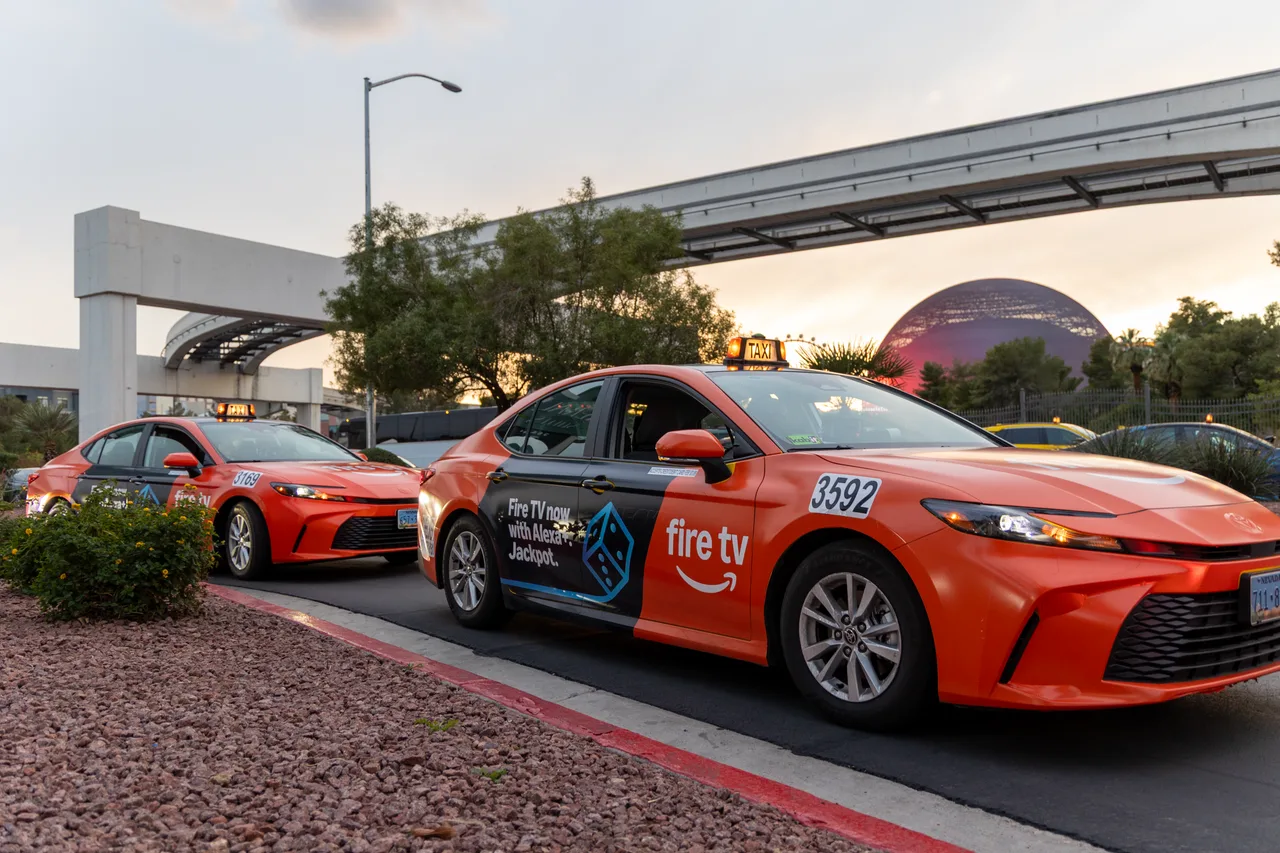
Location-based advertising targets people by where they are rather than who they are. It spans geotargeting, geofencing, proximity marketing and out-of-home. The first three depend on the audience carrying a phone that reports its position; out-of-home does not. And only vehicle-based out-of-home can change its location while a campaign is running.
Four techniques get filed under location targeting and they differ enormously in range, in what they require from the audience, and in how reliable they are. Sorting them out first saves picking the wrong one.
What are the types of location-based advertising?
| Approach | Range | Needs the audience's phone? | What it needs | Fails when |
|---|---|---|---|---|
| Geotargeting | City, region, postcode, radius | Yes. An approximate signal: IP address, coarse device location | A device that can be placed somewhere, roughly | The area is too broad to mean anything, or the IP resolves to the wrong place |
| Geofencing | A drawn perimeter around a place | Yes. Precise device location, with permission | Location permission on the device, or location data bought from apps that had it | Permission is denied, the app is not running, or the fix drifts indoors |
| Proximity (beacon) | Metres | Yes. Bluetooth on, usually an app installed | A beacon at the point, an app listening for it | No app, Bluetooth off, or the person never comes within range |
| Out-of-home by place | Line of sight | No | Nothing from the audience. Geopath counts an impression as a person passing the display who is likely to notice it; nothing on the person is read | The placement is in the wrong place |
The third column is the whole page. Three of these four techniques depend on the audience carrying a device that is willing to report where it is. Out-of-home does not ask the audience for anything, and the guide to out-of-home advertising starts from that fact.
Why is out-of-home the original geofence?
A billboard targets by location perfectly and permanently. Everyone who passes it sees it. There is no opt-in, no permission prompt, no identifier to deprecate, no signal loss indoors. The targeting decision is made once, when you choose the site.
That is also its constraint. The perimeter is drawn at booking and cannot be moved. If the audience shifts, the panel does not.
What changes when the placement can move?
Vehicle-based inventory is the exception, and it is the only part of out-of-home where geography is adjustable after the campaign starts. The unit travels a route, and the route is something you set.
Practically, that turns a few planning problems around:
- Corridors instead of points. If the target area is a route rather than an intersection, fixed panels can only approximate it with several sites.
- Time-shifted geography. The inventory can be in a business district in the morning and elsewhere in the evening. A fixed panel is where it is at every hour.
- Frequency as a dial. Hold a route to concentrate exposure, rotate it to spread across more people.
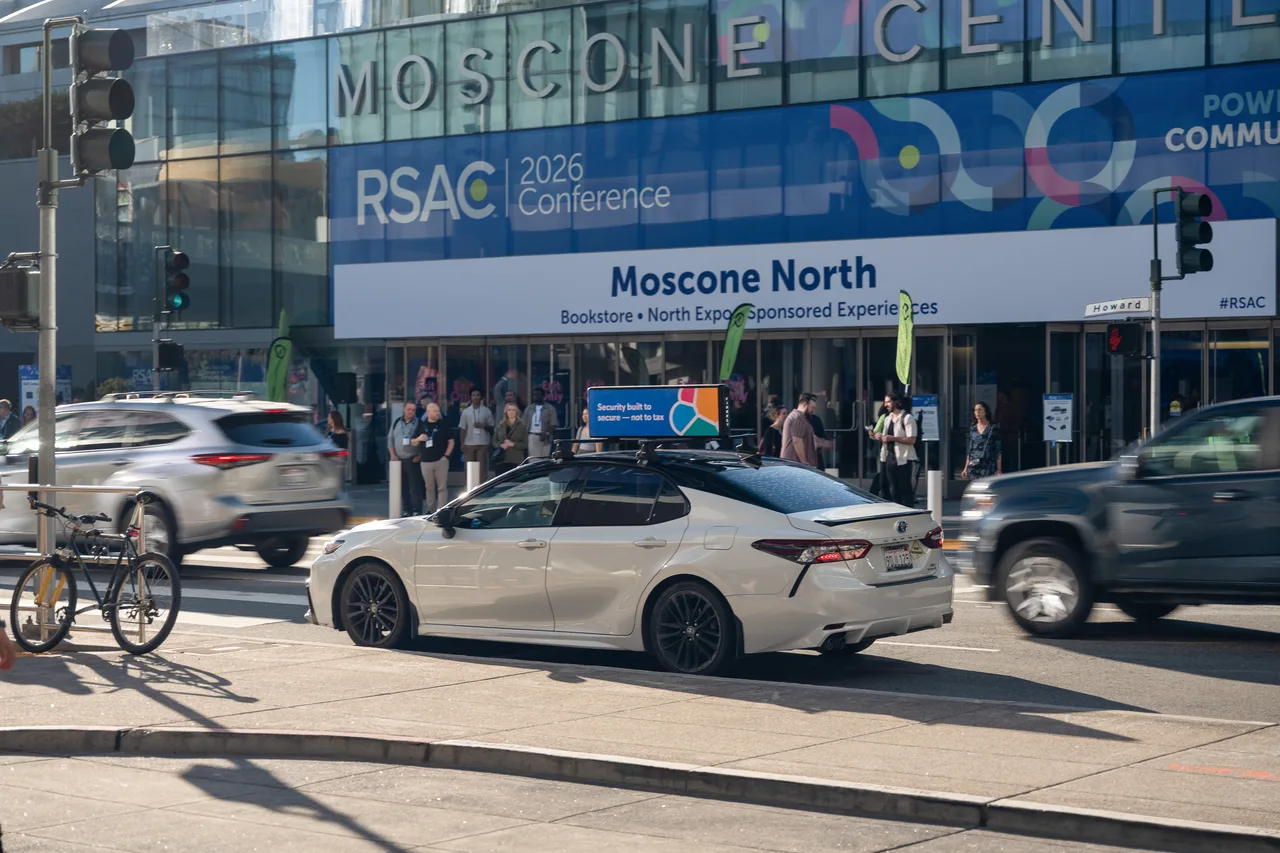
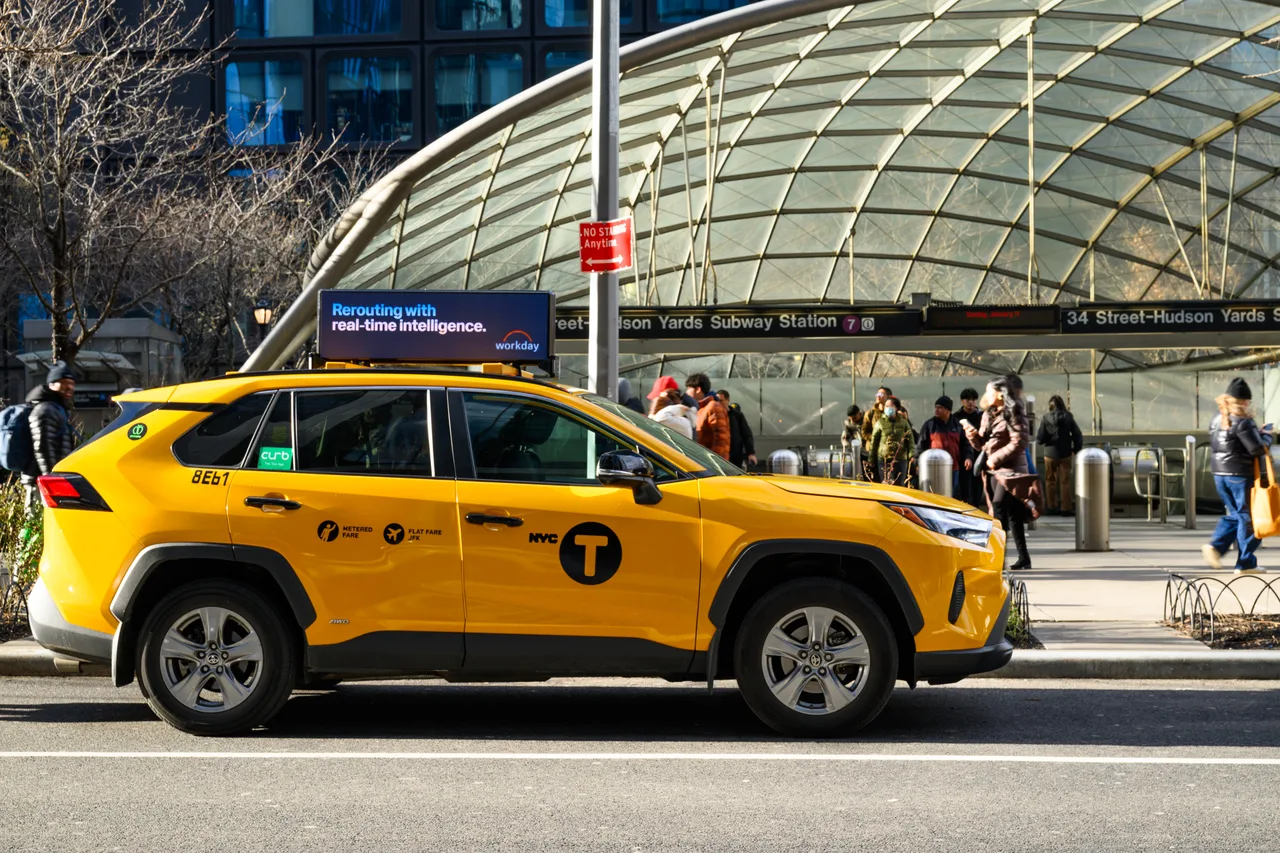
- Events. Where demand is temporary and there is no panel inventory nearby, a route can be built to it. The two frames below are that case: a conference venue for the days of the conference, a transit entrance at the hours people use it.
The cost of that flexibility is measurement. Because geography is a variable, an audience figure means nothing without the route it assumed; see how impressions are measured. Bought programmatically, the same inventory can also be conditioned on time and weather, which is covered on programmatic DOOH.
Who sells it, in each seller's own words. Firefly describes its digital tops as targetable by geofencing, zip code, DMA, competitor conquesting and dayparting, with creative triggered by weather or a data feed, and publishes foot traffic, web conversion and app conversion studies on its measurement page. Carvertise sells the printed equivalent, wraps on rideshare drivers' cars, which commit the creative for the life of the wrap. Can't Miss US sells the truck-borne one, where the route and the hour are the whole plan.
Geofencing in depth: how it works, what it needs, where it fails
Geofencing is the technique the cluster is named after and the one most often sold with the least explanation. Mechanically it is small. Android's developer documentation defines a geofence as a latitude, a longitude and a radius, which together describe a circle; the operating system raises an event when a device enters, leaves or dwells inside it.
What it needs is the part that gets left out of the pitch:
- Permission, twice. On Android an app must hold fine-location permission, and on Android 10 and later a separate background-location permission as well, before it can monitor a fence. On iOS the system prevents an app from using location data until the person grants it, and only the "Always" level lets the system wake a closed app for region monitoring.
- A running app. A fence is monitored by an app on the phone. Android caps this at 100 active geofences per app per device user. Advertising products that promise thousands of fences are not using the phone's own fence at all.
- Someone else's data. Ad-platform geofencing usually works from location histories collected by software development kits inside third-party apps and resold through brokers, then matched to a polygon after the fact. In January 2024 the FTC ordered X-Mode/Outlogic, which the agency said collected precise location data through its SDK in other companies' apps, to stop selling sensitive location data, and found it had not ensured users were fully informed about how the data would be used. Orders against Gravy Analytics and Mobilewalla followed in December 2024.
- A place where the law allows it. Washington's My Health My Data Act makes it unlawful to implement a geofence around an entity providing in-person health care where the fence is used to identify people seeking care or to send them health-related advertising (RCW 19.373.080). Other states have their own rules; check the market before drawing the perimeter.
Where it fails follows from the list. Permission denied, app killed, indoors, or a data supply that a regulator has just shut off. None of those failures is visible in the campaign report: delivery simply happens to a smaller, unknown fraction of the people who were actually there. A screen at the same location reaches all of them and reports none of them individually. Which of those you need is the brief. The full treatment, including the platform limits on Android and iOS, the lookback windows ad platforms use, the four state laws on fences near health facilities and the published third-party costs, is on geofencing advertising.
Does being somewhere mean wanting something?
Usually not, and this is where location budgets go to die. Presence is a weak signal of intent. People pass car dealerships without wanting a car and stand outside gyms while waiting for a bus.
Location works best when the place genuinely implies a state: commuting, travelling, waiting, arriving at a venue. It works worst when a perimeter is drawn around a competitor's front door and treated as a purchase signal. Geofencing a rival's car park is the tactic that gets pitched most and disappoints most.
How do you choose between them?
- Does your audience need to be identified, or only reached? If reaching them is enough, out-of-home avoids the entire permission problem.
- Is the target a point or a corridor? Points favour fixed placement; corridors favour routes.
- Does the geography need to change mid-campaign? Only mobile inventory and device-based channels can do that.
- How precise does "here" need to be? Metres means proximity. A neighbourhood means geotargeting.
- What happens when the signal is unavailable? Indoors, in transit, or with permissions denied, device-based targeting degrades quietly rather than visibly.
- Can you live with not knowing who? Out-of-home reports an audience estimate, never a person. If the plan requires a device-level match, you are back in the permission and data-broker economy, and should budget for it to shrink.
Where to go next
What DOOH is covers the screen side of out-of-home, and transit advertising goes deeper on the formats that move and who regulates them. Whether a placement changed anything, as opposed to who was near it, is the question incrementality testing answers.
Frequently asked questions
- What is location-based advertising?
- Advertising targeted by where the audience is rather than who they are. It covers geotargeting by area, geofencing around a defined perimeter, proximity marketing at very short range, and out-of-home placed where a target audience already passes. Three of the four depend on the audience carrying a phone that reports its position.
- Is location-based marketing the same as location-based advertising?
- In practice yes. "Location-based marketing" is the broader label and usually includes owned channels such as app notifications and local store pages; "location-based advertising" is the paid part. The techniques underneath, and the dependence on device location, are the same.
- What is the difference between geofencing and geotargeting?
- Geotargeting selects a broad area: a city, a postcode, a radius. Geofencing draws a specific perimeter around a place and triggers on entry, exit or dwell. Geofencing is tighter and event-driven and needs precise device location; geotargeting is a filter on who is eligible to see an ad and works from a coarse signal.
- What is proximity marketing?
- Reaching people within very short range of a specific point, typically metres rather than kilometres, using a device signal such as a Bluetooth beacon. It is the shortest-range form of location targeting and the most dependent on the audience carrying a phone with the right app and the right permissions.
- Is out-of-home a form of location-based advertising?
- It is the oldest form. A billboard is a permanent geofence: everyone who passes the site sees it, with no device, app or permission required. The targeting is done by choosing the location rather than by filtering an audience.
- Is geofencing legal in the US?
- No federal law bans it, but two constraints apply. The FTC has ordered location data brokers (X-Mode/Outlogic in January 2024; Gravy Analytics and Mobilewalla in December 2024) to stop selling sensitive location data, which is the raw material of many geofencing products. And some states restrict specific uses: Washington’s My Health My Data Act makes it unlawful to geofence an in-person health care provider to identify people or send them health-related ads. This describes the rules; it is not legal advice.
- What are the downsides of geofencing?
- It only works on people whose phones are reporting location, so the audience is a sample of unknown size. Being inside a perimeter is a weak proxy for intent. And the data supply is under regulatory pressure, so a tactic that works this quarter may lose its inputs next quarter. Out-of-home at the same location has none of those dependencies and none of the individual-level reporting.
- Can I do my own geofencing?
- Inside your own app, yes: both Android and iOS provide geofence and region-monitoring services, subject to the person granting location permission. Advertising to people who have not installed your app is different. That is bought through ad platforms, and the location signal then comes from other apps and data brokers rather than from you.
- Can out-of-home change location during a campaign?
- Fixed sites cannot; the geography is committed at booking. Vehicle-based inventory can, because its geography is a route rather than a coordinate. That is the only part of out-of-home where location is adjustable mid-flight.
Sources
- Create and monitor geofences · Android Developers (Google), Accessed September 14, 2026
- Requesting authorization to use location services · Apple Developer Documentation, Accessed September 14, 2026
- FTC Order Prohibits Data Broker X-Mode Social and Outlogic from Selling Sensitive Location Data · Federal Trade Commission, January 9, 2024
- FTC Takes Action Against Mobilewalla for Collecting and Selling Sensitive Location Data · Federal Trade Commission, December 3, 2024
- RCW 19.373.080, Washington My Health My Data Act: geofencing around health care facilities · Washington State Legislature, 2023 c 191 s 10
- Glossary: impressions, circulation, visibility adjustment index · Geopath, Accessed September 14, 2026
- Measurement & Attribution: brand study, foot traffic, web conversions, app conversion, retargeting · Firefly, Accessed September 14, 2026
About the author
Ercan Bozkurt writes the methodology pages on this site: how out-of-home inventory is counted, measured and bought, with a particular interest in screens that move. He works from the primary document in each case, the transit authority's own rulebook, the measurement body's own definitions, the company's own filing, and writes the page so that a media planner can check every figure against it.
Ercan Bozkurt on LinkedIn · Reviewed by Melih Koray, who publishes this site · How this site is edited and what it refuses to publish: about this site.