Programmatic DOOH, explained
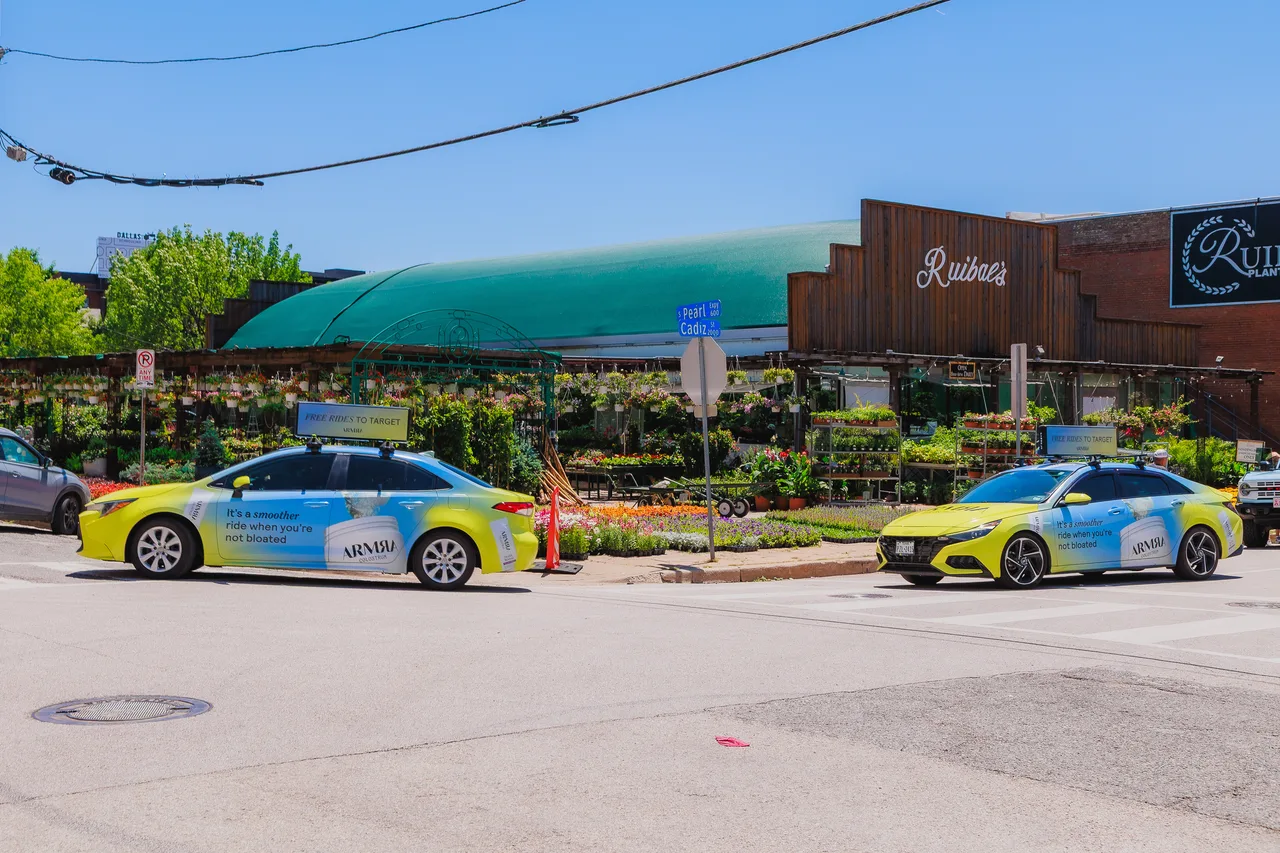
Programmatic DOOH buys digital out-of-home through automated platforms against an audience and conditions rather than by booking named sites. There is no cookie and no click, so targeting happens at the level of place and time, and one purchased play is counted as many impressions. It buys flexibility and trades away certainty about which screens ran your brand.
Programmatic arrived in out-of-home about a decade after it reshaped display, and it arrived changed, because the thing it was designed for does not exist here. There is no individual. A screen shows an ad to everyone in front of it, whoever they are. The IAB's own definition of digital out-of-home, published in December 2024, lists programmatic buying as something DOOH can support, "while not a core requirement."
Understanding what survived that translation is most of understanding pDOOH.
How does the supply chain fit together?
Advertiser / agency
        │  sets audience, geography, budget, rules
        ▼
  DSP  (demand side)
        │  bids for screen time
        ▼
  SSP  (supply side)
        │  aggregates and exposes inventory
        ▼
Media owners and format operators
        │
        ▼
     Screens
The demand-side platform is where a buyer works. The supply-side platform is where owners make inventory available. Between them sits an auction, or more often a deal, for slots in a screen's loop. Each layer takes a share of the spend, which is the honest argument for buying direct when you already know exactly which screens you want. The layers are the same ones described in the guide to out-of-home advertising; programmatic only changes how the middle two talk to each other.
Who sits where in the programmatic DOOH stack?
Named platforms, each described from its own published material, in alphabetical order within each side. This is a role map, not a ranking. Digital formats were 36.3% of US out-of-home revenue in 2025 by OAAA's count, and the share of that bought through these systems is not published in a form that can be cited.
| Platform | Side | What it does, in its own terms | Note |
|---|---|---|---|
| Broadsign | Supply, plus a buying tool | Content management and ad serving for screen networks (Broadsign Control), an SSP it describes as "a programmatic DOOH sales platform" (Broadsign Reach), and a DSP acquired with OutMoove in May 2024. | Acquired the Place Exchange SSP in November 2025. |
| Hivestack (Perion) | Supply and demand | For media owners: a DOOH ad server, SSP and header bidder. For buyers: a DOOH DSP with audience planning and measurement tools. | Founded 2017 in Montreal; acquisition by Perion announced December 12, 2023. |
| Place Exchange (Broadsign) | Supply | An SSP built for out-of-home, exposing owners’ screens to omnichannel DSPs. In November 2022 it introduced geospatial ad units for mobility media: a zip code becomes the ad unit and any partner screen passing through it can serve. | Part of Broadsign since November 25, 2025. |
| VIOOH | Supply | An SSP created by JCDecaux in 2018 and opened to other media owners. Says it works with more than 50 DSPs; its trading manager sells programmatic guaranteed and non-guaranteed deals. | JCDecaux held 93.5% at launch, with Veltys at 6.5%. |
| Vistar Media | Supply and demand | A DSP, an SSP and an ad server from one company, so it can sit on both ends of a single transaction. | Also sells traditional (non-programmatic) OOH planning tools. |
| Display & Video 360 (Google) | Demand | Omnichannel DSP. DOOH is bought as deals negotiated with a seller and imported by deal ID, or found in its Marketplace. Targeting is geography and dayparting; creative is static image or standard video, not HTML5. | Its help page names Perion (Hivestack), Magnite, Place Exchange, Ströer, VIOOH and Vistar as DOOH sellers. |
| StackAdapt | Demand | Omnichannel DSP. DOOH campaigns are planned around location, venue type and timing signals such as time of day or weather. | Names JCDecaux, Broadsign, Clear Channel, Outfront and Lamar among its supply. |
| The Trade Desk | Demand | Omnichannel DSP. Scores screens by an "audience reach percentage" so spend moves toward screens whose modelled audience matches the brief, instead of targeting a person. | Also offers retargeting of devices observed near a screen during a play, which depends on device location data. |
Two things to notice. The same company can be on both sides of a transaction: Vistar Media by design, Hivestack by product line, Broadsign after buying a DSP in 2024 and an SSP in 2025. When a platform tells you it is neutral, ask which product it is being neutral with.
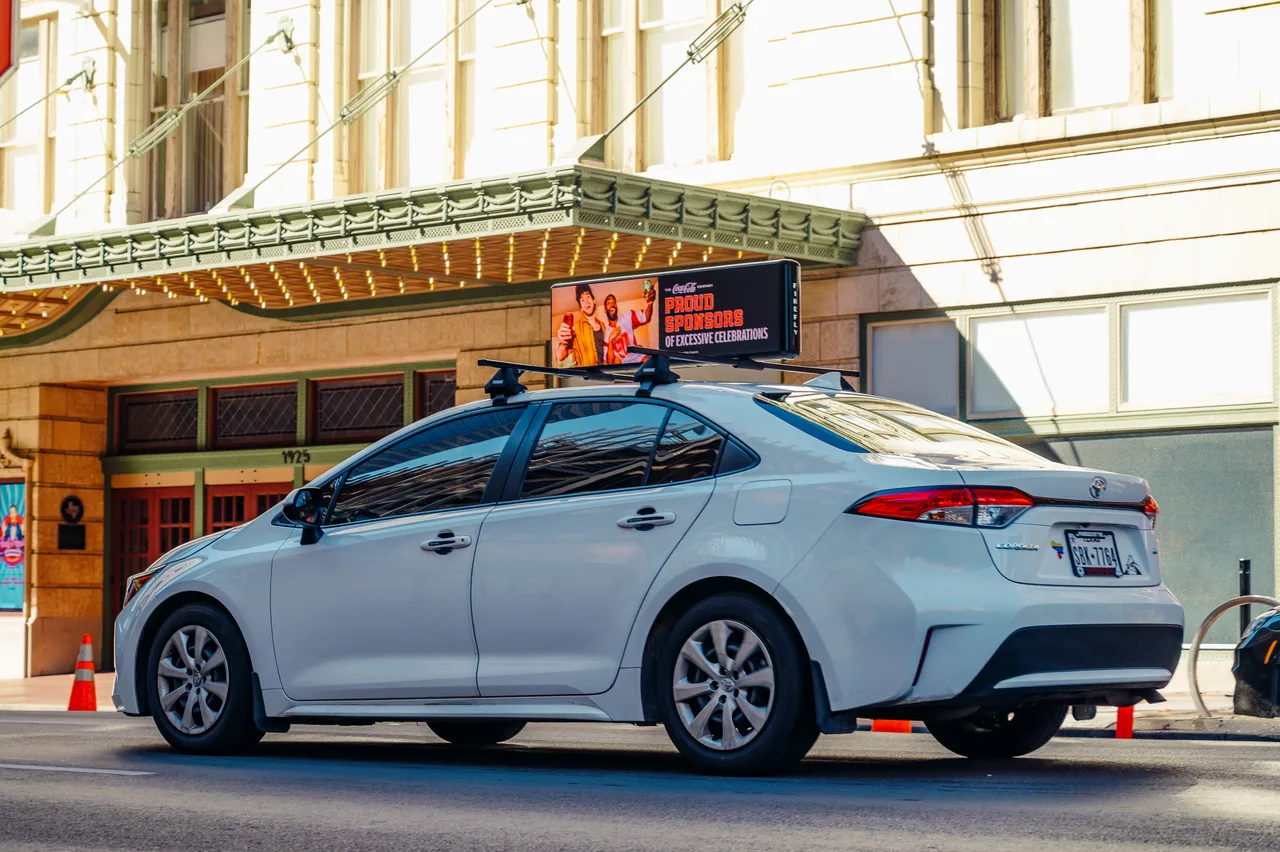
The other is that moving inventory already has a supply-side answer. Place Exchange's November 2022 launch of geospatial ad units put it plainly: until then, mobility media owners had to assign a single fixed location to each vehicle as if it were stationary. The mobility partners named at that launch were Curb, Firefly, Lyft Halo, Octopus, Road Runner Media and Uber OOH. Firefly is the worked example of a mobility operator that can be bought this way: its own solutions page lists Place Exchange, Vistar Media, Hivestack and Broadsign as the SSPs carrying its digital tops, with programmatic guaranteed or open-marketplace deals and dynamic creative, and an April 2026 announcement added VIOOH. Both pages are in the sources.
What can you target without cookies?
Not people. Conditions. Which turns out to cover more than it sounds:
| Dimension | What it does |
|---|---|
| Geography | Which areas, down to individual screens or clusters |
| Time | Hour, daypart, day of week |
| Venue type | Gyms, transit hubs, retail, roadside. Place as a proxy for state of mind. The request carries the venue type from the OpenOOH taxonomy. |
| Audience index | Screens whose measured audience over-indexes for a segment |
| Triggers | External feeds: weather, temperature, sports results, stock levels |
Triggers are the genuinely distinctive capability. A direct booking cannot start a campaign the moment it rains and stop when it clears.
What you cannot do, and what a display planner will keep reaching for out of habit:
- Target a person. There is no identifier in the request for the people in front of the screen.
- Cap frequency per person. Caps apply to the screen and the loop, not to the viewer.
- Optimise to a click or a conversion pixel. Nothing is clicked. Optimisation works on delivery conditions.
- Build a lookalike from site visitors. The audience is a modelled count of passers-by, not a list.
- Retarget the viewer directly. Some DSPs offer retargeting of devices observed near a screen during a play. That is a device-location product with its own permission and data-broker questions, covered on location-based advertising.
What is the difference between open exchange, private marketplace and programmatic guaranteed?
Four ways of transacting, and the OpenRTB 2.6 specification describes each of them in the bid request itself. The table uses the specification's own field names so a planner can ask a platform which one a proposal is.
| Deal type | Who can bid | Price | Volume reserved | In the bid request |
|---|---|---|---|---|
| Open exchange (open auction) | Any buyer connected to the SSP | Auction; the request may carry a floor | No | No deal object. The impression is open to all bids. |
| Private marketplace (private auction) | Only the buyer seats named in the deal | Auction among the invited, above the deal floor | No | A Pmp object with private_auction = 1 and one or more Deal objects, each with an id and an allowed seat list. |
| Preferred deal | The named buyer, who may decline any impression | Fixed, agreed in advance | No | A Deal object whose auction type is set so the floor is the agreed price (at = 3). |
| Programmatic guaranteed | The named buyer, who must bid | Fixed, agreed in advance | Yes, volume is committed | A Deal object flagged guaranteed (guar = 1). The bidder is required to respond. |
A real example of the split. Display & Video 360's DOOH documentation describes inventory arriving either as a deal negotiated offline with a seller and then imported by deal ID, or through its Marketplace, and it supports both guaranteed and non-guaranteed deal types. On the sell side, VIOOH's trading manager describes the same two families: programmatic guaranteed, and non-guaranteed deals with no upfront commitment that let a buyer shift budget in flight. Out-of-home tends toward deals rather than open auction because owners think in packs of screens and posting periods, and a deal is the programmatic shape of a pack.
How does a deal ID actually work?
- The owner packages screens. A set of screens, a period, a floor, and optionally an allowed list of buyer seats or advertiser domains.
- The SSP issues the deal. In OpenRTB terms a Deal object with a required id, a bidfloor, an optional auction-type override and a guaranteed flag.
- The buyer enters the id in the DSP. From then on, every bid request for those screens carries the deal inside a Pmp object; if the owner set private_auction to 1, bids outside the named deals are ignored.
- The DSP bids with the same id. The bid response carries a dealid that references the deal in the request.
- The seller checks conformance. IAB Tech Lab's auction primer notes that sellers may validate that bids carrying deal IDs conform to the deal's terms before the bid enters the auction.
Three questions to ask about any deal you are handed: which screens are actually inside it; whether it is guaranteed or merely preferred; and where the impression multiplier on those screens comes from, since the specification lets the source be the publisher or a named measurement vendor.
Functional comparison: programmatic buying on DOOH vs display
The mechanics look identical from inside a DSP, which is the problem. Row by row, they are not.
| Function | Programmatic display | Programmatic DOOH |
|---|---|---|
| Who is addressed | One browser or device, usually with an identifier | Everyone in front of the screen. The IAB definition calls the audience one-to-one or one-to-many; in practice it is many. |
| What one bid buys | One impression: one ad, one device | One play (a "spot"). The request carries a multiplier stating how many impressions that play is deemed to be, for example 14.2. Values below 1 occur. |
| How the request describes the placement | A Site or App object: page, app, device | A DOOH object: placement id and a venue type from the OpenOOH taxonomy. A request cannot carry both. |
| Targeting inputs | User identifiers, cookies, contextual page data, audience lists | Venue type, geography, daypart, the screen’s modelled audience index, external triggers. No individual. |
| Frequency capping | Per user, per device | Per screen and per loop. Nobody knows whether the same person walked past twice. |
| Creative | Clickable; HTML5, dynamic and rich formats common | No click. Static image and standard video are what a DSP such as Display & Video 360 accepts for DOOH. |
| How it is transacted | Open auction and deals, both routine | Deals are the native shape: owners package screens and buyers import deal IDs. SSPs also run open exchanges (Broadsign Reach documents one), so both exist. |
| What "impression" means | A served ad, logged by an ad server | A modelled count of people likely to notice the ad, produced by a measurement body such as Geopath or by the seller. |
| Optimisation signal | Click, view, conversion | Delivery conditions: place, time, weather, audience index. There is no response event to optimise toward. |
| Where the model fails | Identifier loss, fraud, viewability | Screens that move. The venue type and geography in the request assume a fixed coordinate. |
The multiplier row is the one to internalise. IAB Tech Lab's note on integrating DOOH into OpenRTB spells out that one ad play equals multiple viewers, that the number is a statistical estimate, and that fractional values such as 0.32 impressions per play are common. A display CPM and a DOOH CPM are not the same unit until you know the multiplier and who produced it.
What does programmatic buy you?
- Reach across owners. One buy spanning suppliers who would each need a separate negotiation.
- Mid-flight change. Budget, geography and creative can move after launch.
- Short commitment. No four-week minimum tied to a production schedule.
- Conditional delivery. Rules a human booking process cannot execute.
What do you give up?
- Certainty about placement. You get delivery, not a guaranteed list of the sites your brand appeared on. For a brand with adjacency rules, that matters.
- Margin. Every intermediary takes a share of the media spend.
- Comparability. An audience number produced by a platform's model and one produced by a measurement body are not the same figure. Geopath defines an impression as the number of people passing a display who are likely to notice the ad; a seller-supplied multiplier may or may not have been built that way.
Where does programmatic quietly break?
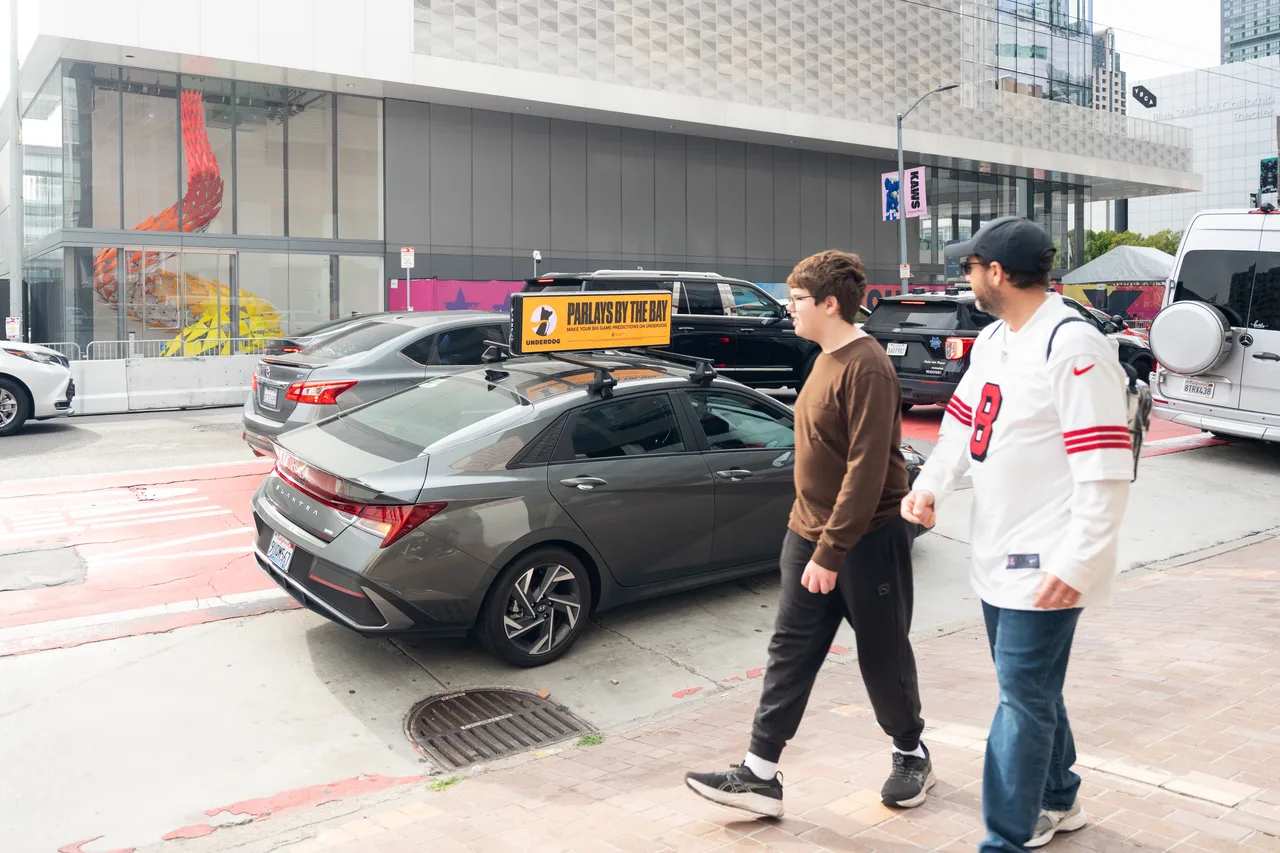
On inventory that moves. The whole model assumes a screen has coordinates: that is how venue type is assigned, how audience indices are attached, and how delivery gets reported by location.
A screen on a vehicle has a route instead. It can be sold programmatically, and it is, but the location-derived attributes in the system have to come from somewhere. If nobody says where, the buyer is reading a number whose geography was assumed rather than measured. Ask. The reasoning is on how out-of-home impressions are measured.
That is not a hypothetical corner of the market. Screen-based inventory on vehicles is sold programmatically today, Firefly's digital tops through five SSPs by its own count, and none of it has a fixed coordinate. The geospatial unit described above is the supply side's admission of the same point: the sellable thing is the place the screen passes through, not the screen.
When should you use it?
- Use programmatic when you want an audience across several markets, need to change things mid-flight, or have a condition that should govern delivery.
- Buy direct when specific locations are the point, when adjacency matters, or when you want the best terms on one site.
- Do both on larger plans: direct for the sites that must be covered, programmatic for reach around them.
Where to go next
What DOOH is covers the format itself, and how the market is structured explains which kind of company sits at each layer of that supply chain, including the specialists who run the screens that move. The operators and platforms themselves, with which SSPs each names for its inventory, are on DOOH companies.
Frequently asked questions
- What is programmatic DOOH?
- Buying digital out-of-home through automated platforms, against an audience and a set of conditions, rather than negotiating named sites with each owner. The screens are the same as any other DOOH buy. What changes is how delivery is bought and decided, and the fact that one purchased play counts as many impressions.
- What does pDOOH mean?
- pDOOH is shorthand for programmatic digital out-of-home. It is the same thing as programmatic DOOH. The abbreviation exists mainly to distinguish it from DOOH bought directly from an owner or operator on a posting period or a share of loop.
- What is the difference between a DSP and an SSP in DOOH?
- The demand-side platform is where a buyer works: audience, geography, budget, rules, and the bids that follow from them. The supply-side platform is where screen owners make inventory available and set floors, deals and allowed buyers. Some companies operate both, so ask which side of a given transaction a platform is on.
- How does programmatic DOOH differ from programmatic display?
- There is no individual to target and no cookie. A screen serves everyone in front of it, so targeting is applied at the level of place and time rather than the person, and one play is counted as a multiple of impressions. There is also no click, so optimisation runs on delivery conditions rather than response.
- How is programmatic DOOH priced?
- As a CPM applied to modelled impressions. A play on a screen is deemed to deliver a stated number of impressions, and the price is that multiplier times the CPM. Whether the multiplier came from the seller or from an independent measurement source is worth asking before comparing two quotes. This site does not publish rates.
- What is a deal ID in programmatic DOOH?
- A string that identifies a private agreement between a screen owner and a buyer. It travels in the bid request, the buyer’s DSP bids against it, and the seller checks that the bid conforms to the deal’s terms. It is how a programmatic buy is tied to a specific pack of screens, a price and a set of allowed buyers.
- Is programmatic DOOH better than buying direct?
- No. It is different. Programmatic gives targeting, cross-market reach and mid-flight changes. Direct gives certainty about exactly which sites carried the brand, and usually better terms on a specific site you actually want. Campaigns built on named locations should be bought direct.
- Can programmatic DOOH be triggered by conditions?
- Yes. Delivery can be conditioned on time of day, day of week, and external data feeds such as weather. Trigger-based delivery is one of the few things programmatic does that a direct booking genuinely cannot.
- Does programmatic work for moving inventory?
- It can, and it is sold that way today. The assumptions need checking: programmatic systems were designed around screens with fixed coordinates, and a moving unit does not have one. Supply platforms have started to sell geography rather than vehicles, with a zip code as the ad unit, which is the honest way to describe a screen on a route.
Sources
- Digital Out-of-Home (DOOH): Definition and Core Features · IAB, December 2024
- OpenRTB 2.6 specification: Pmp, Deal, Qty and DOOH objects · IAB Tech Lab, April 2022, accessed September 14, 2026
- Digital Out of Home is Now Integrated Into OpenRTB · IAB Tech Lab, Accessed September 14, 2026
- Programmatic Auction Definitions · IAB Tech Lab, Finalized June 24, 2026
- Purchase digital out-of-home inventory · Google Display & Video 360 Help, Accessed September 14, 2026
- Supply-side platform for digital out-of-home: buyers · VIOOH, Accessed September 14, 2026
- JCDecaux launches VIOOH, a global independent automated planning and trading platform · JCDecaux, June 12, 2018
- Perion Acquires Hivestack, a Leading Global Full-Stack Digital Out-Of-Home (DOOH) Platform · Perion, December 12, 2023
- Broadsign Reach: getting started · Broadsign documentation, Accessed September 14, 2026
- Broadsign Acquires Netherlands-based DOOH DSP OutMoove · Broadsign, May 13, 2024
- Broadsign Announces Acquisition of Place Exchange · Broadsign, November 25, 2025
- Place Exchange Transforms Out-of-Home Mobility Advertising with Geospatial Ad Units · Place Exchange, November 29, 2022
- Firefly Expands Programmatic Capabilities Through Integration with VIOOH · Firefly, April 23, 2026
- Advertising Solutions: programmatic capabilities (Place Exchange, Vistar Media, Hivestack, Broadsign SSPs; PG and open marketplace; DCO) · Firefly, Accessed September 14, 2026
- Digital out-of-home advertising · The Trade Desk, Accessed September 14, 2026
- Digital out-of-home advertising platform · StackAdapt, Accessed September 14, 2026
- Out of Home Advertising Revenue Reaches Record $9.46 Billion · Out of Home Advertising Association of America (OAAA), March 17, 2026
- Glossary: impressions, circulation, visibility adjustment index · Geopath, Accessed September 14, 2026
About the author
Ercan Bozkurt writes the methodology pages on this site: how out-of-home inventory is counted, measured and bought, with a particular interest in screens that move. He works from the primary document in each case, the transit authority's own rulebook, the measurement body's own definitions, the company's own filing, and writes the page so that a media planner can check every figure against it.
Ercan Bozkurt on LinkedIn · Reviewed by Melih Koray, who publishes this site · How this site is edited and what it refuses to publish: about this site.