Geofencing advertising, explained: the fence, the data behind it and the law around it
Geofencing advertising serves ads to phones observed inside a drawn perimeter, using location the device has reported through an app or an ad request. The fence itself is small, a coordinate and a radius. The audience is a set of mobile advertising identifiers seen inside it within a lookback window, and four states now ban fences around health facilities.
Geofencing is sold as a targeting method and is really a data supply chain with a shape drawn on top. The shape is trivial. What matters is where the location observations come from, how long they are kept, which laws now apply to them, and what happens when the thing being fenced is a screen rather than a store. The comparison with geotargeting, proximity and out-of-home by place is on location-based advertising and is not repeated here.
What is geofencing advertising?
Geofencing advertising serves ads to devices that have been observed inside a defined perimeter. GroundTruth, one of the larger vendors, defines it as “the application of a virtual boundary around a location”, drawn as a radius or as a polygon following store walls, car parks or a shopping centre. Two different things share the name. Inside an app you own, the phone’s operating system watches the fence and tells the app when the device crosses it. In advertising, nobody’s phone is watching anything: a location data supplier matches the devices it has already observed inside the shape, and those devices become an audience bought through an ad platform. The first is a feature of the phone. The second is a purchase of other people’s data.
Geofencing marketing vs geofencing advertising
Geofencing marketing is the wider term and includes owned channels: a push notification when a customer with your app walks into your store, a reminder when they leave an airport, an in-app offer inside a stadium. It runs on the operating-system fence and on permission the person granted you. Geofencing advertising is the paid part: reaching people who have never installed anything of yours, by buying audiences built from location data collected elsewhere. The techniques overlap, the data supply does not. Marketing uses your permission; advertising uses somebody else’s.
What is a geofence, technically?
A geofence is a circle. Android’s developer documentation says it plainly: “the latitude, longitude, and radius define a geofence, creating a circular area, or fence, around the location of interest”, and the system raises an event when a device enters it, exits it, or dwells inside it. Apple calls the same thing region monitoring, “a circular area centered on a geographic coordinate”. Both platforms cap it, gate it behind permission, and publish accuracy figures that are worth reading before anyone promises a fence around a single shopfront.
| Android (Geofencing API) | iOS (Core Location) | |
|---|---|---|
| What a fence is | A latitude, a longitude and a radius, which together define a circle. | A circular area centred on a coordinate; the radius defines the boundary. |
| Events raised | Enter, exit, and dwell (the device stops inside for a set period). | Enter and exit, delivered as the condition becomes satisfied or unsatisfied. |
| Fences per app | 100 per app, per device user. | No single app may monitor more than 20 conditions of any type at once. |
| Permission needed | ACCESS_FINE_LOCATION, plus ACCESS_BACKGROUND_LOCATION on Android 10 and later. | Location authorization before any location data is used; Always authorization lets the system launch a closed app for region monitoring. |
| Radius guidance | Minimum radius 100 to 150 metres for best results. | Apple’s sample code uses a 200 metre radius. |
| Accuracy | Usually 20 to 50 metres with Wi-Fi; as small as 5 metres indoors; several hundred metres to several kilometres without Wi-Fi. | Not stated in the region-monitoring guide. |
| Latency | Usually under 2 minutes; about 2 to 3 minutes on average under background location limits. | The system wakes the app as needed; no figure published. |
Two lines of the table decide what the phone’s own fence can do for an advertiser. The limits, 100 fences per app on Android and 20 per app on iOS, mean a product promising thousands of fences is not using the device’s fence at all. And the permissions mean the fence only exists for people who said yes: on Android a background location grant on top of fine location, on iOS an Always grant if the app is to be woken while closed. Everything an ad platform does starts from the fact that most of the people it wants to reach never granted either.
How do ad platforms geofence people who never installed the app?
By working backwards from data. The fence becomes a query run against a store of location observations: every device seen inside the polygon during a window is pulled into an audience, keyed by its mobile advertising identifier (MAID), and served ads wherever that identifier turns up next. OUTFRONT’s May 2024 measurement explainer describes the same mechanism from the out-of-home side: a phone passing through a geofenced area pings its device ID with coordinates, and measurement partners assign the MAID to mark the device present without sharing personally identifiable information.
The observations come from four places, and the OAAA’s 2020 guide grades each on accuracy, precision and scale, in its own words:
| Signal | How it is collected | Accuracy | Precision | Scale |
|---|---|---|---|---|
| Carrier network | Every time a phone connects to the network | Fair | Good | Excellent |
| GPS via app SDK | Apps where consumers opt in to share location | Good | Good to Excellent (signal dependent) | Dependent on SDK installs |
| Bid stream | Location passed while an app with location services on requests an ad | Poor | None | Good |
| Beacon | Bluetooth scan of devices within 10 to 100 feet; Bluetooth on and visible | Excellent | Excellent | Dependent on SDK installs |
The two that feed most advertising products are the middle rows. Software development kits inside third-party apps report GPS fixes from people who opted in to those apps, not to the advertiser. Bid-stream data is the location an app attaches to an ad request, which the OAAA rates poor on accuracy and which, the FTC alleged in December 2024, Mobilewalla retained from auctions it did not even win, amassing more than 500 million unique advertising identifiers paired with precise location. Placer.ai describes a panel of “tens of millions of devices” and machine learning to estimate foot traffic from it. Every geofenced audience is a sample, of unknown coverage, of the people who were actually there.
Three mechanics follow from that data model. A lookback window sets how long an observation keeps a device in the audience; Simpli.fi lets advertisers engage devices “for up to 30 days” after they leave a fenced address. Conquesting fences a competitor: in Simpli.fi’s fast-food case study, 4,770 fences were drawn around rival outlets and devices seen there were served ads for up to 30 days. A conversion zone is a second fence around the advertiser’s own locations, so exposed devices that later enter are counted as visits; that study drew 353 of them. Simpli.fi also converts street addresses to fences from plat-line data, up to one million addresses per campaign. None of this touches the phone’s own fence. The perimeter is the least important input.
What does the law say about geofencing?
Two layers, both recent. Federally, the FTC has moved against the data supply rather than the technique. On January 9, 2024 it announced its first settlement with a data broker over sensitive location data: X-Mode Social and its successor Outlogic, which collected precise location through an SDK in other companies’ apps and from other brokers, were prohibited from sharing or selling sensitive location data, required to keep a list of sensitive locations, and ordered to delete data previously collected. On December 3, 2024 the Mobilewalla order added the bid stream: the company is barred from collecting or retaining consumer data from ad auctions for any purpose other than the auction itself, the first time the FTC had alleged that practice was unlawful. The raw material of many geofencing products is exactly what those orders restrict.
At state level, four statutes now make it unlawful to fence health facilities for advertising or tracking. Each was read from the legislature’s own text.
| State | Statute | Fence defined as | Around | Prohibited purposes |
|---|---|---|---|---|
| Washington | RCW 19.373.080 (My Health My Data Act, 2023 c 191 s 10) | A virtual boundary 2,000 feet or less from the perimeter of the location | Any entity that provides in-person health care services | Identifying or tracking consumers seeking health care; collecting consumer health data; sending notifications, messages or advertisements related to consumer health data or health care services. |
| Nevada | SB 370 (2023), section 31; effective March 31, 2024 | A radius of 1,750 feet or less | Any medical facility, facility for the dependent, or any person or entity providing in-person health care services or products | Identifying or tracking consumers seeking in-person care; collecting consumer health data; sending notifications, messages or advertisements related to consumer health data or health care services or products. |
| Connecticut | General Statutes § 42-526(a)(1)(C); Public Act 23-56, effective October 1, 2023 | Within 1,750 feet | Any mental health facility or reproductive or sexual health facility | Identifying, tracking, collecting data from or sending any notification to a consumer regarding the consumer’s consumer health data. |
| New York | General Business Law § 394-g | A virtual boundary of 1,850 feet radius or less | Any health care facility other than the person’s own | Delivering a digital advertisement by electronic means; building consumer profiles; inferring health status, medical condition or medical treatment. |
The radii differ by a few hundred feet and the covered facilities differ in scope: Washington and Nevada reach any in-person health care provider, Connecticut names mental health and reproductive or sexual health facilities, New York covers any health care facility other than the advertiser’s own. A national campaign that fences pharmacies, gyms with clinics attached, or a shopping centre with an urgent-care tenant has to be checked against all four. This describes the rules; it is not legal advice.
How is geofencing used for out-of-home?
Out-of-home does not need a geofence to reach anyone; a screen reaches whoever passes it. Geofencing enters out-of-home through measurement, as the mechanism that turns an unlogged medium into an exposed panel. The fence is drawn around the screen’s viewshed, the area from which it can be seen, and devices observed inside it while the campaign runs become the exposed group a brand lift study surveys or an incrementality test compares with a control. The guide to out-of-home advertising covers where that panel sits in the wider buy.
Fencing a screen is not fencing a store
The two fences point in opposite directions. A fence around a store defines the outcome: a device that enters it after exposure is a visit. A fence around a screen defines the exposure: a device inside the viewshed while the ad plays is exposed. A store fence can be drawn from a property boundary; a screen fence has to be drawn from sightlines, and the OAAA’s definition of exposure, presence in the zone while content is viewable, is explicit that it does not require the content to have been seen. A full attribution study uses both fences and a lookback window between them, as the Lamar and Clear Channel studies on the incrementality page do. How the audience estimate behind the screen is built in the first place is on how out-of-home impressions are measured.
Why a moving screen is a moving geofence
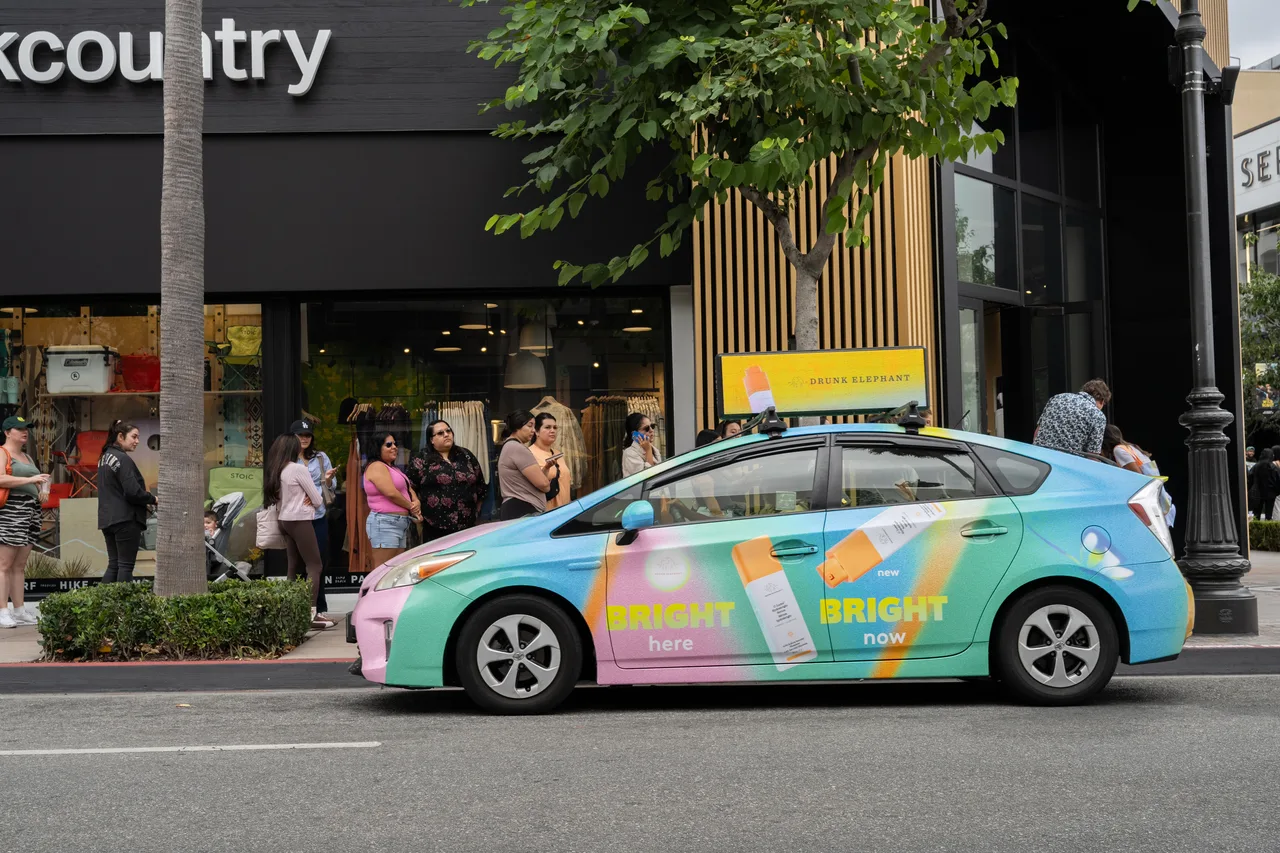
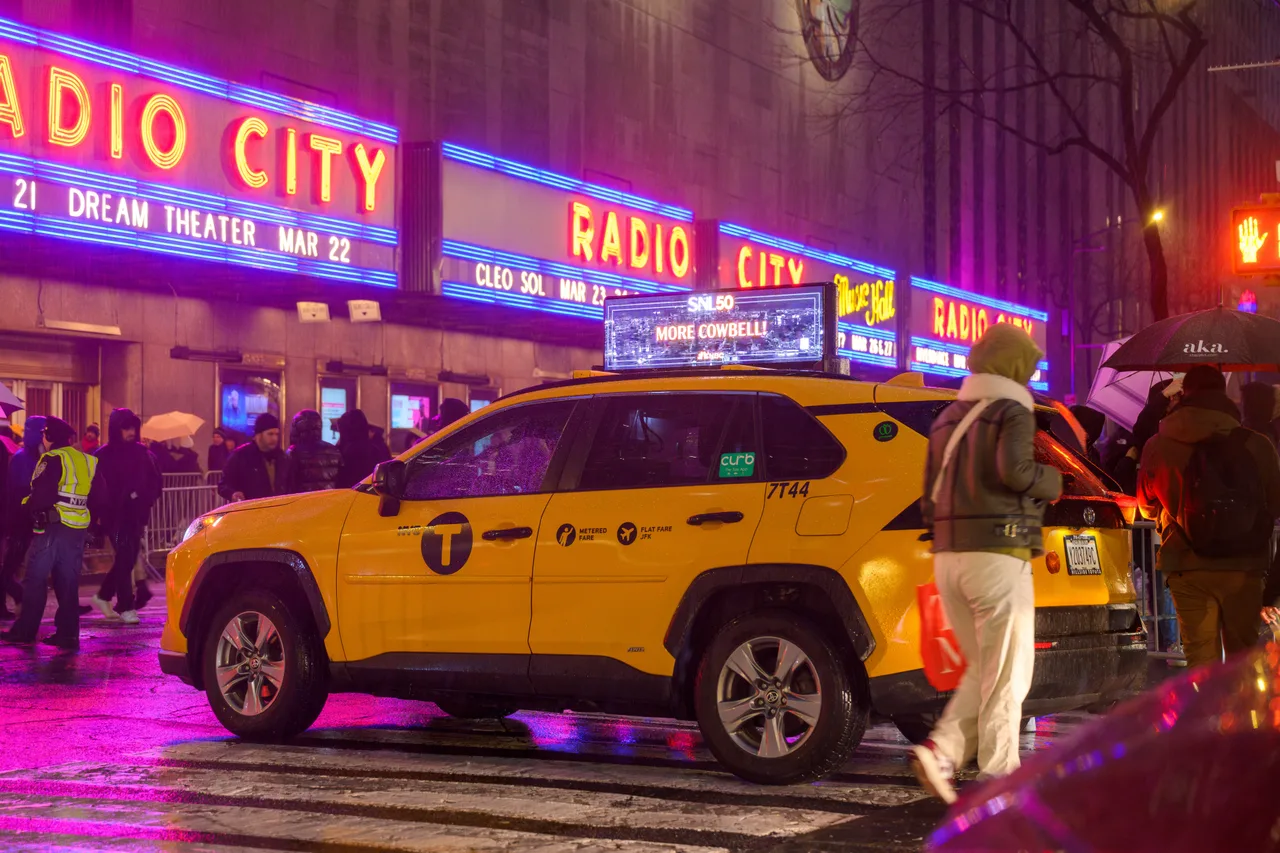
A fixed screen’s viewshed is a polygon drawn once and valid for the flight. A screen on a vehicle has a viewshed that travels with it, so the fence is not a shape but a shape per timestamp, and the exposed panel is the union of every device logged inside it along the route. Three things change structurally. The exposure record becomes a route log joined to a location panel, which is why Reveal Mobile lists “moving waypoints” as an input to its exposure computation alongside media plans and ad rolls. Frequency stops being a property of a site and becomes a property of route repetition: the same unit on the same corridor at the same hour builds frequency, a rotated route spreads reach. And the fence inherits the vehicle’s timing, so an exposed panel built from a morning commute and one built from an evening route are different populations under the same impression total. The IAB’s July 2025 guide is direct about the cost: static placements are “more compatible with geofencing and camera-based tools”, while exposure for exterior moving formats “is highly variable depending on vehicle speed, obstructions, and route patterns”. That is the trade. The moving fence can be steered to where the audience is; the record of who it reached is only as good as the route data behind it. Firefly, whose taxi-top and rideshare-top studies are the operator-published examples on the brand lift and incrementality pages, lists geofencing and dayparting as targeting inputs for its digital tops and publishes foot traffic, web and app conversion studies on its measurement page; the GPS log its tops carry is the route data that sentence is about.

What does geofencing advertising cost?
Vendors publish more about geofencing prices than about most media, because the buy is programmatic display priced per thousand impressions or per measured visit. The figures below are the ones this desk could read on the publisher’s own page.
The ranges below are market-level figures compiled from publicly published vendor and industry sources. They are not quotes, and they are not the rates of any single network, including the operator whose campaigns the archive on this site documents, which prices per campaign and does not publish a rate card. Always get a written quote before budgeting.
| Source | Date | Published figures |
|---|---|---|
| GroundTruth, “How much does geofencing cost?” | Accessed September 14, 2026 (undated page) | Industry range $3.50 to $15 CPM for mobile and desktop; $20 to $50 CPM for connected TV. GroundTruth’s own floor $3.50 CPM; $10 to $15 recommended for short event flights; video $7 to $12. Also sells on cost per visit. |
| Propellant Media, “How much does geofencing cost?” | January 5, 2026 | Static display $5 to $12 CPM; video $15 to $17, up to $25; OTT and connected TV $25 to $60. Minimums of $10,000 to $20,000 a month at larger platforms, versus its own $1,000; recommends 10 to 20 fences per $1,000 of monthly budget. |
| WebFX, “How much does geofencing cost?” | Accessed September 14, 2026 (undated page) | $1,500 to more than $32,000 a month, stated as what businesses spend on geofencing advertising; the agency’s own pricing page. |
How it is priced matters more than the numbers. Two models exist: CPM, where the advertiser pays for impressions served to the fenced audience wherever they appear, and cost per visit, where GroundTruth says marketers “only pay for ads that result in a store visit”, which shifts the risk of a thin audience to the vendor. Fence count is usually not a line item; Propellant Media does not charge per fence and instead recommends a fence-to-budget ratio. Minimums are where vendors differ most, from four figures a month at small agencies to five at the larger platforms according to the same page. The undated pages will drift; treat them as the shape of the market rather than its level.
Where to go next
The four location techniques side by side, and when presence means anything, are on location-based advertising. What the exposed panel is used for once it exists is on the brand lift study and incrementality testing pages. Buying the inventory whose fence moves, with time and weather conditions, is on programmatic DOOH.
Frequently asked questions
- What is geofencing in marketing?
- Using a drawn perimeter around a place to decide who is eligible for a message. A phone observed inside the perimeter, by an app on the phone or by location data an ad platform has bought, is added to an audience and served ads, sometimes at once and usually for a set number of days afterwards. The perimeter is the easy part; the location data is the product.
- How does geofencing advertising work?
- An advertiser defines polygons or radii around target locations. A location data supplier matches mobile advertising identifiers it has observed inside those shapes, within a lookback window, and the resulting audience is bought through a demand-side platform and served display, video or connected-TV ads across the apps and sites those devices use. Visits are measured the same way, with a second fence around the advertiser’s own locations.
- What are examples of geofencing ads?
- Fencing competitor stores and serving offers to their visitors for up to 30 days, which Simpli.fi documents with 4,770 fences around rival fast-food outlets. Fencing an event venue for the days of the event. Fencing a trade-show hall to reach attendees. Fencing an advertiser’s own stores as a conversion zone, so exposed devices that later enter are counted as visits.
- Is geofencing advertising legal in the US?
- No federal statute bans it, but two constraints apply. The FTC has ordered location data brokers to stop selling sensitive location data (X-Mode/Outlogic, January 2024; Mobilewalla, December 2024). And Washington, Nevada, Connecticut and New York each make it unlawful to geofence health care facilities for advertising or tracking, with radii of 2,000, 1,750, 1,750 and 1,850 feet. This is a description of the rules, not legal advice.
- How much does geofencing marketing cost?
- Published vendor and agency figures span $3.50 to $15 CPM for mobile display, $7 to $25 for video and $20 to $60 for connected TV, with monthly minimums from $1,000 at small agencies to $10,000 or more at larger platforms, according to GroundTruth and Propellant Media pages read in September 2026. They are not quotes and not the rates of any single network.
- Is geofencing free?
- Inside your own app it costs nothing beyond development: Android and iOS both provide geofencing as an operating-system service, limited to 100 and 20 fences per app respectively and gated by location permission. Advertising to people who have not installed your app is bought from ad platforms and location data suppliers, and is priced on a CPM or cost-per-visit basis.
- How accurate is a geofence?
- As accurate as the phone’s position fix. Android’s documentation puts typical accuracy at 20 to 50 metres with Wi-Fi available, as small as 5 metres indoors, and several hundred metres to several kilometres without Wi-Fi, and recommends a minimum radius of 100 to 150 metres. Ad-platform fences drawn from bid-stream location are worse: the OAAA’s 2020 guide rates that source poor on accuracy.
- Can a moving screen be geofenced?
- Yes, but the fence moves with it. Measurement partners geofence a fixed screen’s viewshed once; for a vehicle the viewshed is a polygon per timestamp along the route, and the exposed panel is the union of devices logged inside it. Reveal Mobile lists moving waypoints as an input to its exposure model for exactly this reason, and the IAB notes fixed screens are more compatible with geofencing.
- What is the difference between geofencing a screen and geofencing a store?
- Direction. A fence around a store defines the outcome: a device entering it after exposure counts as a visit. A fence around a screen defines the exposure: a device inside the viewshed while an ad plays counts as exposed. An out-of-home attribution study needs both, and for a screen on a vehicle the exposure fence is a route log rather than a coordinate.
Sources
- Create and monitor geofences: definition, transition types, 100-fence limit, permissions, radius, accuracy, latency · Android Developers (Google), Accessed September 14, 2026
- Monitoring the user’s proximity to geographic regions: 20-condition limit, system launch on boundary crossing · Apple Developer Documentation, Accessed September 14, 2026
- Requesting authorization to use location services: When in Use and Always authorization · Apple Developer Documentation, Accessed September 14, 2026
- Geofencing Marketing and Advertising Platform: radius and polygon fences, Blueprints · GroundTruth, Accessed September 14, 2026
- How Much Does Geofencing Cost? CPM and CPV pricing models · GroundTruth, Accessed September 14, 2026
- Addressable Geo-Fencing: plat-line fences, one million addresses per campaign, 30-day engagement, Conversion Zones · Simpli.fi, Accessed September 14, 2026
- Fast Food Brand Increases Visits for Multiple Locations With Simpli.fi’s Advanced Location Targeting: 4,770 competitor fences, 353 conversion zones, 30-day recency · Simpli.fi, Campaign January to April 2021; accessed September 14, 2026
- Harnessing the Power of Geofencing Marketing: definition, panel of tens of millions of devices · Placer.ai, Accessed September 14, 2026
- Out of Home Advertising: Measurement and Analytics Guide (attribution solutions matrix: carrier, GPS, bid stream, beacon) · Out of Home Advertising Association of America (OAAA), March 2020
- OOH FAQ: Billboard and Transit Media Measurement and Attribution (geofenced viewsheds, MAIDs) · OUTFRONT Media, May 21, 2024
- OOH Performance Measurement: The Net Lift Study (moving waypoints as an exposure input) · Reveal Mobile, Accessed September 14, 2026
- Digital Out-Of-Home (DOOH) Measurement Guide: moving DOOH metrics; static screens more compatible with geofencing · Interactive Advertising Bureau (IAB), July 2025
- FTC Order Prohibits Data Broker X-Mode Social and Outlogic from Selling Sensitive Location Data · Federal Trade Commission, January 9, 2024
- FTC Takes Action Against Mobilewalla for Collecting and Selling Sensitive Location Data · Federal Trade Commission, December 3, 2024
- RCW 19.373.080: Geofencing around health care entities · Washington State Legislature, 2023 c 191 s 10
- RCW 19.373.010: Definitions (geofence, 2,000 feet) · Washington State Legislature, Accessed September 14, 2026
- Senate Bill 370, enrolled: section 31 (geofence within 1,750 feet of health care), section 36 (effective March 31, 2024) · Nevada Legislature, 82nd Session, 2023
- Chapter 743jj, Sec. 42-526: Consumer health data privacy. Disclosure, access and geofencing · Connecticut General Assembly, Accessed September 14, 2026
- General Business Law § 394-g: Geofencing of health care facilities · New York State Senate, Accessed September 14, 2026
- How Much Does Geofencing Cost? (agency pricing page) · Propellant Media, January 5, 2026
- How Much Does Geofencing Cost? (agency pricing page) · WebFX, Accessed September 14, 2026
- Measurement & Attribution: brand study, foot traffic, web conversions, app conversion, retargeting · Firefly, Accessed September 14, 2026
About the author
Ercan Bozkurt writes the methodology pages on this site: how out-of-home inventory is counted, measured and bought, with a particular interest in screens that move. He works from the primary document in each case, the transit authority's own rulebook, the measurement body's own definitions, the company's own filing, and writes the page so that a media planner can check every figure against it.
Ercan Bozkurt on LinkedIn · Reviewed by Melih Koray, who publishes this site · How this site is edited and what it refuses to publish: about this site.