Outdoor advertising in Chicago: what runs, who sells it, and what the rules allow
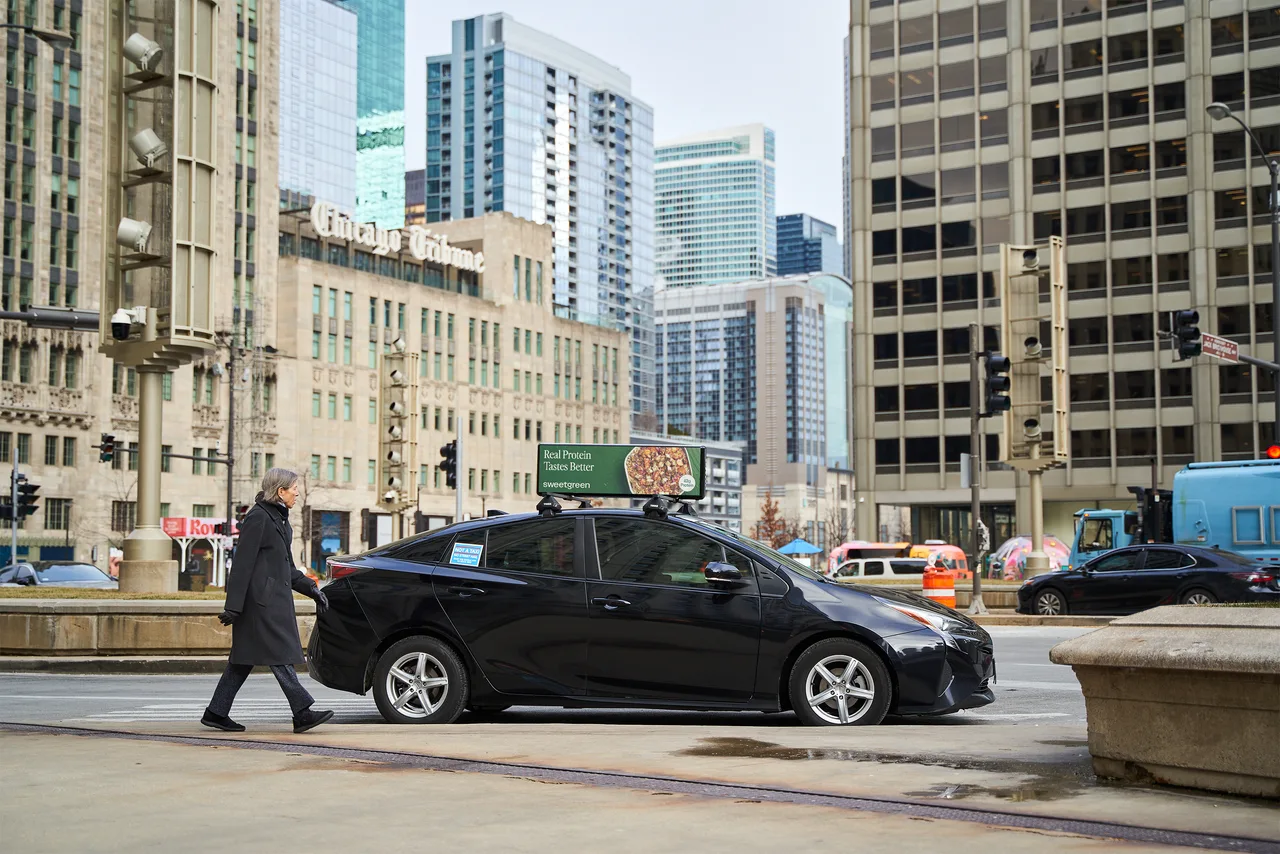
Chicago out-of-home is roadside bulletins and digital from Clear Channel Outdoor, OUTFRONT and Lamar; CTA buses and trains sold by Intersection under Ordinance 026-42; Metra sold by OUTFRONT; JCDecaux shelters; and screens on cars and trucks. AdQuick lists a static bulletin at $2,500 to $15,000 per four weeks, read September 14, 2026.
Chicago is the market where the rules push inventory away from the places advertisers want most. The zoning ordinance keeps new off-premise signs 500 feet from the expressways, Lake Shore Drive and Michigan Avenue between Oak Street and Roosevelt Road, and the transit authority's advertising policy was rewritten and re-passed in April 2026. This page is the Chicago row of the site's format and market matrix opened up: the 17 placements below are photographs from the 170 Chicago frames in the campaign archive, the owners table was read off each company's own Chicago page, and every figure carries the publisher and the date it was read. It is written for advertisers and media buyers, and it is not a rate card.
What has actually run in Chicago?
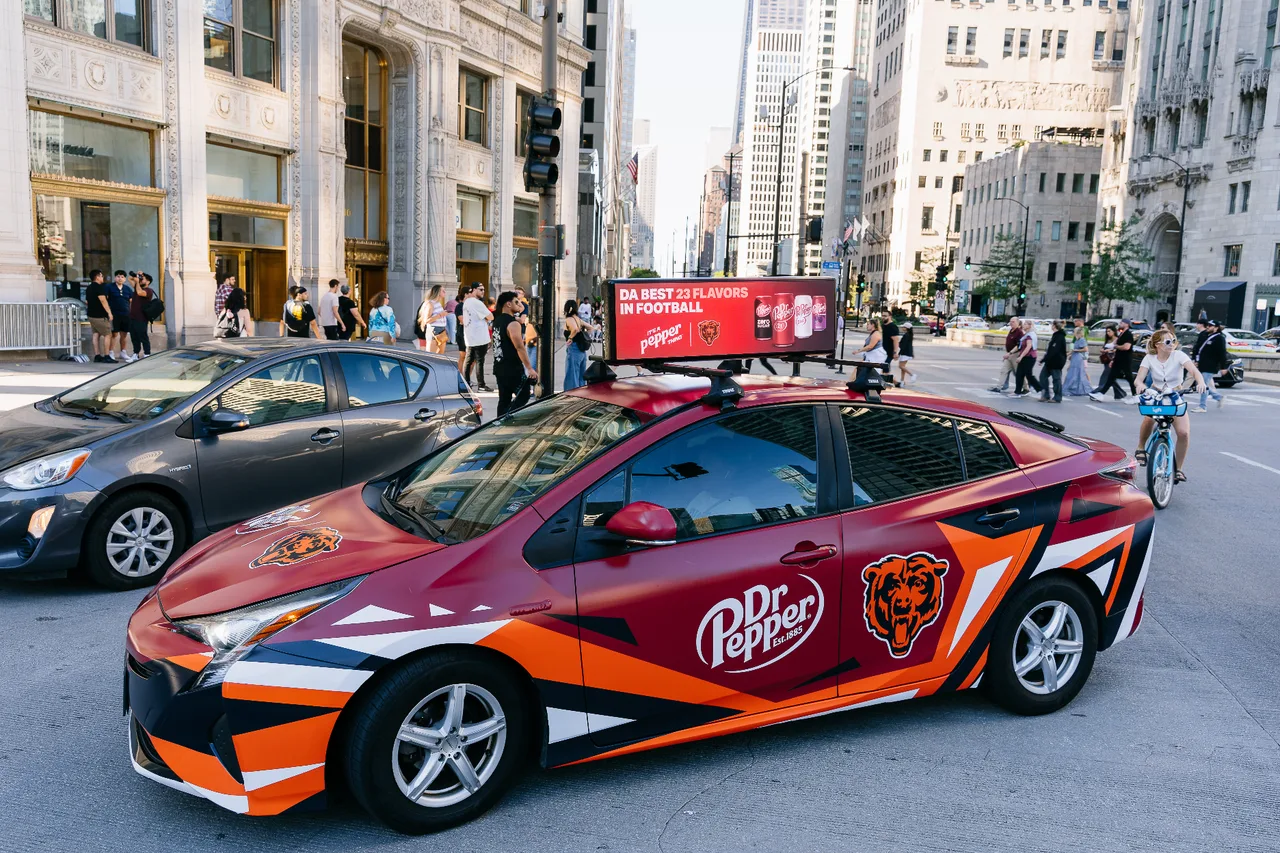
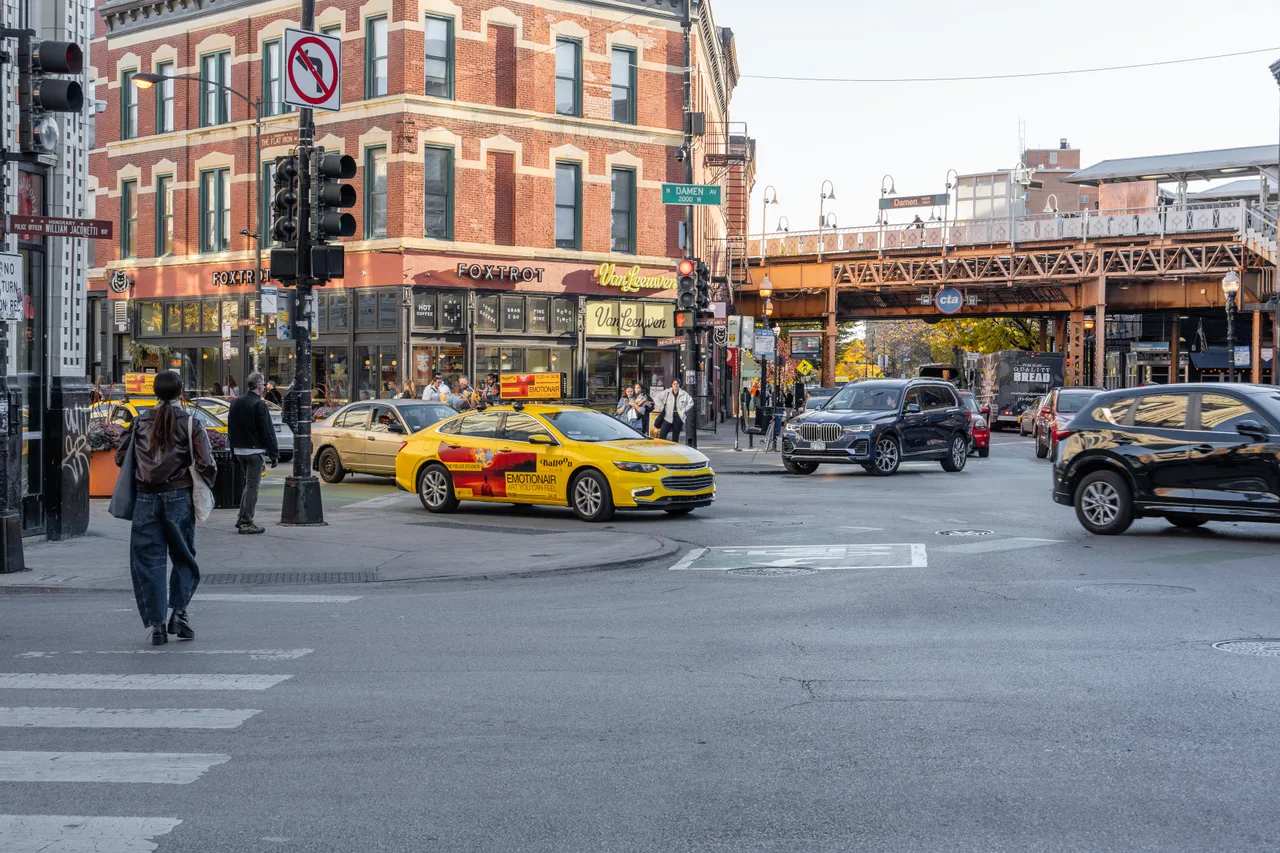
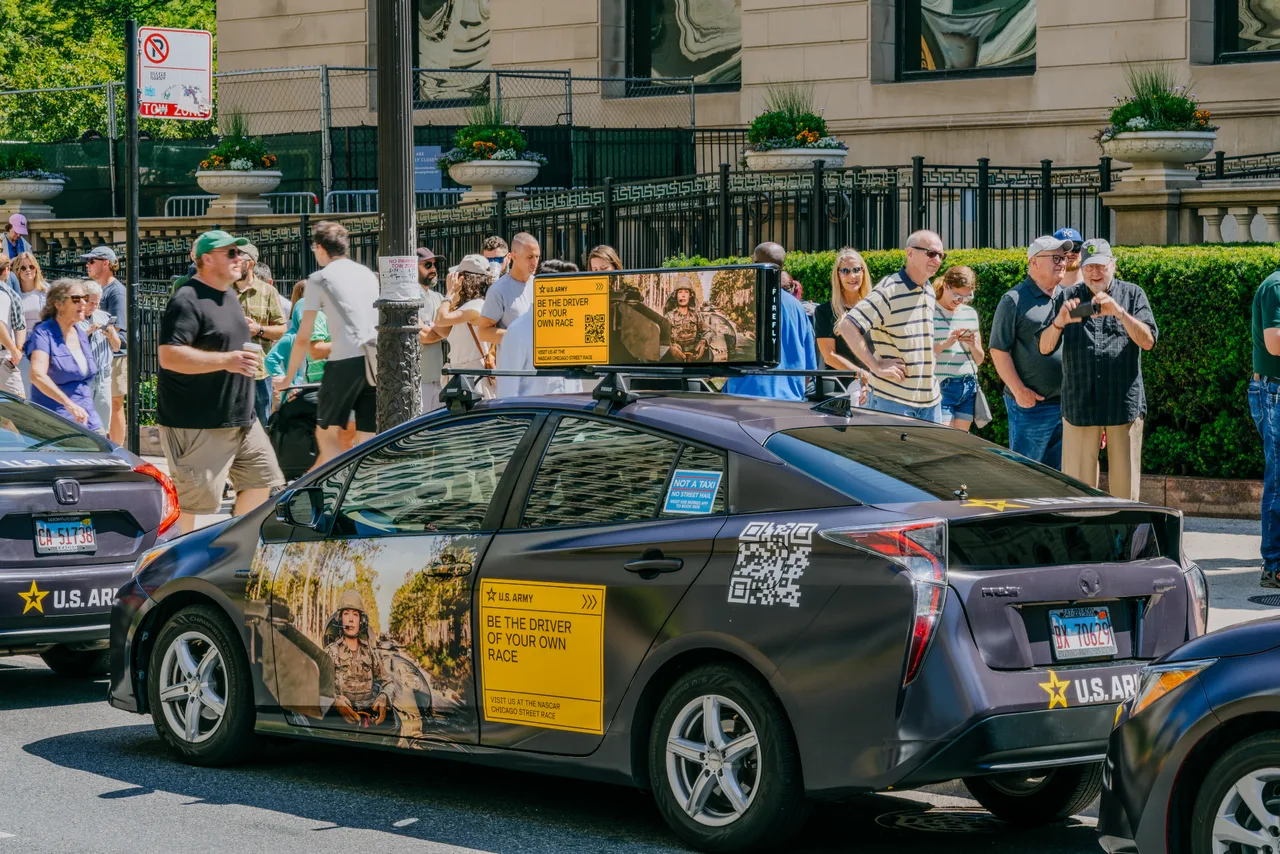
The archive holds 170 frames from Chicago covering 46 brands, photographed between 2022 and 2025. Three things stand out in it. The city's convention calendar shows up on the roofs: AbbVie and AstraZeneca's Lynparza at McCormick Place during ASCO, Siemens Healthineers' trucks during ADLM. The CTA is in the background of the street-level frames as often as the skyline is, which is the audience overlap a planner should notice. And Chicago is the only one of the four markets in this series with hologram frames in the archive, ten of them, one of which is below.
Digital screens on car roofs
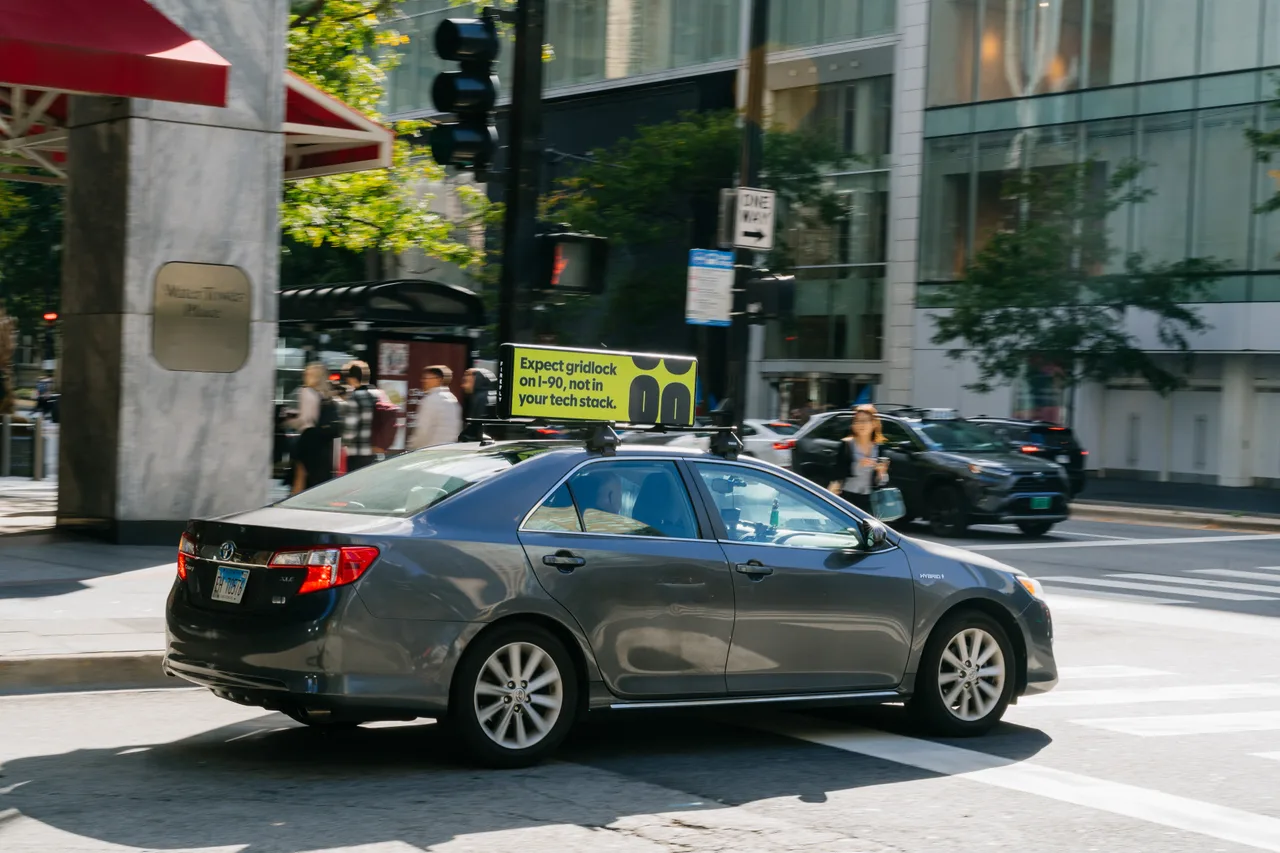
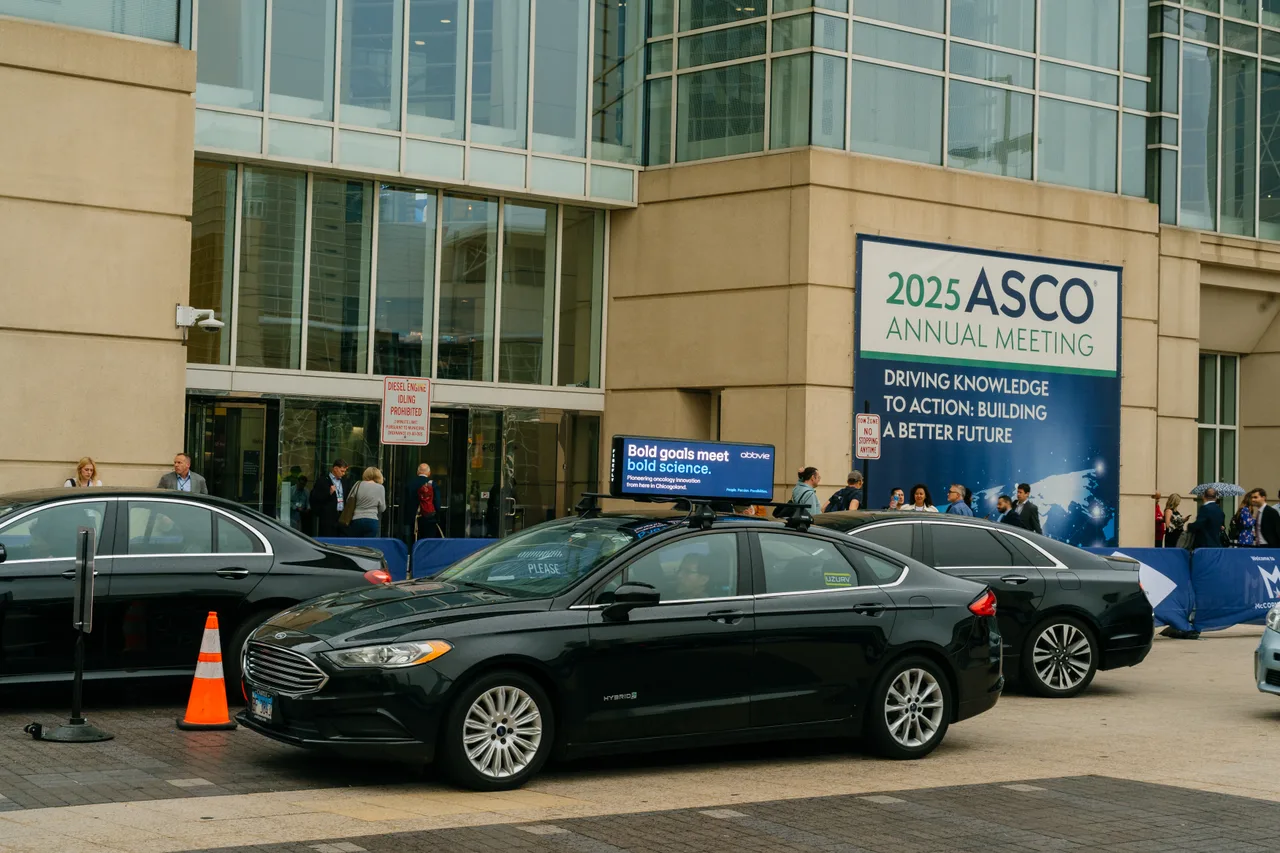
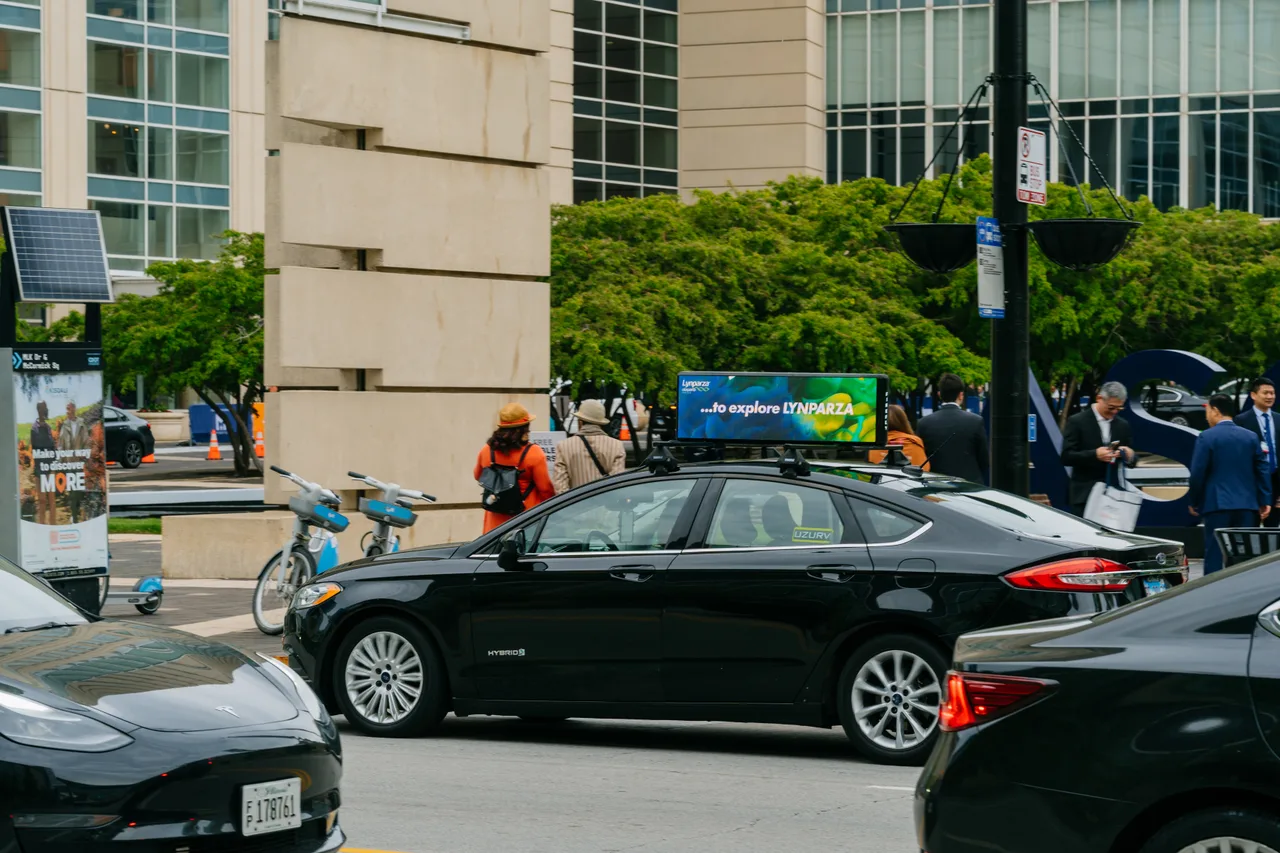
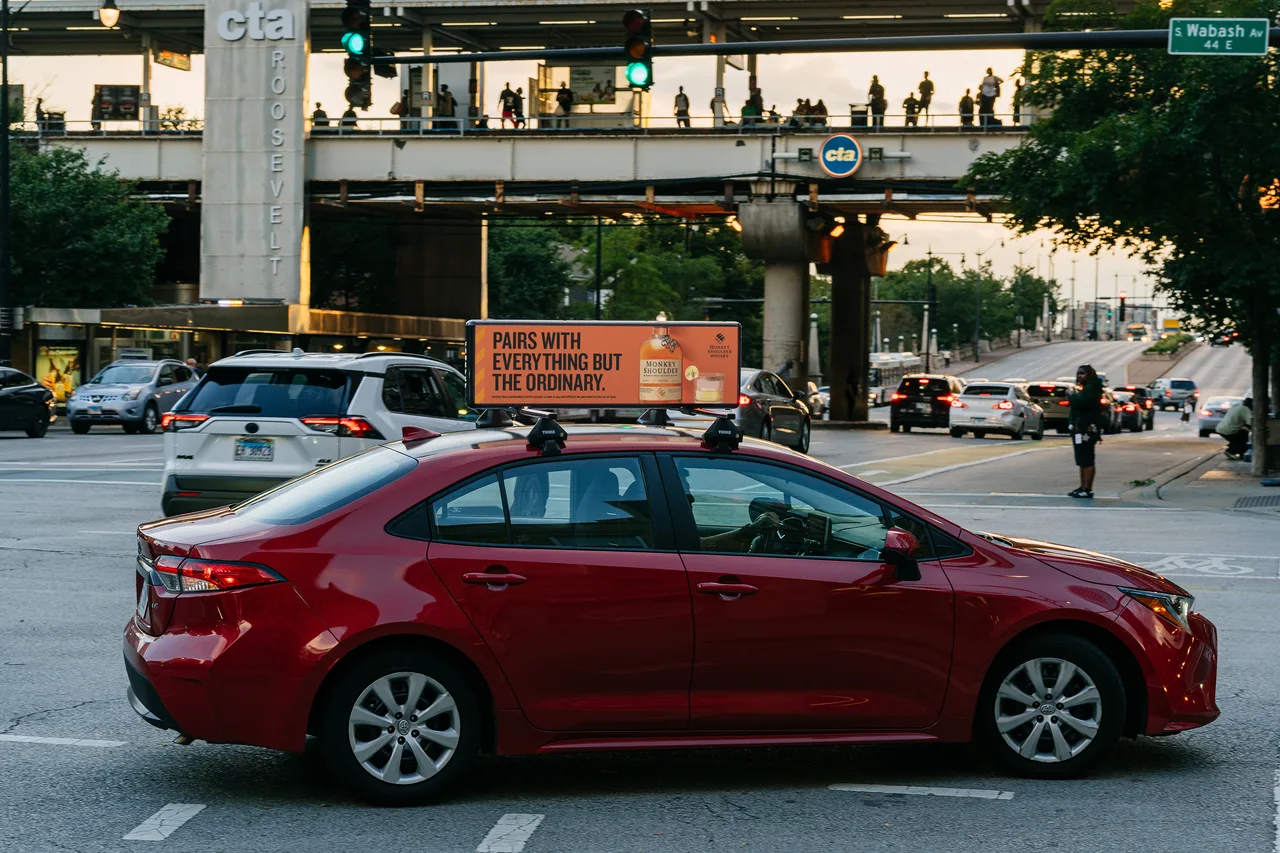
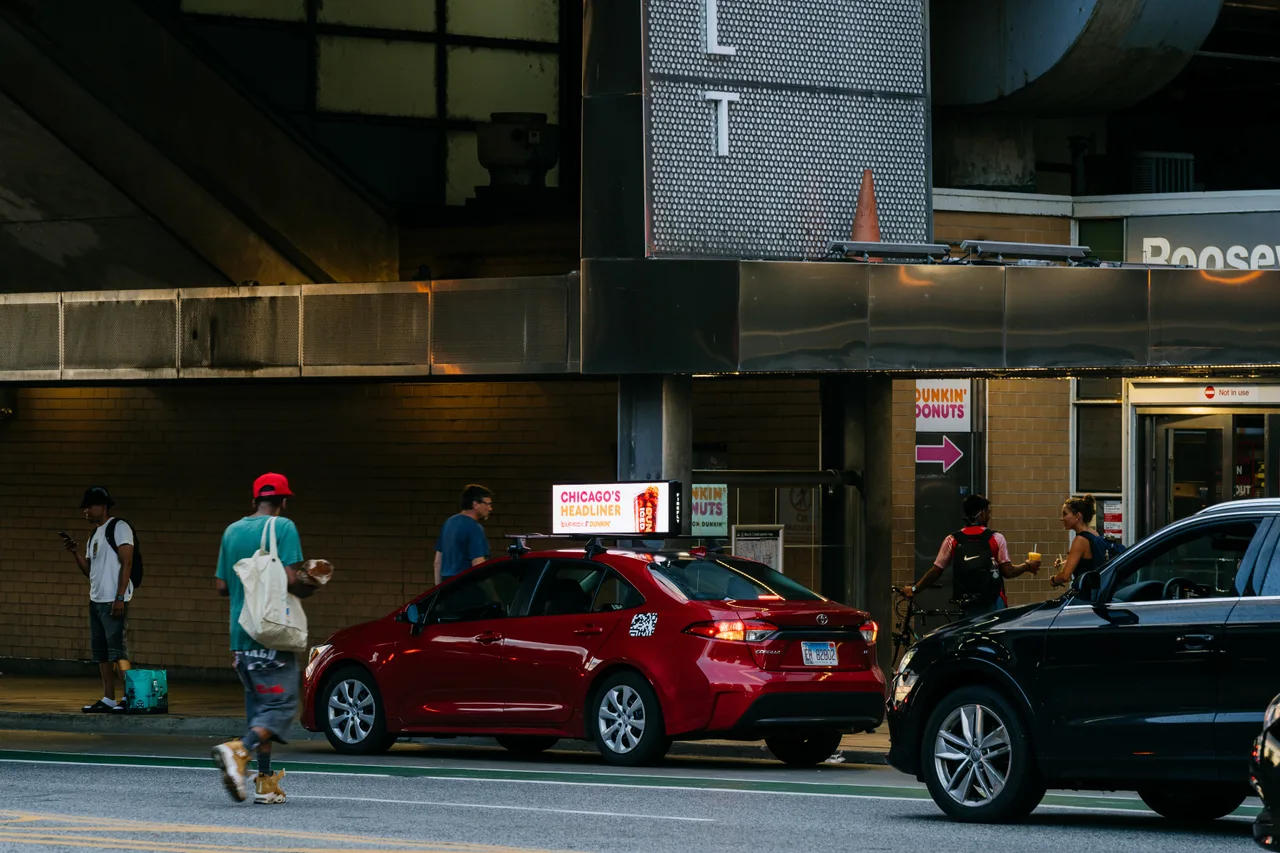
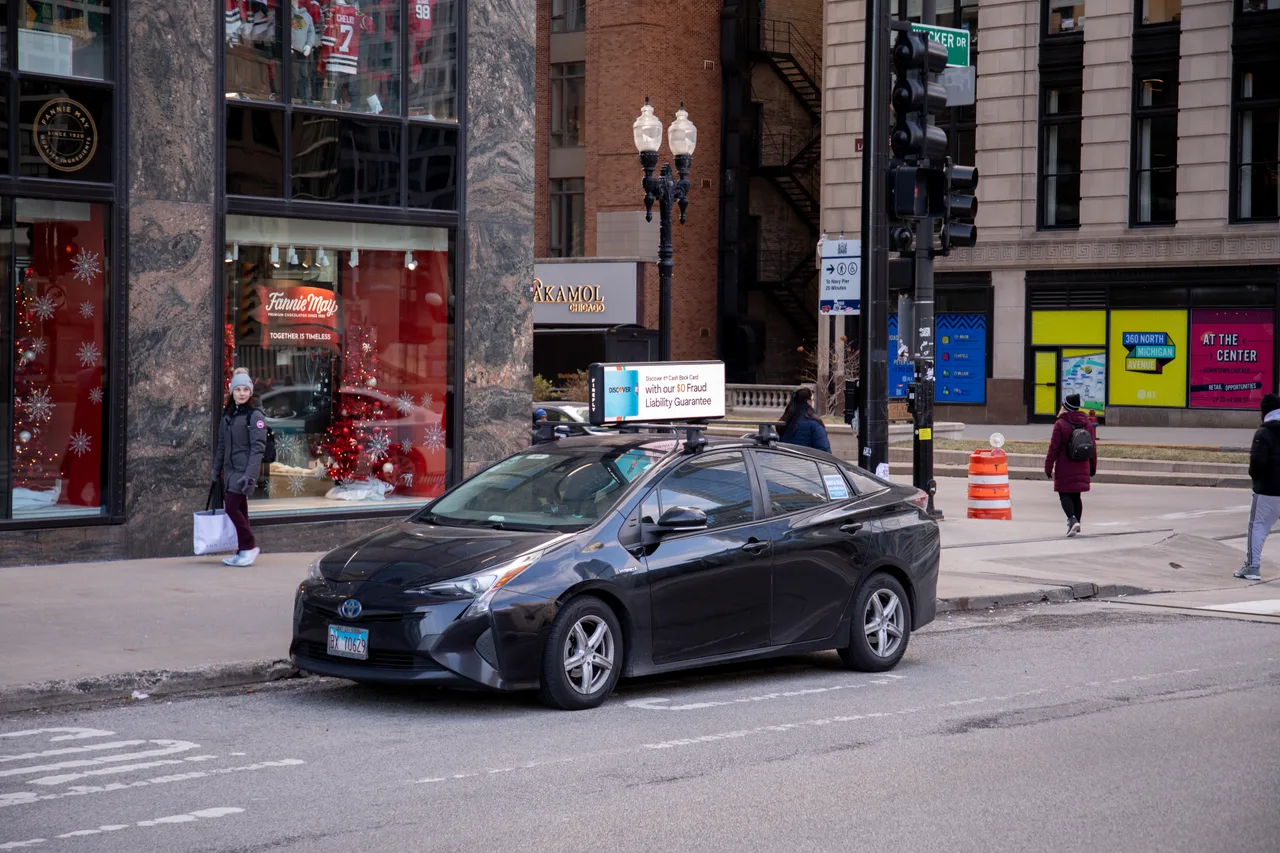
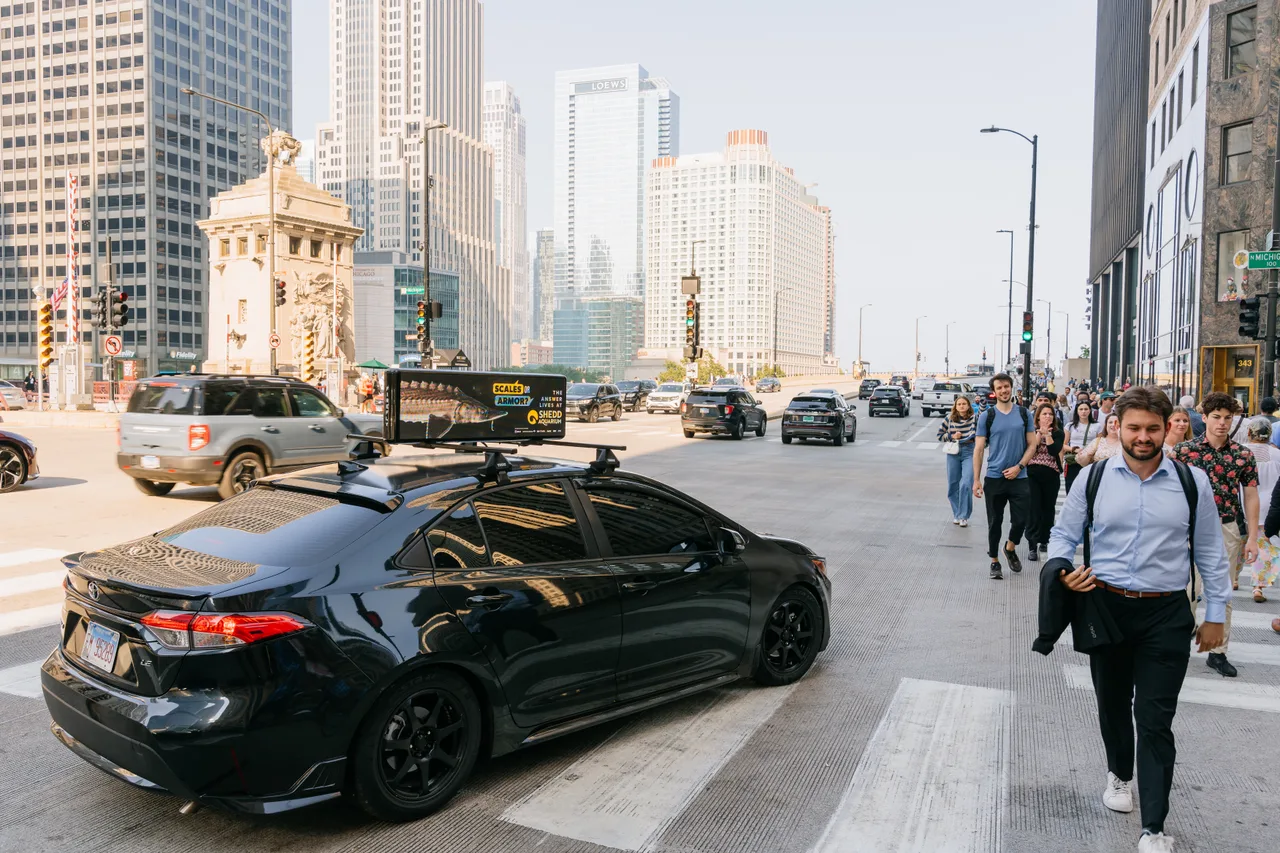
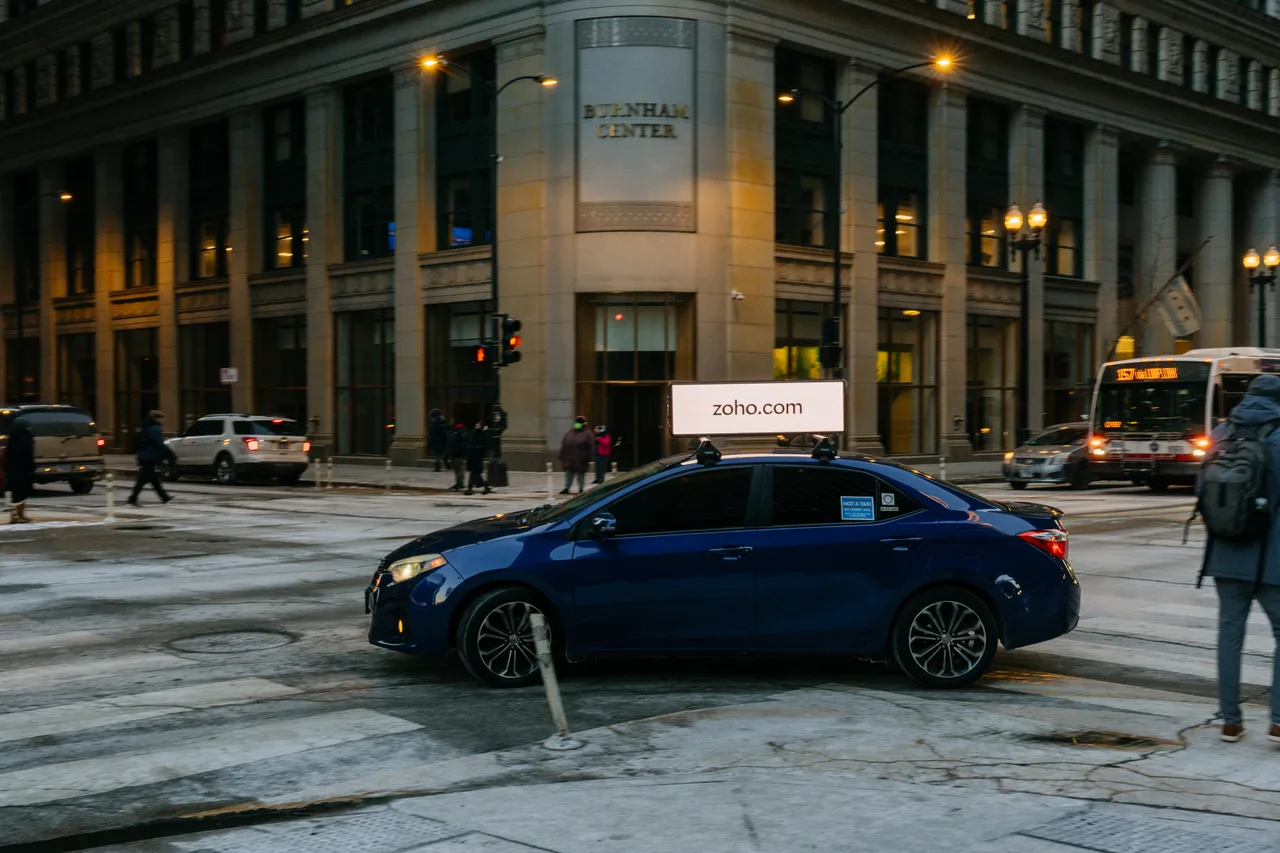
Wrapped cars, with and without a screen on top
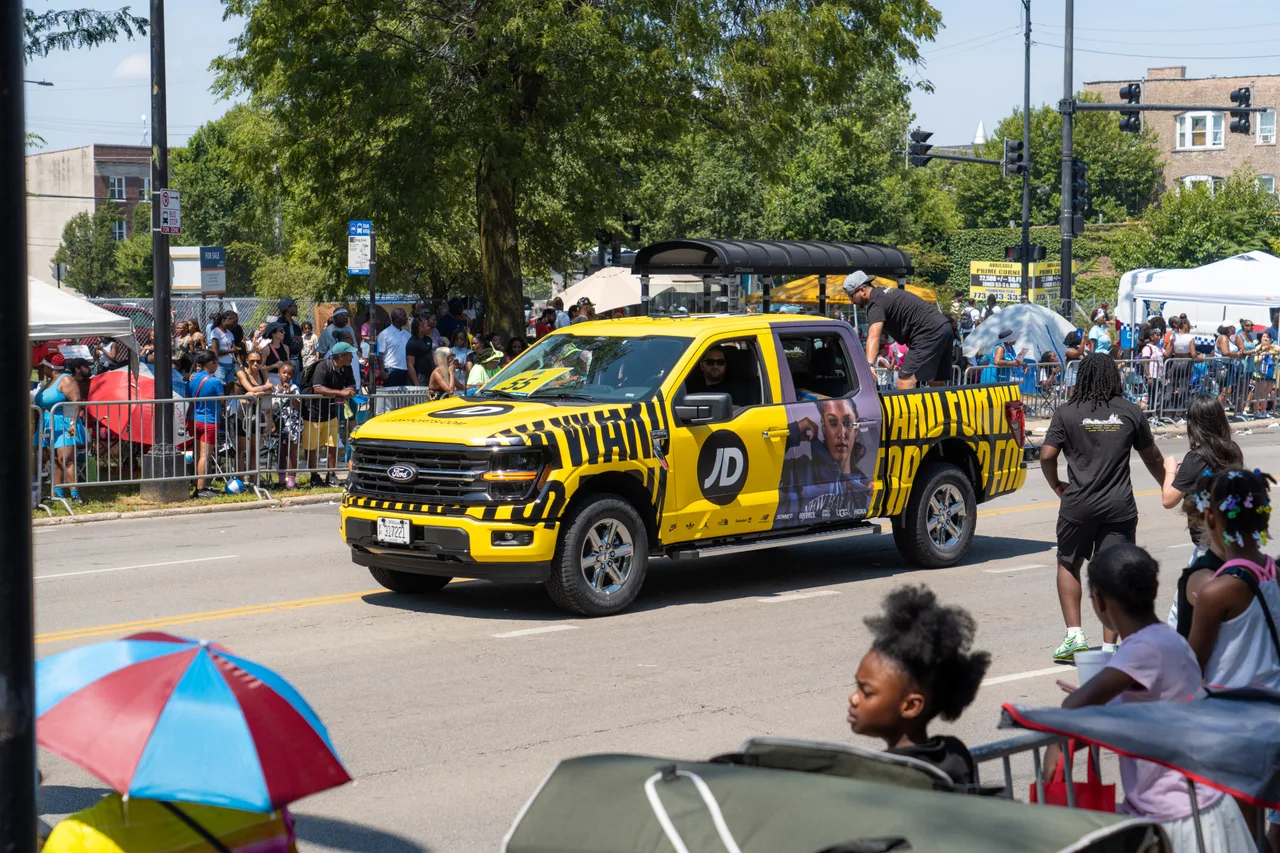
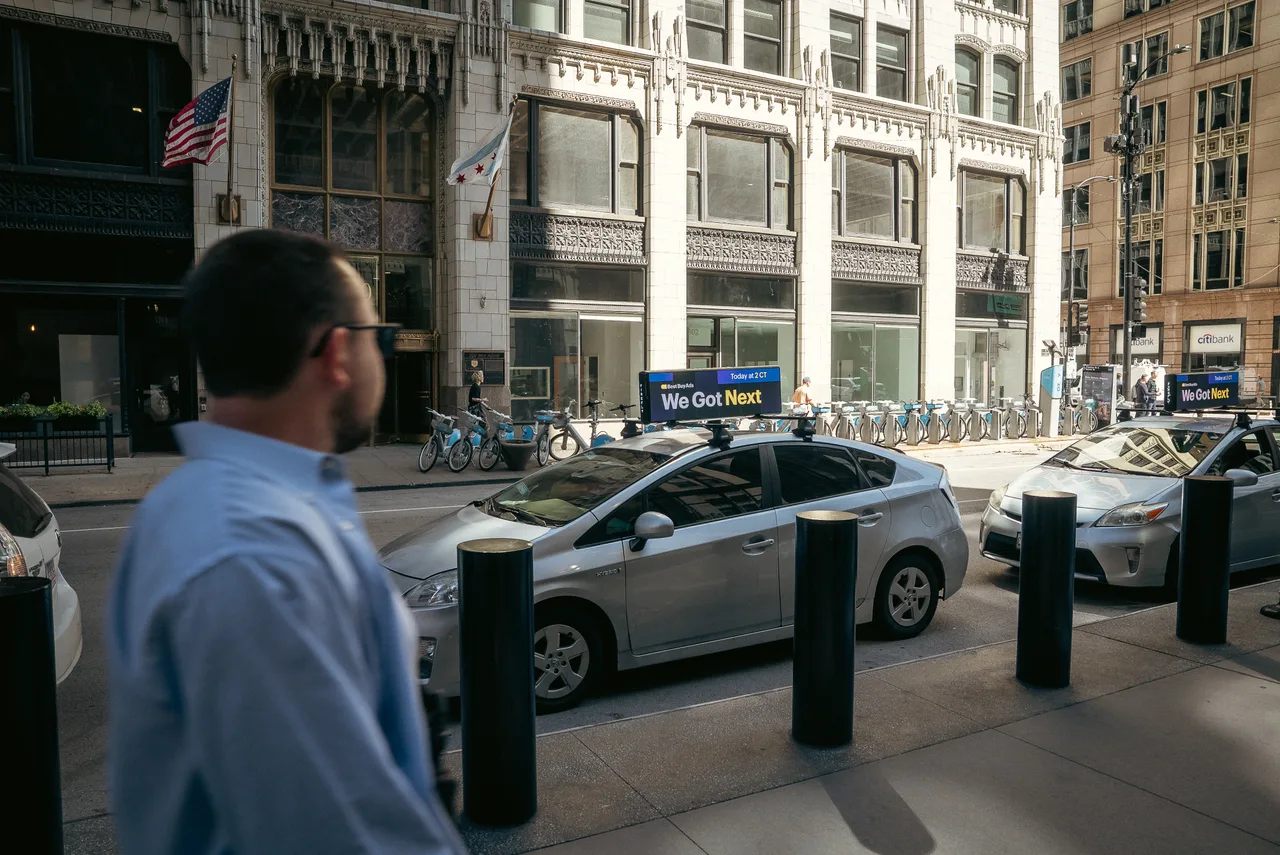
LED trucks and a hologram unit
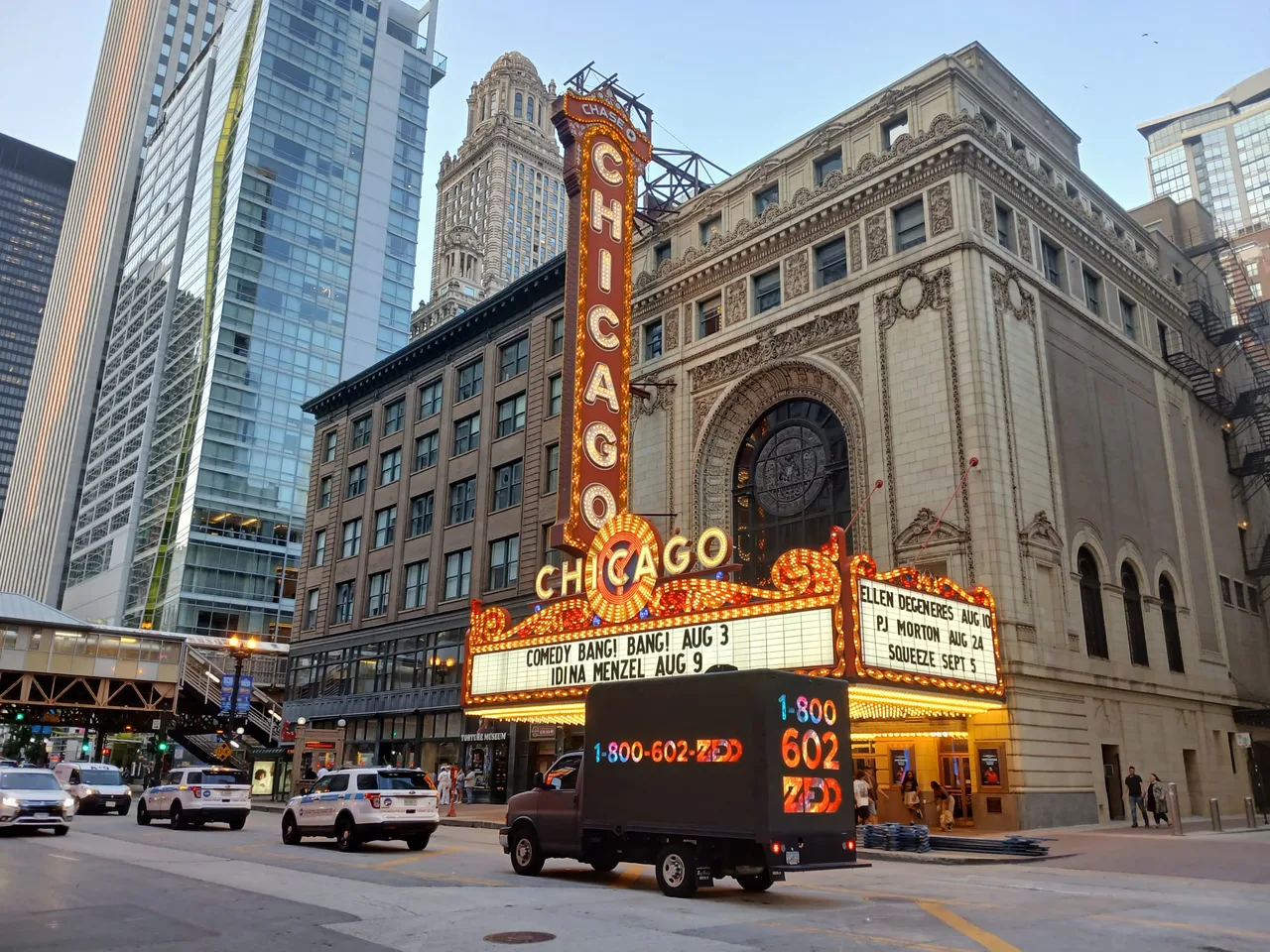
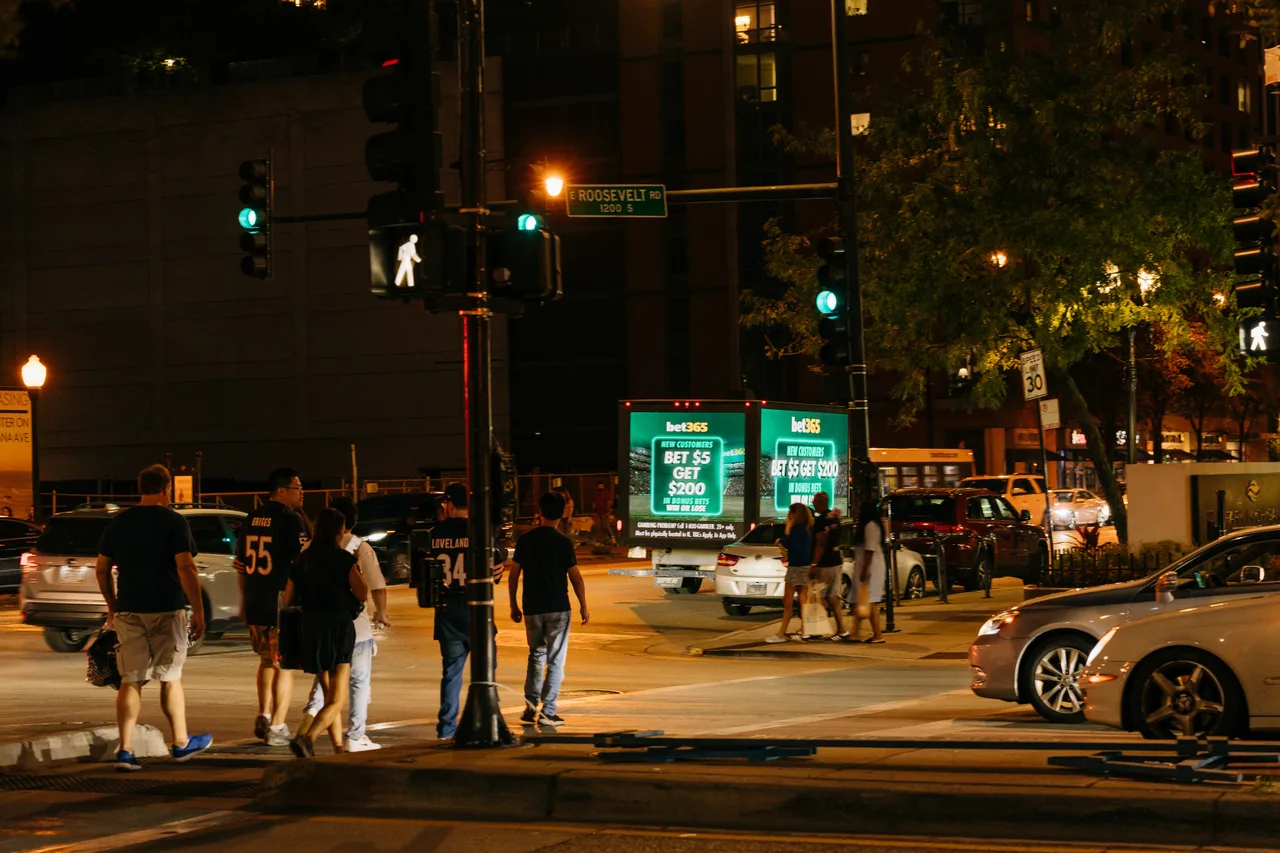
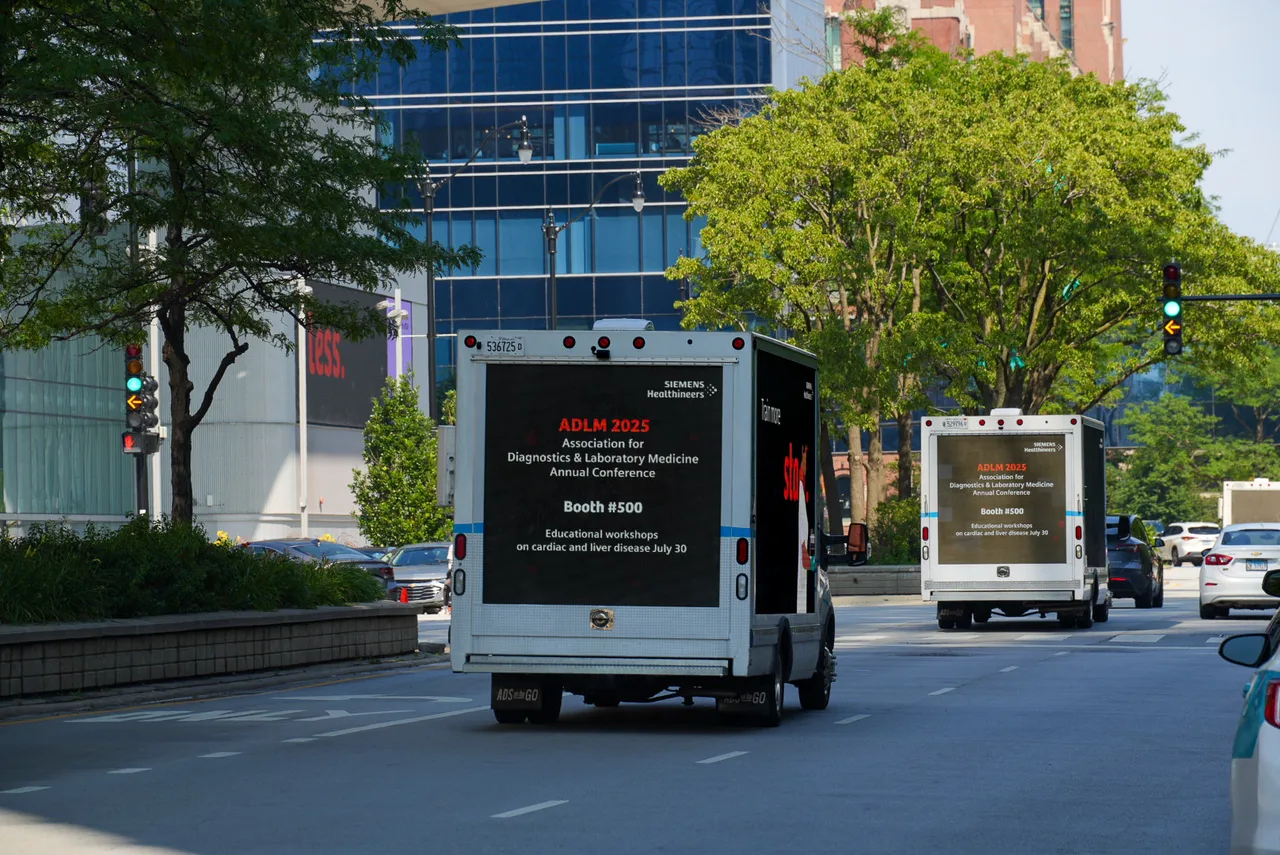
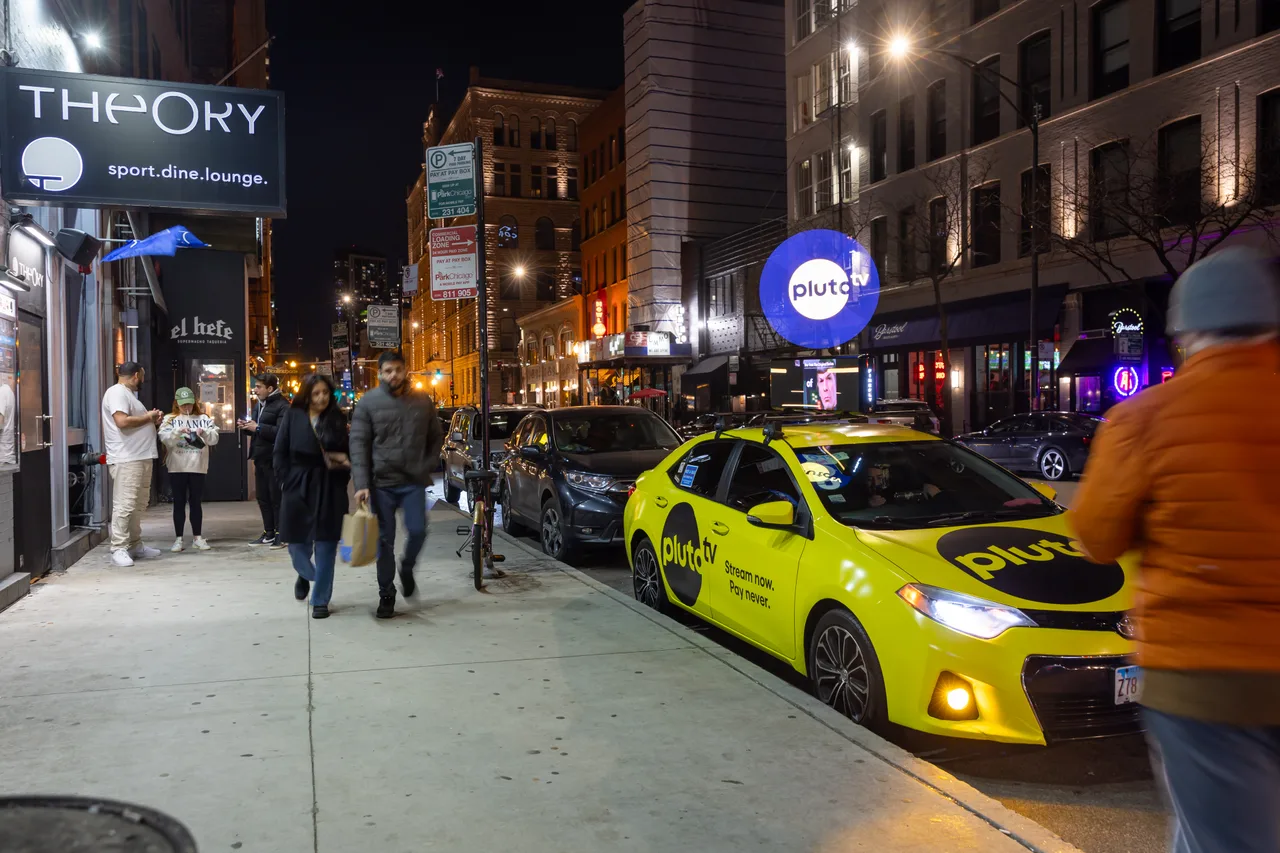
Among the frames rejected from this page after being opened: a truck the manifest files under "lollapalooza" is a Warner Bros. film truck outside Nordstrom on Michigan Avenue, so its brand field is wrong, and an in-car screen filed under Chicago shows a Las Vegas weather header on the tablet. The manifest is a starting point, not a caption.
Who sells outdoor advertising in Chicago?
Seven different sellers, and the split matters more than the names. The roadside plant is shared by three national companies. Transit is two concessions with two content policies, because the CTA and Metra are different authorities. The shelter the bus stops at belongs to a fourth contract. Every row below was read on the seller's own page or the authority's page on September 14, 2026; where a number appears, it is the seller's own claim, dated as the seller dates it.
| Inventory | Who sells it | What the seller's or authority's page says |
|---|---|---|
| Roadside bulletins, posters and digital | Clear Channel Outdoor | "Over 5,600 displays covering 13 counties" and "more than 70" digital displays, unit count as of June 30, 2022 on its own Chicago page. Also holds the advertising at O'Hare and Midway. |
| Roadside bulletins, posters, wallscapes, digital | OUTFRONT Media | Lists "static and digital billboards, Metra Transit media, posters, Mobile"; claims a digital network of "over 29 million impressions weekly" and "the only coverage on the O'Hare Airport expressway". |
| Billboards, wallscapes, digital | Lamar Advertising | Chicago office in Orland Park; page says its inventory "reaches commuters from Illinois, Wisconsin, and Indiana". Products listed: billboards, wallscapes, digital. |
| CTA buses and rail (vehicles and stations) | Intersection | Named on transitchicago.com. Bus: Queens, Kings, Ultra Super Kings, Full Wraps, Headliners, Headlights, Taillights, Fullbacks, interior cards, window clings. Rail: car cards, platform displays, brand trains, station dominations, wrapped trains. |
| Metra commuter rail trains and stations | OUTFRONT Media | "All train and station advertising for Metra is managed by OUTFRONT Media" (metra.com), including MetraMarket at Ogilvie and train wraps. |
| Bus shelters | JCDecaux | Chicago bus shelter page lists digital screens with full motion and backlit posters; coverage named from the Loop and West Loop to Wicker Park and McCormick Place. Not part of the CTA concession. |
| Moving formats on cars and trucks | Firefly (digital and static tops on taxis and rideshare vehicles, 360, 270 and 180 wraps, LED trucks; its site names Chicago among the cities where it runs digital tops; documented above), Blue Line Media (taxi tops, digital rideshare tops, Taxi TV; Chicago page), Intersection (CTA bus exteriors), OUTFRONT (Metra train wraps) | None of the four publishes an operator rate card for Chicago; Blue Line publishes reseller ranges, listed below. |
The Metra line is the one national planners miss. OUTFRONT's Chicago page lists "Metra Transit media" among its formats and calls the commuter rail "the nation's fourth largest/busiest system"; Clear Channel Outdoor's page separately claims the "500 W. Madison" and "2N Riverside" positions beside Ogilvie Transportation Center. Two companies are selling the same commuters at the same station from different assets, one from the platform and one from the building across the street. Neither is the CTA. The general pattern, who holds each concession in each city and why bus and shelter are usually two contracts, is on bus advertising and subway advertising.
What do Chicago's rules allow?
Three documents decide most of it, and all three were read in full for this page. The CTA policy is the most detailed content standard of any authority in this series: it counts alcohol wraps. The zoning ordinance is about geography. The municipal code is about who signs off.
| What is decided | The rule as published | Source |
|---|---|---|
| CTA vehicles and stations | Non-public forum (Exhibit A, I.A.4). Prohibited (II.B): political, public issue, religion, tobacco, firearms, adult, false or misleading, disparaging. Alcohol (II.A.4): no more than 75 exterior bus wraps and 30 exterior rail car pairs at any one time, no more than 9.99% of total advertising space, a warning covering at least 3% of the ad, and no alcohol at stations or garages where reduced-fare student ridership exceeds 7.5%. | Chicago Transit Board, Ordinance 026-42, passed April 8, 2026 |
| Where an off-premise sign may stand | Prohibited within 500 feet of Lake Shore Drive, any designated expressway or toll road, and Michigan Avenue between Oak Street and Roosevelt Road (17-12-1006-F); anywhere in the Lake Michigan and Chicago Lakefront Protection District (17-12-1006-E); within 100 feet of a residential district, 250 feet if the face exceeds 100 square feet (17-12-1006-A); within 100 feet of the named waterways (17-12-1006-C). | Chicago Zoning Ordinance, Title 17, Sec. 17-12-1006 |
| Who approves a large sign | A City Council order is required, in addition to the permit, for any sign over 100 square feet or over 24 feet high. If the Council does not act within 60 days of the order being submitted to the City Clerk, the order is deemed issued. Changing an approved static sign to a dynamic image display needs a new order. | Municipal Code of Chicago, Sec. 13-20-680 |
Read the alcohol clause against the owners table. An alcohol brand can buy a Clear Channel bulletin on the Kennedy without a count, but on the CTA it competes for one of 75 exterior bus wraps and 30 rail car pairs at any one time, and it cannot post at all at a station where reduced-fare student ridership exceeds 7.5%. The ordinance also states the CTA's own scale, "over 950,000 rides on an average weekday on eight rail lines and 127 bus routes", which is a ridership figure and not an audience figure; the difference is the subject of how out-of-home impressions are measured.
On vehicles: we read Municipal Code 9-80-080, which restricts parking a vehicle on a roadway to display it for sale or to sell merchandise, and found no Chicago section specific to advertising vehicles in the chapters we read. That is a statement about what we read, not a clearance. The national table of which regulator governs each moving format is on transit advertising.
What do third parties publish on Chicago rates?
The ranges below are market-level figures compiled from publicly published vendor and industry sources. They are not quotes, and they are not the rates of any single network, including the operator whose campaigns the archive on this site documents, which prices per campaign and does not publish a rate card. Always get a written quote before budgeting.
| Publisher | Retrieved | Published figures |
|---|---|---|
| AdQuick, billboard cost page (city table) | Read September 14, 2026 | Chicago static bulletin $2,500 to $15,000 per four weeks, published as a planning range with no method. |
| AdQuick, Chicago billboard advertising page | Read September 14, 2026 | Per month: expressway static bulletin $4,500 to $18,000; Kennedy or Dan Ryan premium units $12,000 to $30,000 or more; expressway digital $6,500 to $25,000; CTA bus king $1,200 to $2,800; "L" interior card $400 to $1,200; Metra station media $1,500 to $6,500; downtown bus shelter $1,500 to $3,500; O'Hare unit $8,000 to $80,000 or more; mobile billboard $5,000 to $25,000 per flight. Production $500 to $2,500 per static unit. |
| Blue Line Media, Chicago billboard page | Read September 14, 2026 | Static poster $1,500 to $3,000; static bulletin $4,500 to $7,500; digital bulletin $4,000 to $7,500; wallscape $10,000 to $25,000, all per four weeks. $5,000 minimum spend per market. |
| business.com, "What does a billboard cost" | Published October 15, 2025; read September 14, 2026 | Chicago named in the "major metro" tier: static $5,000 to $25,000, premium and spectaculars $50,000 or more; digital $5,000 to $20,000 per month on a shared rotation. |
The publishers disagree with each other and, in one case, with themselves. AdQuick's city table gives a Chicago static bulletin a $2,500 floor; its Chicago page gives an expressway bulletin a $4,500 floor and a premium unit a $30,000 ceiling, twice the ceiling on its own table. Blue Line Media's bulletin ceiling is $7,500, less than half of AdQuick's. business.com's tier puts Chicago in the same band as New York and Los Angeles. None of the four states a sample or a method. Treat them as four published opinions about the same market, and note that the two with the highest ceilings are the two that name the Kennedy and Dan Ryan, the corridors the zoning ordinance keeps new signs out of.
How is delivery counted in Chicago?
Fixed inventory is rated by Geopath, whose impression is "the total number of times people passing an OOH display are likely to notice the ad", built from circulation and a visibility adjustment. Clear Channel Outdoor cites "Geopath OOH Ratings" beneath its Chicago claims; OUTFRONT cites "GEOPATH, 2022" for its reach figure. A screen on a car or a truck is not a rated unit in that system: it moves, so delivery depends on the route, the dwell time and the hour, and the arithmetic changes. Both methods, and what each can and cannot show, are on how out-of-home impressions are measured.
This is Chicago's row of the format and market matrix, derived from the archive:
| Ad surface | Digital screen | Vehicle wrap | Static print | Hologram | Spectacular |
|---|---|---|---|---|---|
| Chicago | 113 | 55 | · | 10 | · |
| Carrier | LED truck | Food truck | In-car screen | Pedicab | Hologram truck | Glass truck | Golf cart screen |
|---|---|---|---|---|---|---|---|
| Chicago | 30 | 12 | 4 | · | · | · | · |
Reflects campaigns documented in this archive; absence is not evidence of unavailability. Counts are photographs, not campaigns or units, and a frame tagged with two surfaces is counted under each. The twelve food-truck frames are one sampling campaign and were not used above because the truck itself is not legible in them.
The whole matrix, all markets and all formats, is on the campaign archive. The category argument, why a screen that follows an audience behaves differently from one that waits for it, is on the guide to out-of-home advertising. A market is published on this site only when it clears four checks: at least twelve documented frames photographed in it, the transit authority's own advertising standards read live, at least two named third-party rate sources read live, and a real row in the matrix above. Chicago clears all four.
Frequently asked questions
- How much does it cost to advertise on a billboard in Chicago?
- No Chicago plant publishes a rate card; Clear Channel Outdoor, OUTFRONT and Lamar all route to a sales contact. The published third-party ranges for a static bulletin are $2,500 to $15,000 per four weeks on AdQuick's city table, $4,500 to $18,000 per month on AdQuick's Chicago page for an expressway unit, $4,500 to $7,500 on Blue Line Media's Chicago page, and $5,000 to $25,000 in business.com's major-metro tier. All were read on September 14, 2026 and none states a method. Print and installation are extra, typically $500 to $2,500 per unit by AdQuick's figure.
- Who sells billboard advertising in Chicago?
- Three national plants publish Chicago pages: Clear Channel Outdoor (over 5,600 displays across 13 counties by its own June 2022 count, plus O'Hare and Midway), OUTFRONT Media (bulletins, posters, wallscapes, digital and Metra) and Lamar Advertising (billboards, wallscapes and digital from an Orland Park office). This site does not rank them. The map of who sells what across the whole category is on the outdoor advertising companies page.
- How do I advertise on the CTA?
- Through Intersection, the concessionaire named on transitchicago.com, not through the CTA itself. Bus units run from Queens and Kings to full wraps and Fullbacks; rail units run from car cards to wrapped trains and station dominations. Creative must clear Ordinance 026-42, passed April 8, 2026, which designates the space a non-public forum, bars political and issue advertising, tobacco and firearms, and caps alcohol at 75 exterior bus wraps and 9.99% of total space at any one time.
- Is Metra advertising sold by the same company as the CTA?
- No. Metra's own page says all train and station advertising is managed by OUTFRONT Media, including MetraMarket at Ogilvie Transportation Center and train wraps. The CTA is sold by Intersection. A plan that wants both the "L" and the commuter rail is two contracts with two content policies.
- Where can new billboards go in Chicago?
- Not near the places advertisers most want. The zoning ordinance keeps off-premise signs 500 feet from Lake Shore Drive, every designated expressway or toll road, and Michigan Avenue between Oak Street and Roosevelt Road, and out of the Lakefront Protection District entirely (Sec. 17-12-1006). Any sign over 100 square feet or 24 feet high also needs a City Council order under Municipal Code Sec. 13-20-680. That is why the corridors with the most traffic have the least new inventory, and why prices for existing faces there sit at the top of every published range.
- Can I rent a digital billboard in Chicago for a day?
- Programmatic and self-serve digital can be bought in short flights, but AdQuick's own Chicago page calls the "from $10 a day" promotions that appear on aggregator sites misleading for this market, saying they apply only to the lowest-priced posters far from the core. Its published range for expressway digital is $6,500 to $25,000 per four weeks. How a screen's audience is counted per spot rather than per unit is explained on the digital billboard advertising page.
- Is there a map of Chicago billboard locations?
- Each plant publishes its own. OUTFRONT's Media Finder searches "by address or unit number" across its Chicago inventory; Lamar's Chicago page opens a "Browse Inventory" tool; Clear Channel Outdoor publishes a coverage map on its Chicago page and offers planning through its RADARView tool. AdQuick and Blue Line Media both run marketplace maps that mix several owners. No single map shows every face in the city, and none of them shows transit or the screens on cars and trucks documented above.
Sources
- Advertising on the CTA: Intersection Media, bus and rail formats, link to Ordinance 026-42 · Chicago Transit Authority, Accessed September 14, 2026
- Ordinance 026-42, Exhibit A: Guidelines Governing All Advertising in or upon CTA Facilities and Vehicles (non-public forum I.A.4; alcohol limits II.A.4; prohibited content II.B) · Chicago Transit Board, Passed April 8, 2026; accessed September 14, 2026
- Advertising and Partnering with Metra: all train and station advertising managed by OUTFRONT Media · Metra, Accessed September 14, 2026
- Chicago Bus Shelter Advertising: digital screens and backlit posters, neighbourhood coverage · JCDecaux North America, Published April 15, 2025; accessed September 14, 2026
- Chicago market page: over 5,600 displays across 13 counties, more than 70 digital displays, O'Hare and Midway (unit count as of June 30, 2022) · Clear Channel Outdoor, Accessed September 14, 2026
- Chicago billboards and OOH advertising: formats, digital network impressions, Metra media · OUTFRONT Media, Accessed September 14, 2026
- Outdoor advertising in Chicago: billboards, wallscapes, digital; Orland Park office · Lamar Advertising, Accessed September 14, 2026
- Chicago Zoning Ordinance Sec. 17-12-1000, including 17-12-1006 Additional Standards for Off-premise Signs · City of Chicago, via American Legal Publishing, Accessed September 14, 2026
- Municipal Code of Chicago Sec. 13-20-680, Council approval for signs over 100 square feet or 24 feet · City of Chicago, via American Legal Publishing, Accessed September 14, 2026
- Billboard advertising costs: city table and format ranges · AdQuick, Accessed September 14, 2026
- Billboard advertising in Chicago, IL: format ranges, transit and airport ranges, production · AdQuick, Accessed September 14, 2026
- Billboard advertising in Chicago, IL: rate table and minimum spend · Blue Line Media, Accessed September 14, 2026
- Taxi advertising in Chicago, IL: taxi tops, digital rideshare tops, Taxi TV · Blue Line Media, Accessed September 14, 2026
- What does a billboard cost? Market-tier table · business.com, Published October 15, 2025; accessed September 14, 2026
- Glossary: impressions, circulation, visibility adjustment index · Geopath, Accessed September 14, 2026
- On-Car Products: digital tops, static tops, car wraps (360°, 270°, 180°) · Firefly, Accessed September 14, 2026
About the author
Melih Koray is a marketing and SEO practitioner who documents out-of-home media, with a particular interest in inventory that moves. On this site he writes the vendor and ranking pages, where the question is who owns what and what each seller publishes, and he edits every page, tracing each statistic to a named and dated source.
Melih Koray on LinkedIn · How this site is edited and what it refuses to publish: about this site.