Outdoor advertising in Miami: what runs, who sells it, what the county allows, and what third parties publish on cost
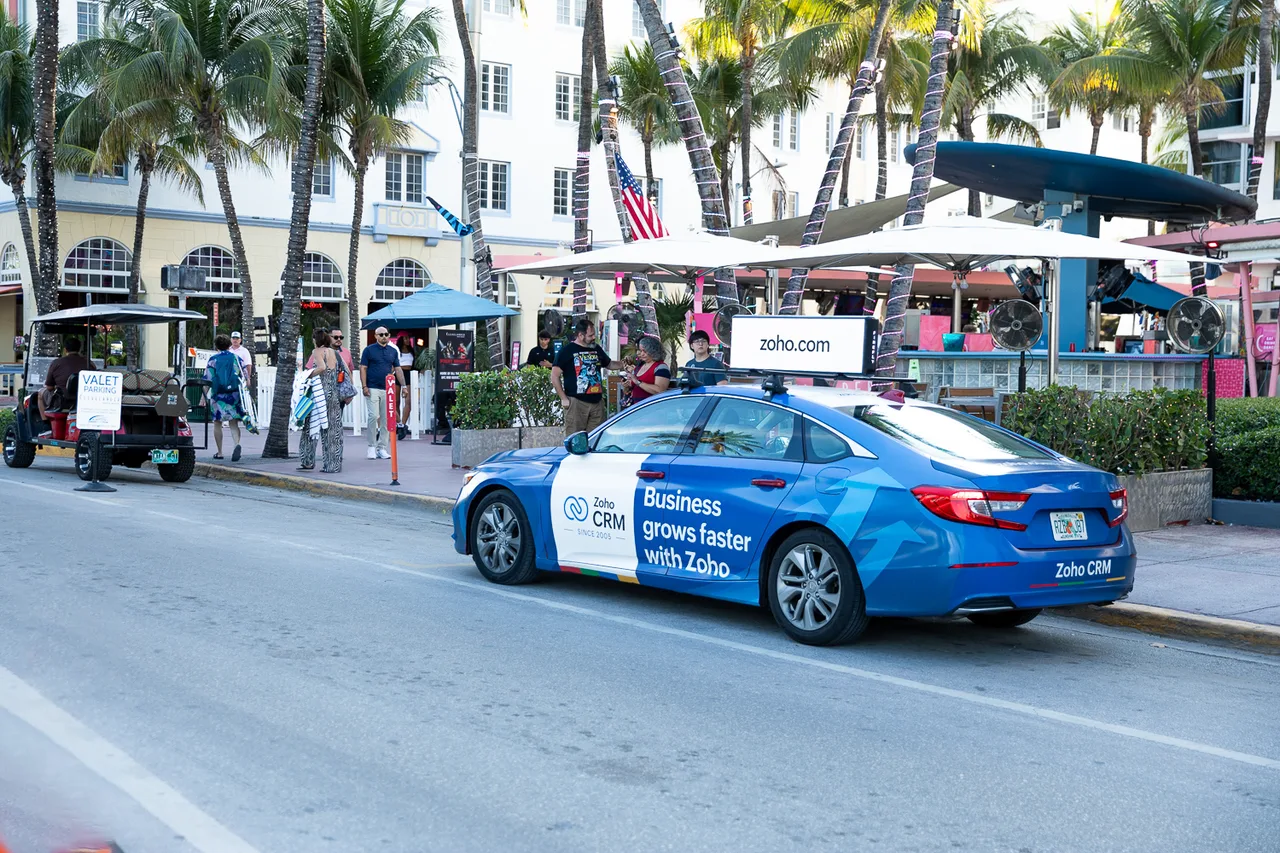
Miami out-of-home inventory is roadside billboards from Clear Channel Outdoor, OUTFRONT Media and Lamar, Miami-Dade's Metrobus, Metrorail, Metromover and bus shelters sold by Outfront Media under a county contract, JCDecaux's 252 digital screens at MIA, and moving formats from car tops to LED trucks. This archive holds 131 photographed Miami campaigns.
Miami is a market where one company sells the bus, the train, the people-mover and the shelter, and three others divide the roadside. It is also a market whose transit authority is a county department rather than a stand-alone agency, which changes where the rules are written. This page is the Miami row of the archive behind this site: 131 photographed frames from 34 brands, grouped by format and checked one by one, then the owner of each inventory type on the owner's own page or the county's, the rules the county publishes, and every third-party rate range for Miami with its retrieval date. The category is explained on out-of-home advertising; this page is only about Miami.
What has actually run in Miami?
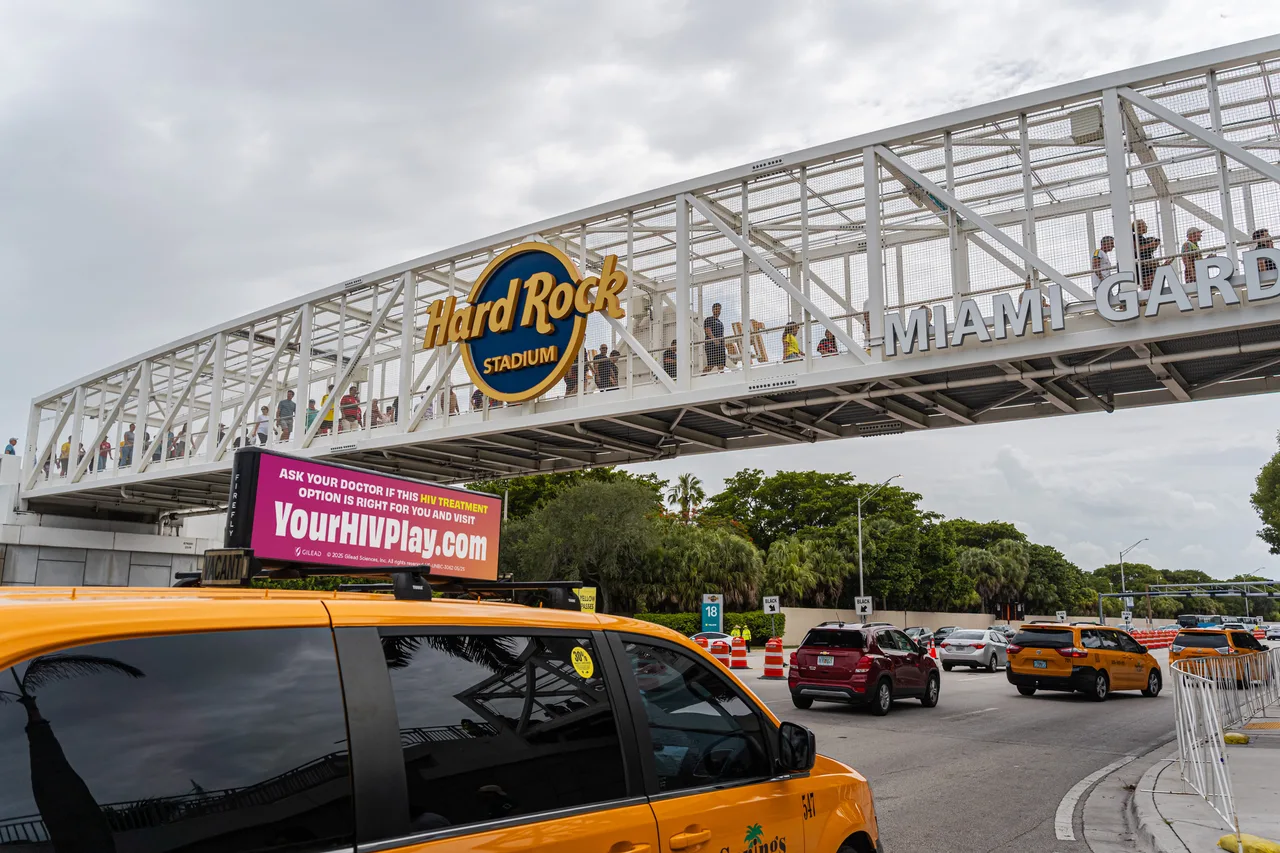
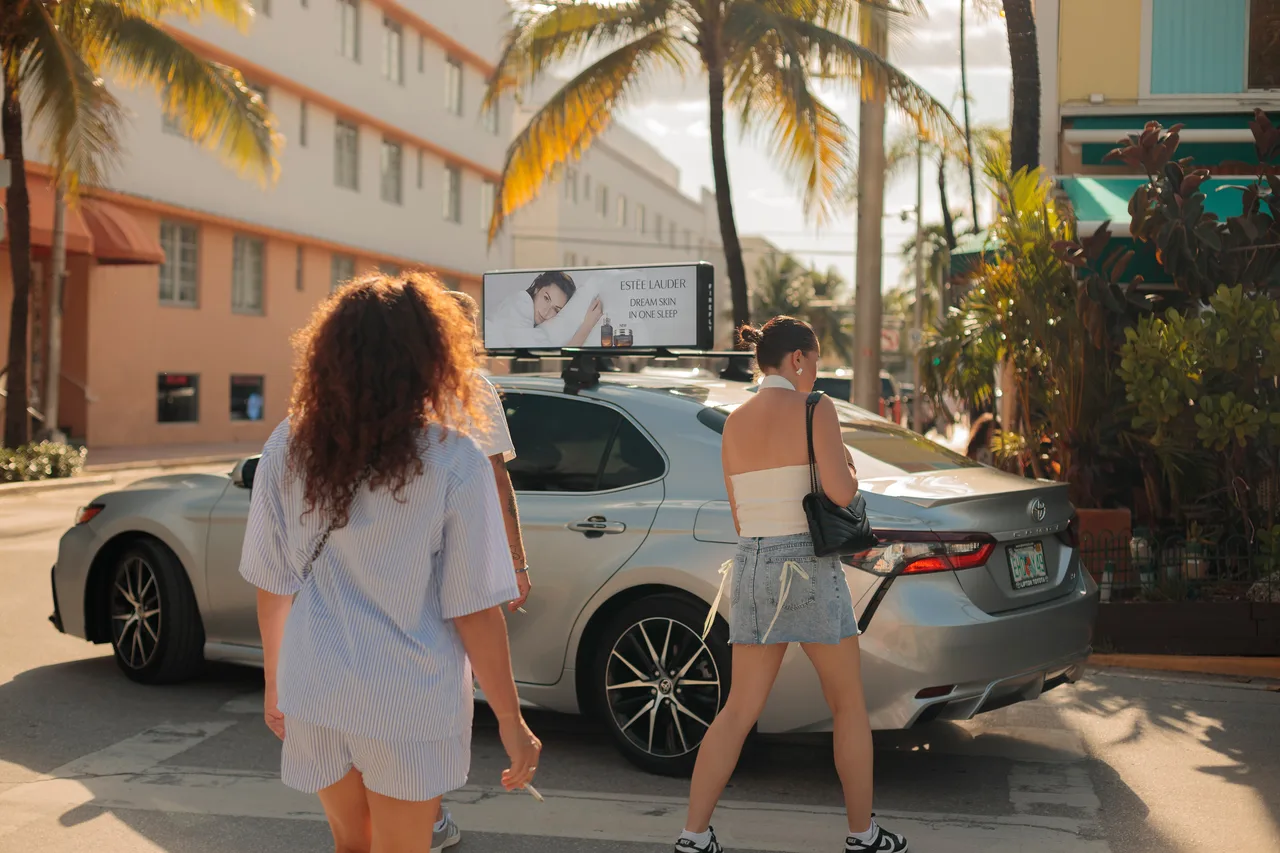
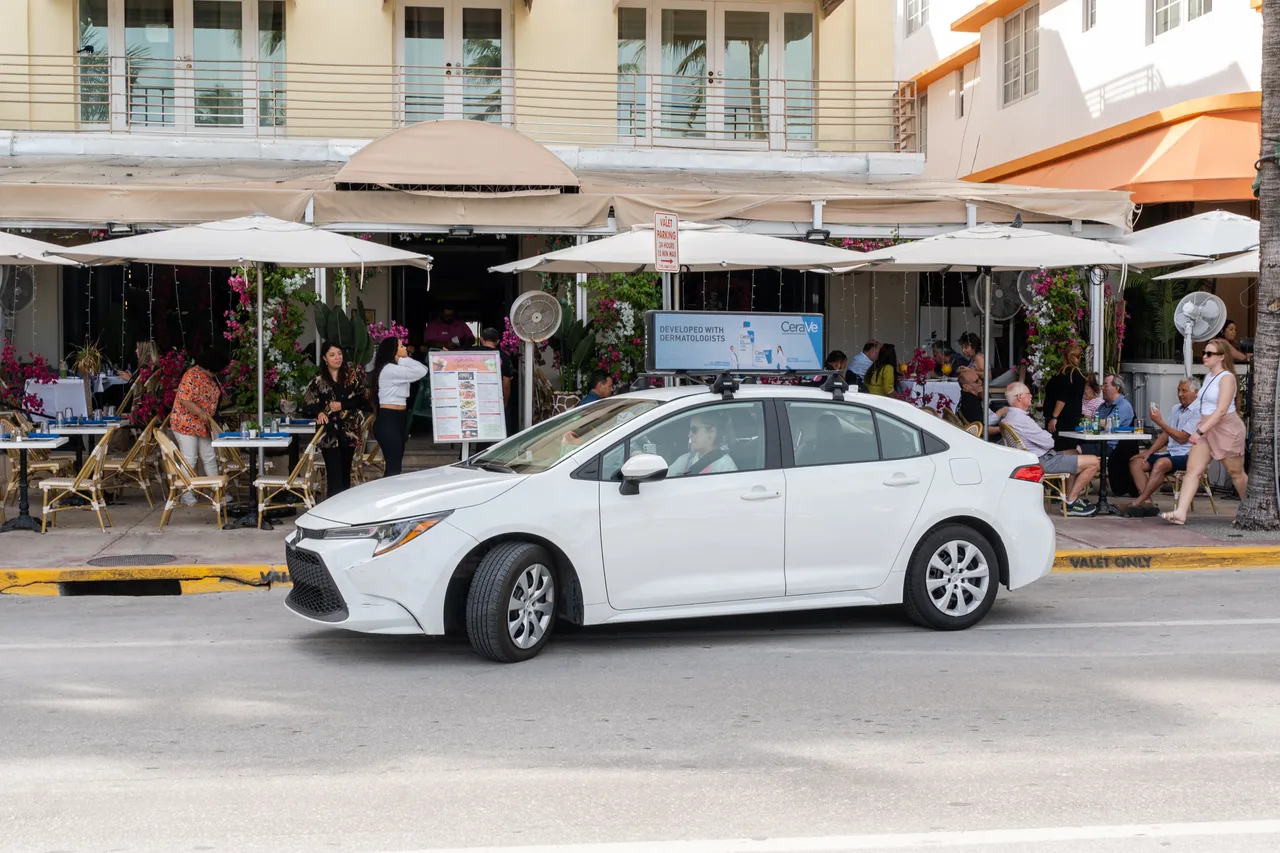
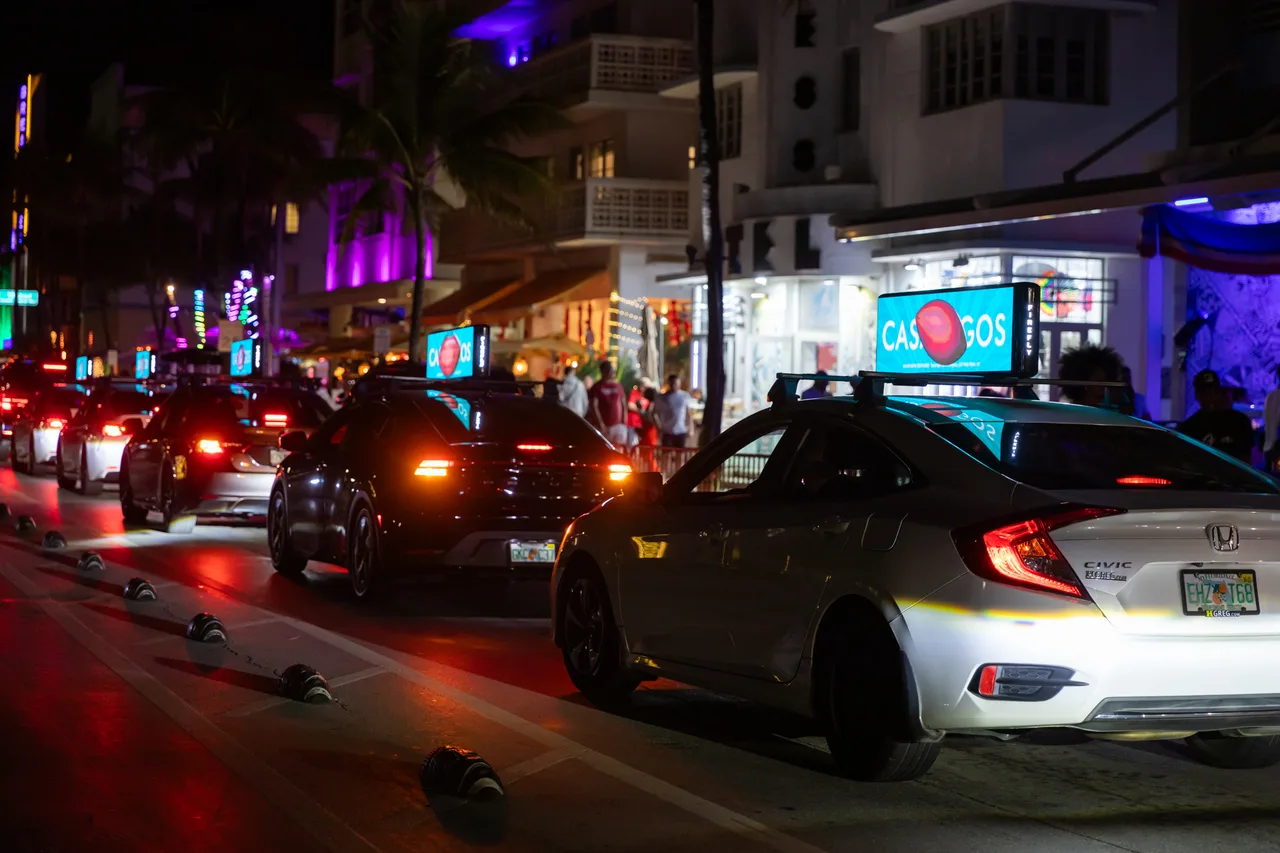
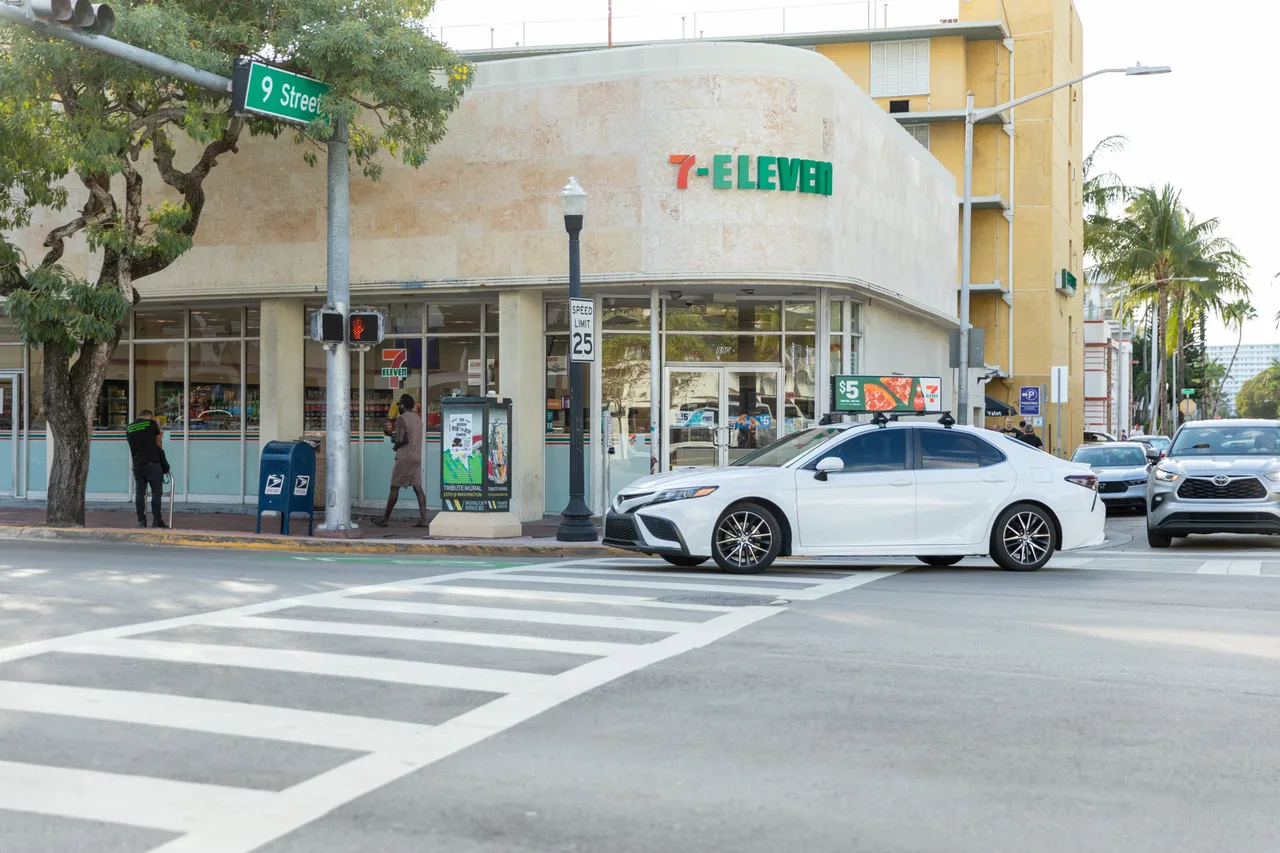
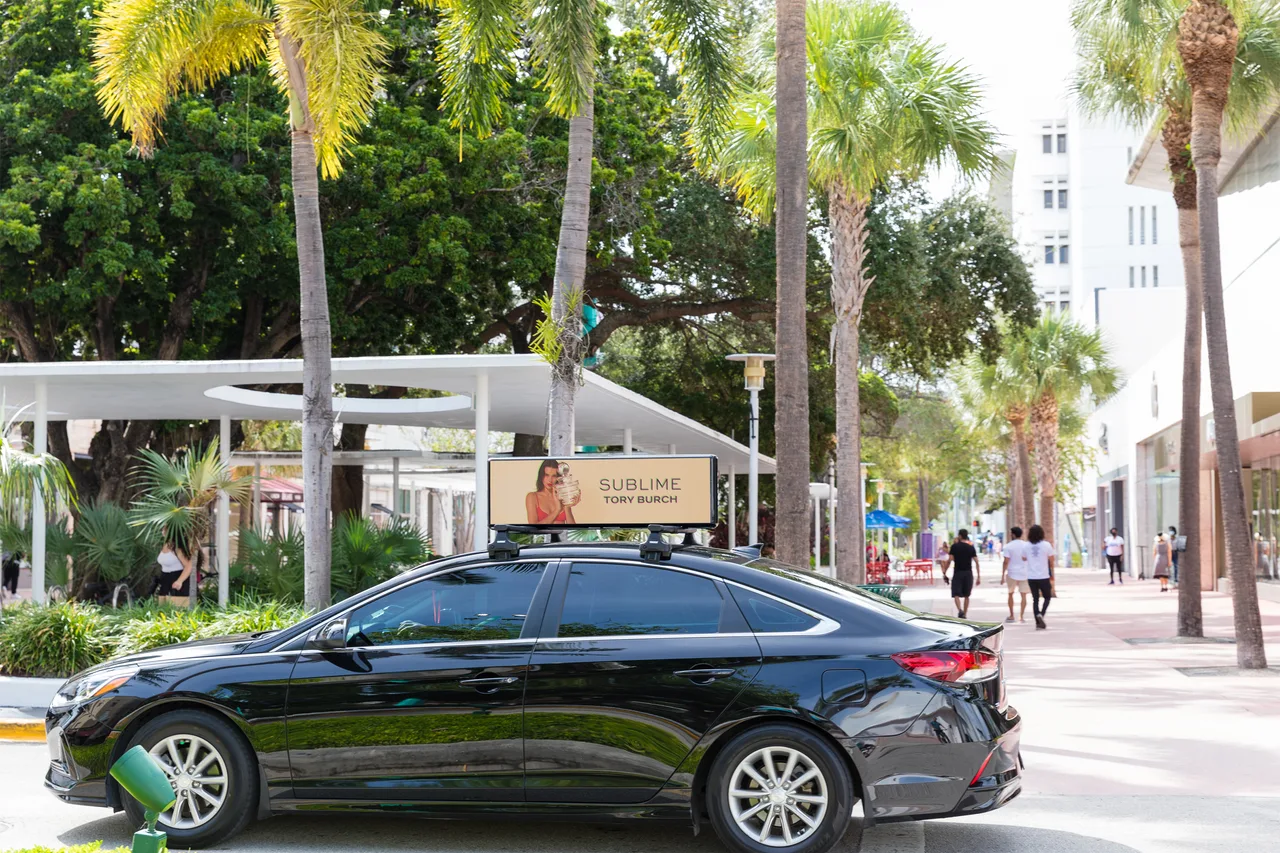
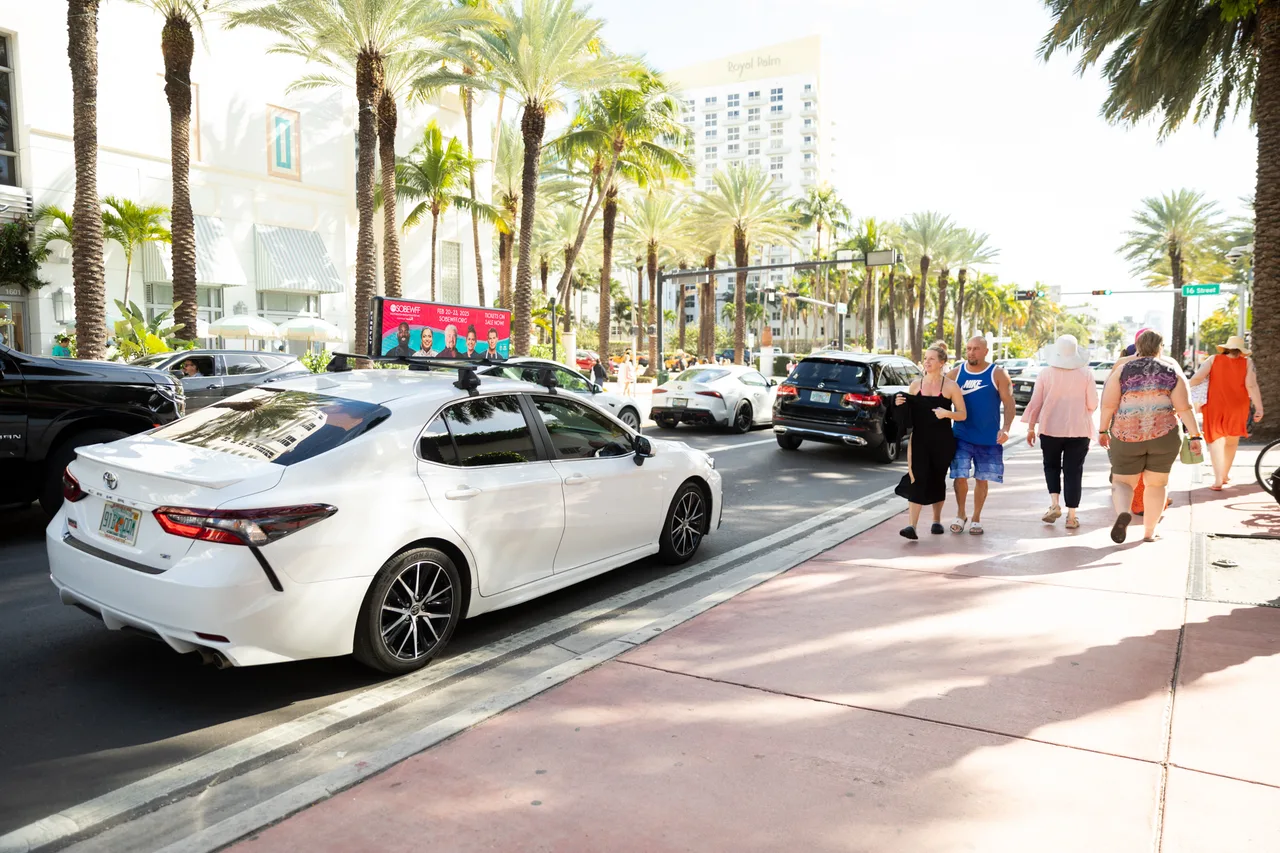
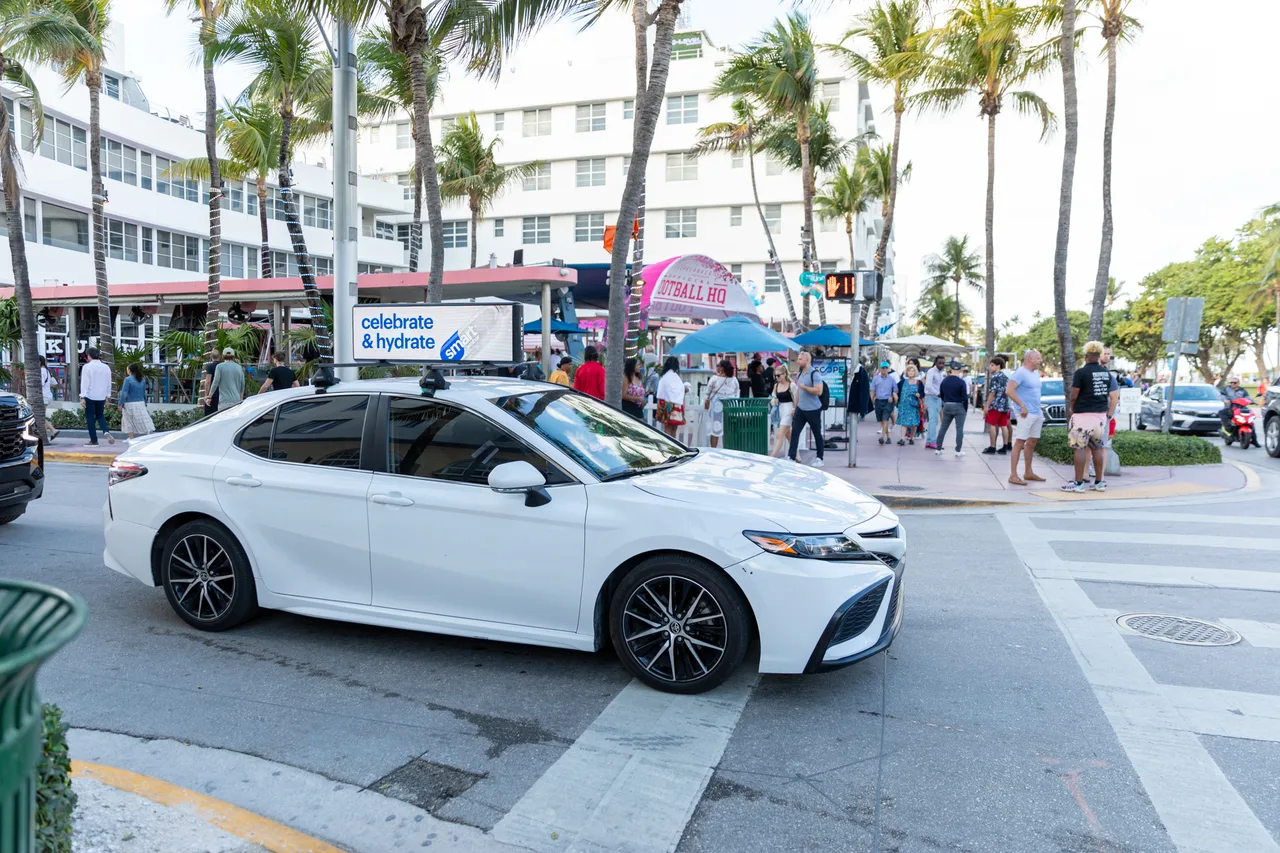
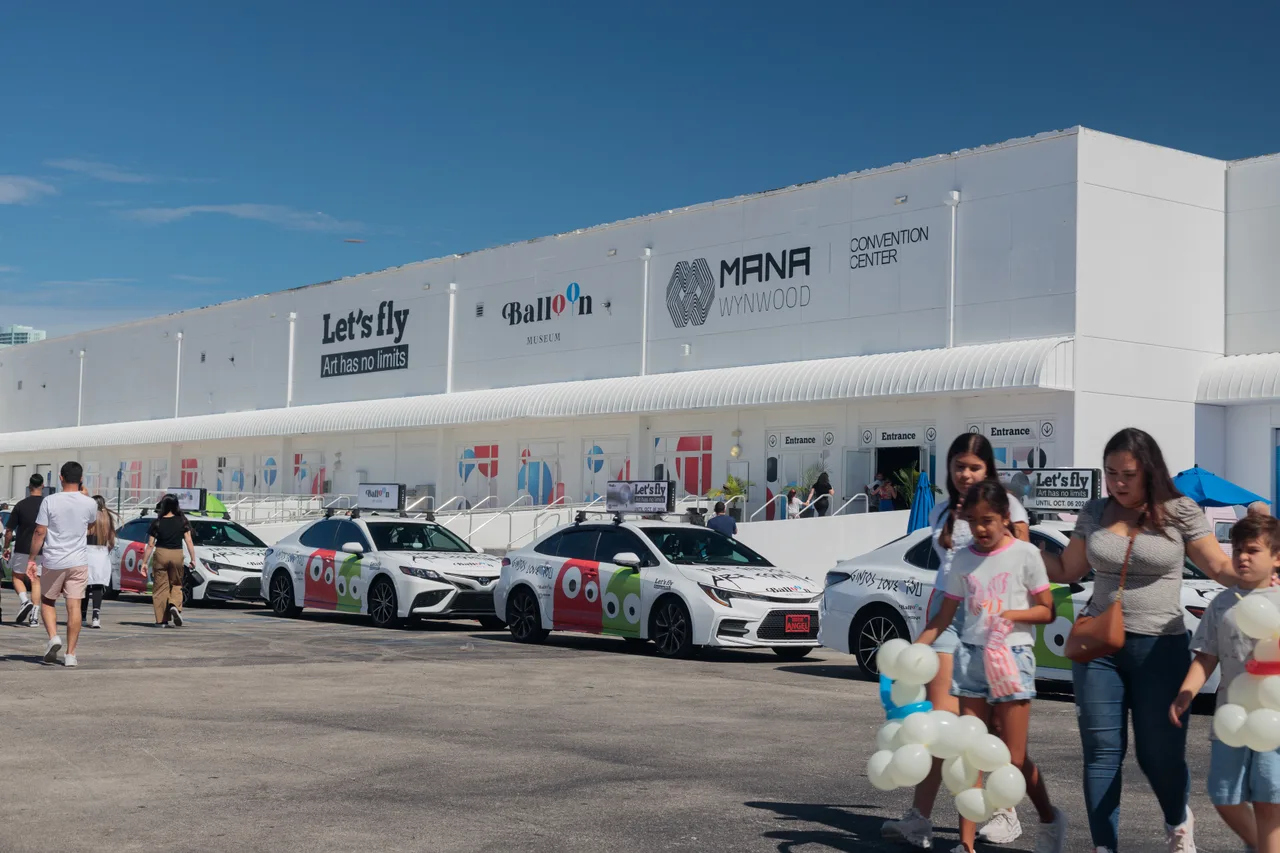
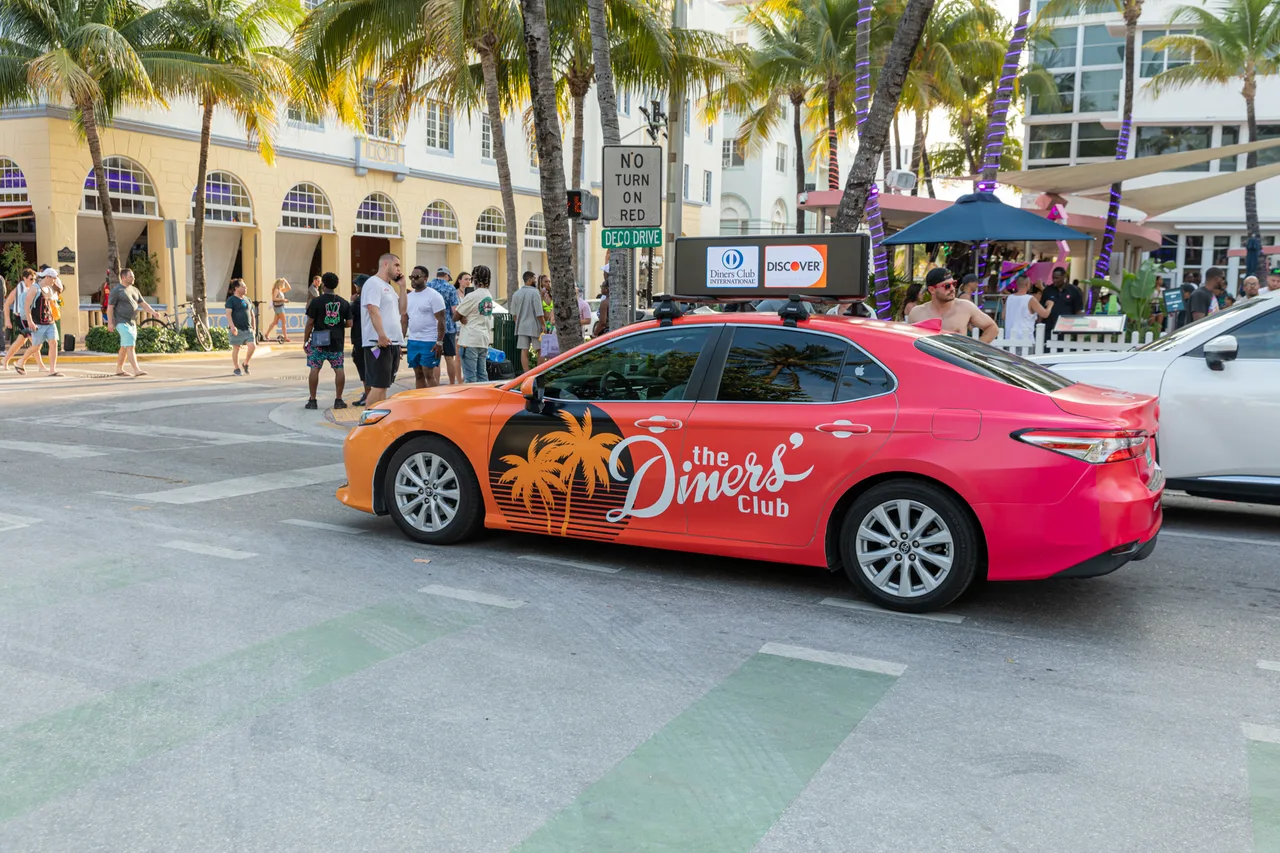
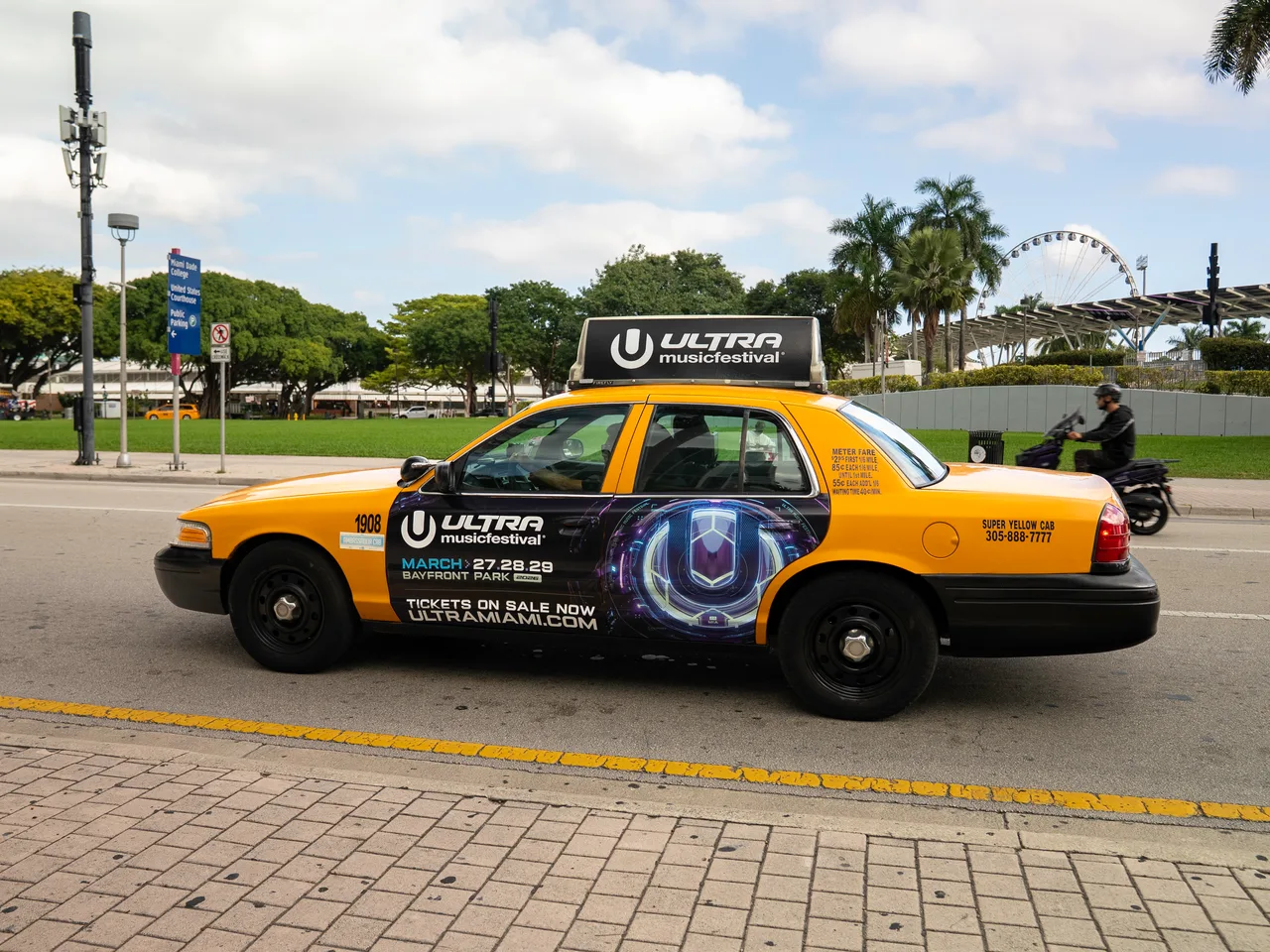
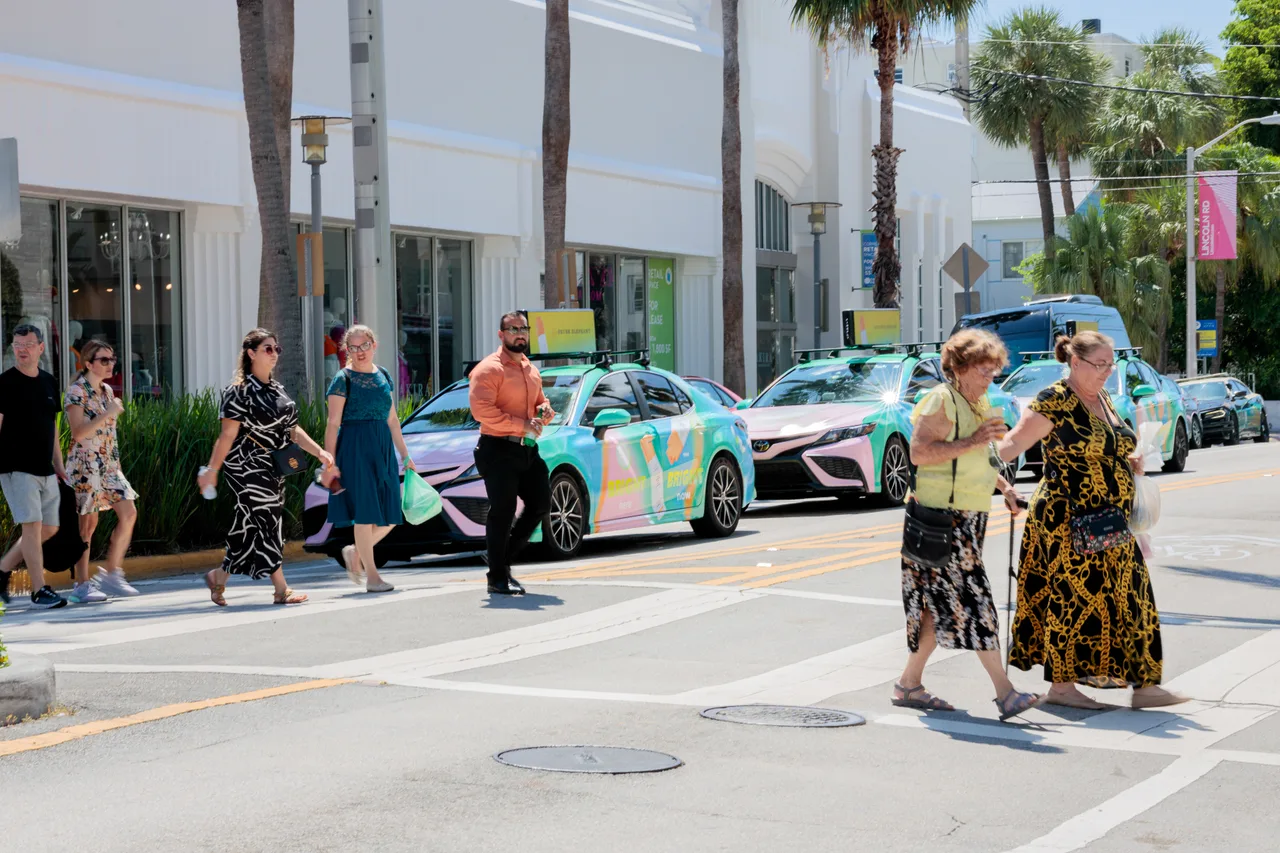
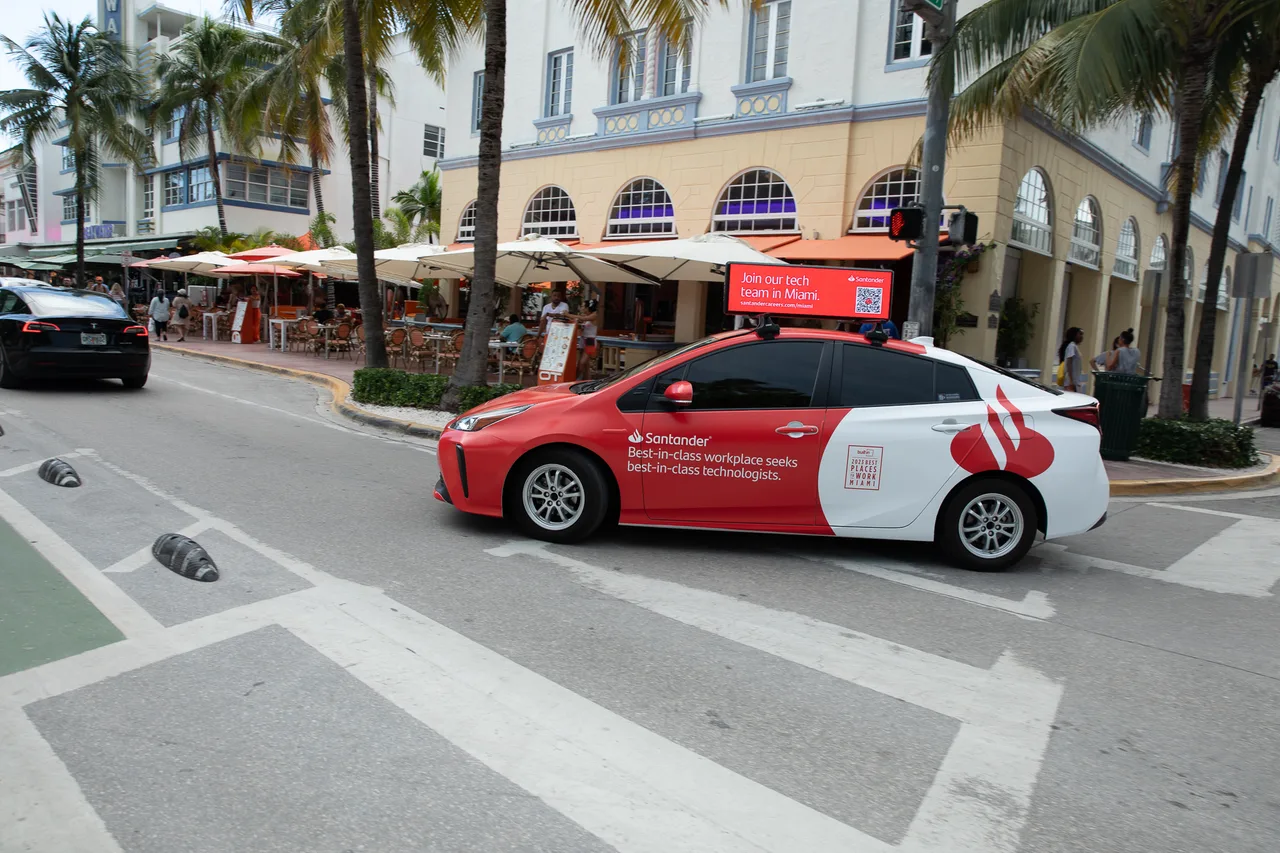
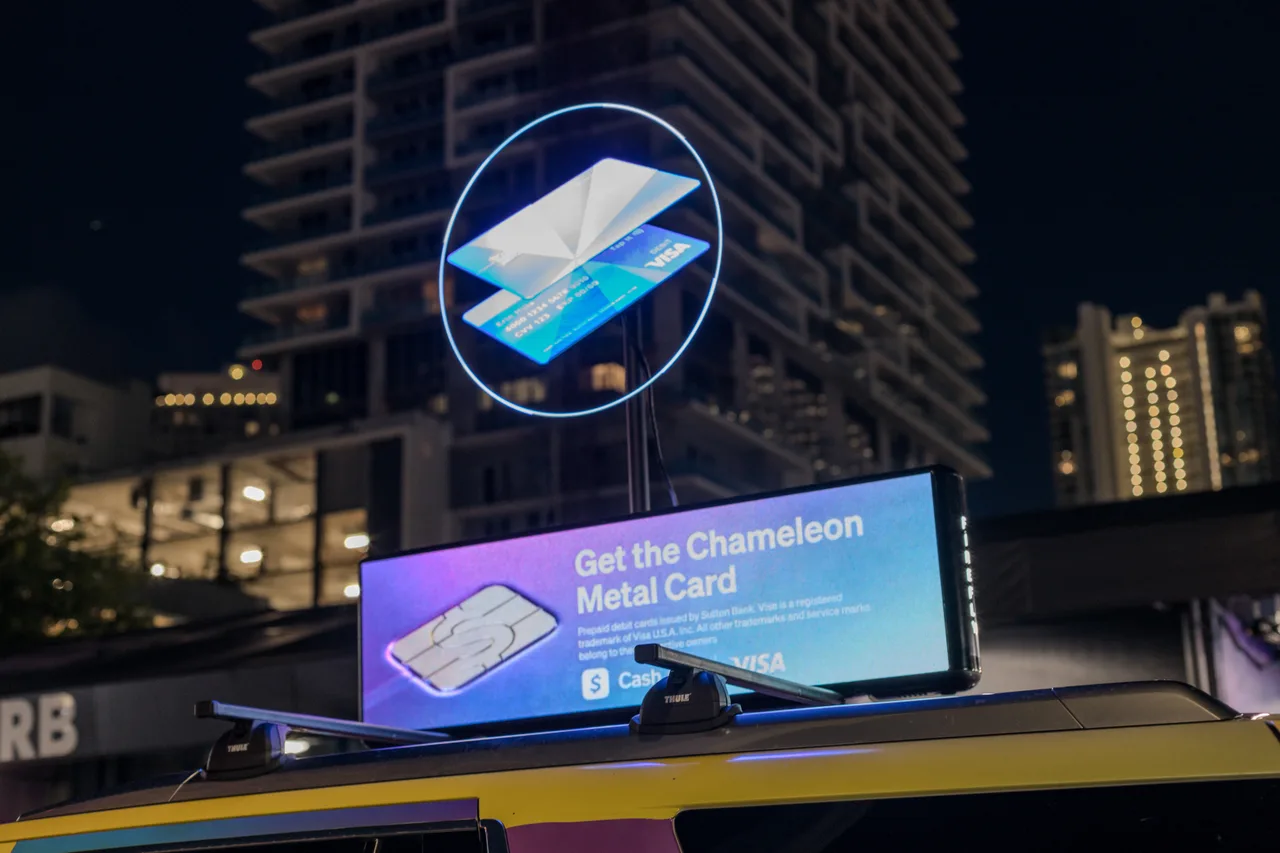
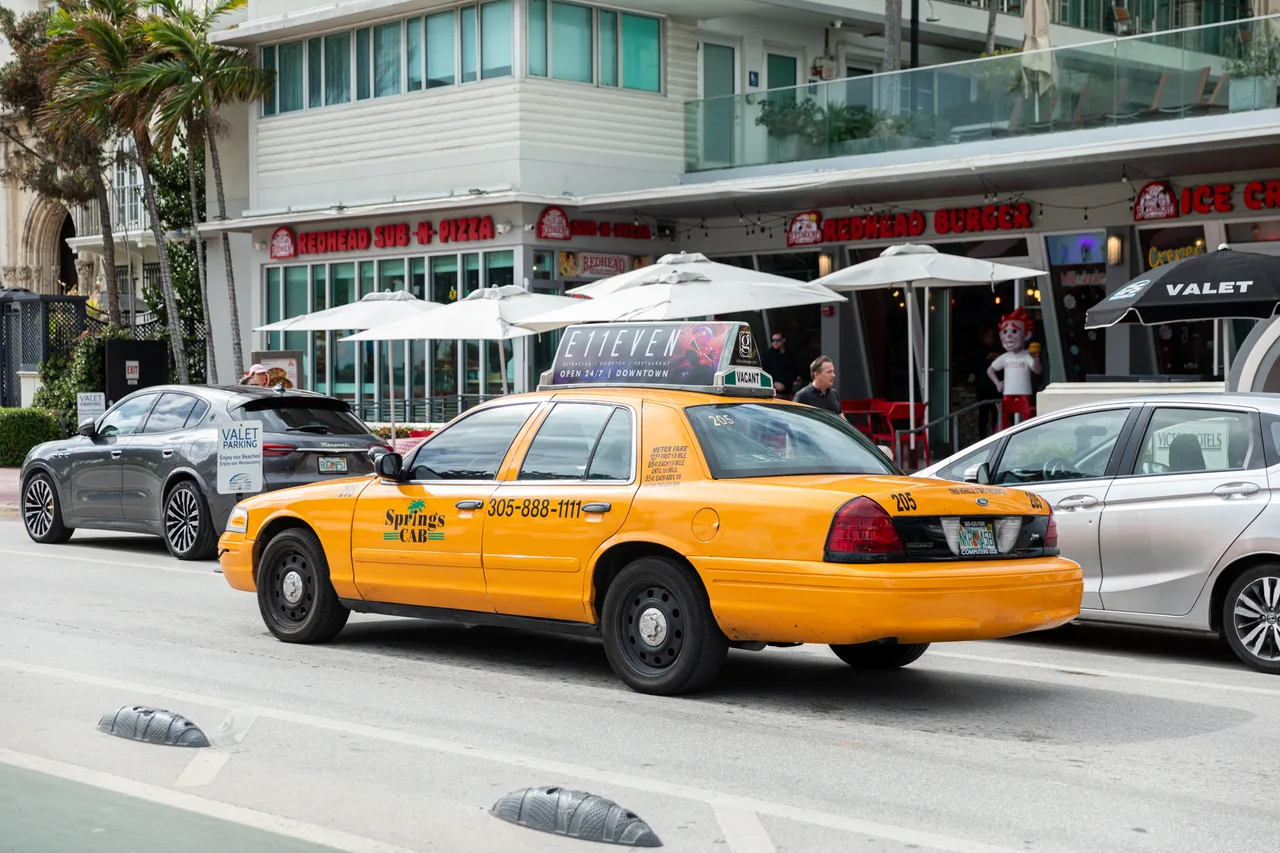
Every frame is a photograph of a live campaign in Miami-Dade. Captions are brand, city, format and year as the archive records them. Nine Miami frames that passed the manifest filter were dropped after inspection because the brand or format tag did not match the photograph; the survivors are below.
Digital car tops
Wrapped vehicles
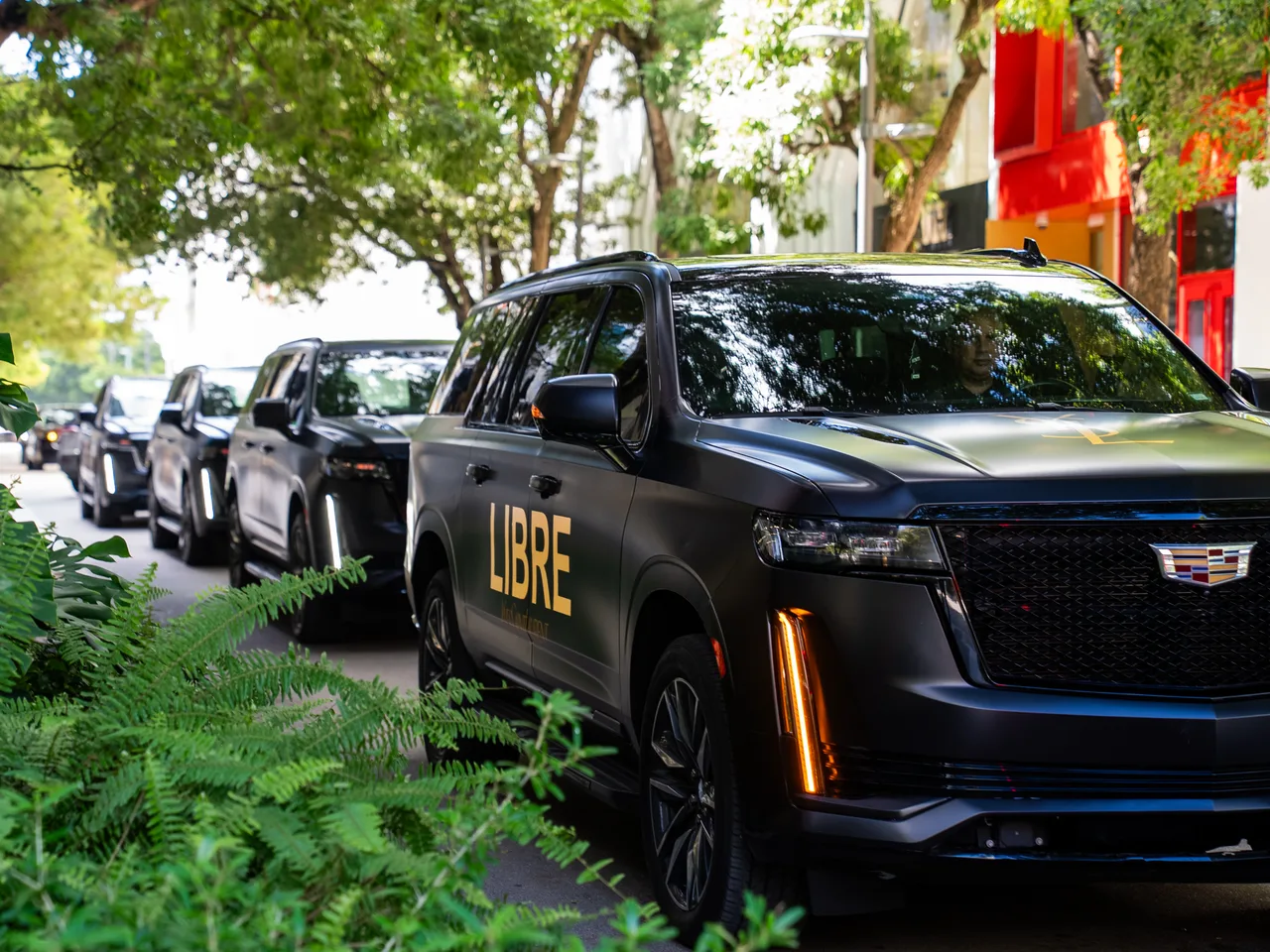
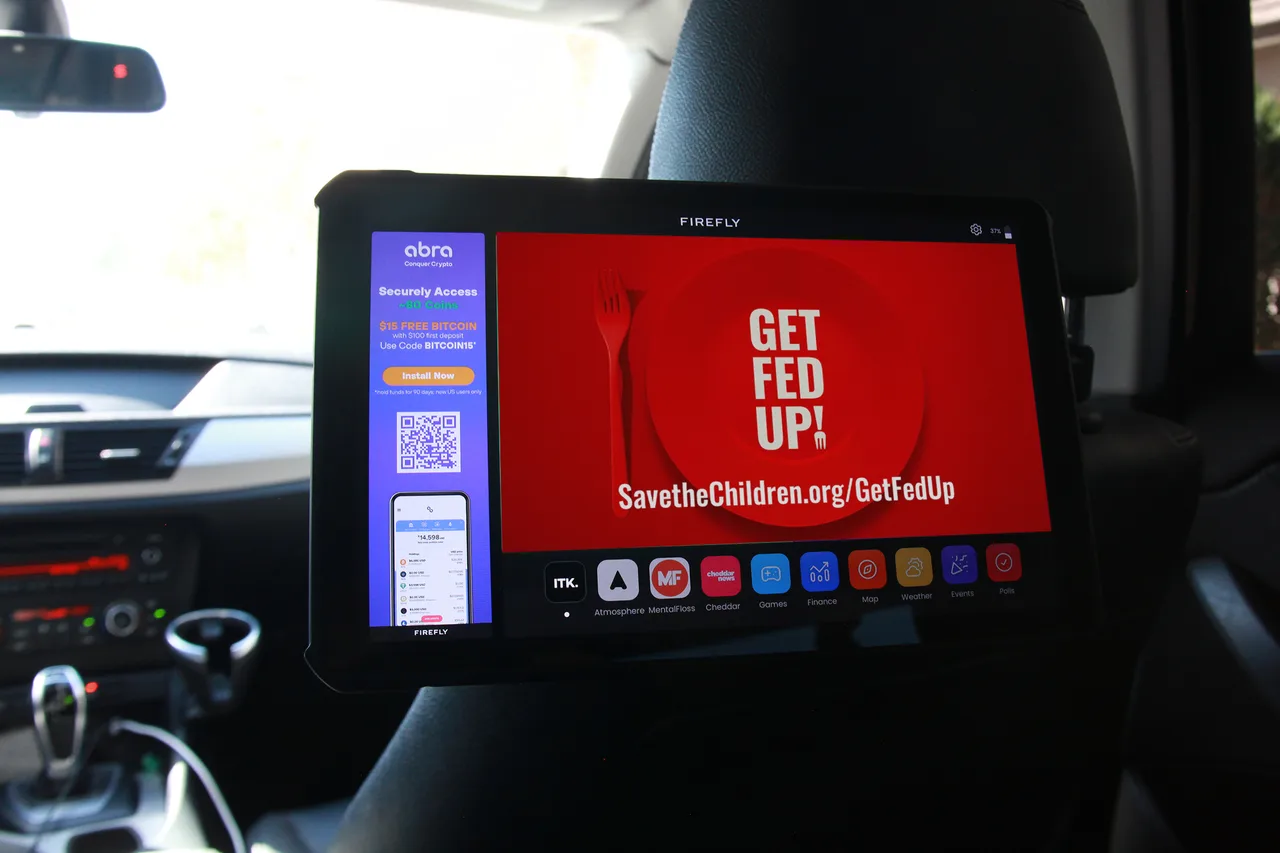
Hologram, static top and in-car
Who owns the inventory in Miami?
Each row was read on the owner's page or a Miami-Dade County page on September 14, 2026. Nobody in the table publishes a rate. Rows are in asset order, not size order.
| Inventory | Who sells it | What the record says |
|---|---|---|
| Metrobus, Metrorail and Metromover | Outfront Media | Miami-Dade's transit contact page routes "Advertising & Media Requests" to Outfront Media. A county board memo of June 4, 2024 describes the Metrorail system advertising program as "currently managed by Outfront Media Group, LLC". The 2015 renewal was a five-year term with two five-year extension options and a $17.25 million minimum payment (OUTFRONT release, February 2, 2015). |
| Bus passenger shelters | Outfront Media, county contractor to May 31, 2035 | The county's shelter program page: 360 new shelters built mid-2022 to mid-2024, 233 of a further 350 installed by January 2026, 500 more approved for construction from late 2026, and 1,031 existing shelters being refurbished. Outfront bears installation and maintenance cost. |
| Roadside billboards | Clear Channel Outdoor; OUTFRONT Media; Lamar of South Florida | Clear Channel: "over 1,200 displays across three counties" (unit count as of June 30, 2022) and "the exclusive provider of digital posters and bulletins on surface streets in Miami". OUTFRONT: "8 Digital Panel Networks made up of 79 Digital Panels". Lamar: billboards, digital, wallscapes from a Doral office. None publishes a price. |
| Miami International Airport (MIA) | JCDecaux | JCDecaux's Miami page: "252 Digital Screens" and "195+ Static Panels" at MIA, plus two private terminals. Fort Lauderdale-Hollywood (FLL) is Clear Channel, on Clear Channel's own market page. |
| Moving formats | Firefly; Mobile Billboard Miami; The Rolling Ads | Firefly sells digital and static tops on taxis and rideshare vehicles, 360, 270 and 180 wraps, LED trucks, and Miami is on its list of 15 markets. Mobile Billboard Miami covers Miami-Dade and Broward with three-screen LED trucks. The Rolling Ads names Ocean Drive and Collins, Wynwood, Brickell and Calle Ocho as routes. None of the three publishes a rate on the page read. |
The shelter line is unusual. In most large systems the shelter belongs to a city street-furniture franchise and the bus to the transit authority, so two vendors under two rule sets, as bus advertising lays out city by city. In Miami-Dade the county owns both and Outfront holds both, which is why a single Miami transit brief can cover the King on the bus and the panel at the stop. The shelter contract is also mid-build: by the county's own count, 360 shelters went up between mid-2022 and mid-2024, 233 of the next 350 were in by January 2026, and 500 more are approved to start late in 2026. Inventory that did not exist when a media kit was printed exists now.
Two vendor claims sit next to each other and should be read carefully. Clear Channel's market page mentions "Transit Shelters covering key surface streets throughout the DMA"; the county's page names Outfront as the Miami-Dade shelter contractor. The Miami-Fort Lauderdale DMA includes Broward and Palm Beach counties, so the two statements can both be true, but a Miami-Dade shelter buy goes to Outfront. Airports split the same way: JCDecaux at MIA on its own page, Clear Channel at FLL on its own page.
What rules change what can run in Miami?
The transit rulebook is the thing to know about. This desk found no Miami-Dade advertising standards page for Metrobus and Metrorail of the kind CapMetro or Los Angeles Metro publish. What the county does publish is a county-wide implementing order that governs marketing and advertising on County-owned assets, and a sign code for the unincorporated county. Both were read in the primary document.
| Rule | What it says | Where it is published |
|---|---|---|
| County content restrictions for advertising on County assets | Implementing Order 8-9, the Marketing Partnerships Program, lists what is "not allowed": political or political campaign advertising; advertising promoting the sale of alcohol or tobacco; advertising that is clearly defamatory; advertising that is obscene or pornographic or advocates imminent lawlessness. The county invoked this order and Code section 2-2201 for the Civic Center Metrorail station naming agreement in June 2024. | Miami-Dade County, IO 8-9, ordered October 7, 2014, effective October 17, 2014; board file 240856, June 4, 2024 |
| No transit-specific standards page | No separate Miami-Dade advertising standards page for Metrobus and Metrorail could be found; content rules for Outfront's inventory sit inside the concession agreement, which the county has not put online. Ask Outfront for the current standards in writing. | Miami-Dade DTPW contact and shelter program pages, read September 14, 2026 |
| Vehicle advertising in unincorporated Miami-Dade | Vehicles, vans, trailers or trucks may not be parked continuously in one location solely as advertising signs; daily-use business vehicles with logos are permitted. Portable signs are not allowed on public or private property. No sign may be erected within a county-maintained right-of-way; fines run from $60 to $810 and up per violation. | Miami-Dade County Sign Regulations page: Chapter 33, Article VI; Sec. 33-95; Sec. 19-15.12; Sec. 2-103.15 |
The four exclusions in Implementing Order 8-9 are narrower than a typical transit policy: no religion clause, no firearms clause, no forum designation. Whether the Outfront concession adds more is not knowable from the county's site, and a brief for Metrobus should ask for the contract's standards in writing rather than assume the county's four lines are the whole rule. The vehicle rule is the one that touches moving formats: a wrapped car parked continuously in one place as a sign is a violation in the unincorporated county; a wrapped car in daily business use is not. The national format-by-regulator table is on transit advertising.
What do third parties publish on Miami cost?
The ranges below are market-level figures compiled from publicly published vendor and industry sources. They are not quotes, and they are not the rates of any single network, including the operator whose campaigns the archive on this site documents, which prices per campaign and does not publish a rate card. Always get a written quote before budgeting.
| Publisher | Retrieved | Published figures |
|---|---|---|
| Blue Line Media, Miami billboard page | Read September 14, 2026 | Bulletin $4,000 to $20,000 per 4 weeks; digital bulletin $4,000 to $9,000; poster $1,500 to $3,000; digital poster $1,500 to $3,000; $5,000 minimum spend. Face counts by road: I-95 120, Palmetto Expressway 59, Florida Turnpike 40, US 441 23, Dolphin Expressway 14. |
| AdQuick, Miami market page | Read September 14, 2026 | Bulletin $3,500 to $9,000 per 4 weeks; digital bulletin $6,500 to $18,000; 30-sheet poster $1,000 to $2,400; bus king $1,000 to $1,800; bus shelter $900 to $2,200; full bus wrap $15,000 to $25,000; wallscape $20,000 to $75,000+; MIA diorama $6,000 to $20,000; mobile billboard $1,200 to $2,800 per truck per day. Stated as "typical Miami market pricing as of 2026". |
| AdQuick, national billboard cost page | Read September 14, 2026 | "Miami / South Florida": typical static bulletin $2,500 to $15,000 per 4 weeks, note "seasonal demand swings". |
| business.com, market-tier table | Updated January 27, 2026; read September 14, 2026 | Miami named as a major metro: static $5,000 to $25,000 per 4 weeks; digital $5,000 to $20,000 per month; premium spectaculars $50,000+. |
The disagreements are the content. On a digital bulletin Blue Line's ceiling is $9,000 and AdQuick's is $18,000, twice as high, for the same format in the same market on the same day. On a static bulletin AdQuick's own two pages carry two different ranges, $3,500 to $9,000 on the Miami page and $2,500 to $15,000 on the national page. business.com's tier is a tier, not a Miami figure; Miami is one of five cities it names as examples of a major metro. Blue Line adds a $5,000 minimum that AdQuick does not. The one number in the table that is not a price is Blue Line's face count by road, which puts 120 of its faces on I-95 and 14 on the Dolphin Expressway; it says nothing about whose faces they are.
How is delivery counted in Miami?
A bulletin on I-95 is priced on Geopath impressions: traffic counts, a visibility adjustment, the people modelled to notice the face. A car top on Ocean Drive is counted by where the screen went and how long it stayed, and the structural difference between those two counts, without any multiplier attached, is on how out-of-home impressions are measured. Blue Line's Miami page publishes four-week impression averages per format; they are the publisher's own and are not repeated here.
What this archive can say about Miami is which formats have run here. Each cell below is the number of documented frames of that surface or carrier photographed in Miami.
| Market | Digital screen | Vehicle wrap | Static print | Hologram | Spectacular | LED truck | Glass truck | In-car screen |
|---|---|---|---|---|---|---|---|---|
| Miami | 77 | 64 | 3 | 12 | · | 2 | 6 | 3 |
Reflects campaigns documented in this archive; absence is not evidence of unavailability. Counts are photographs, not campaigns or units, and a frame tagged with two surfaces is counted under each.
Miami is one of three markets in this archive with a glass truck and one of seven with an in-car screen; it has no fixed spectacular and only two LED-truck frames, neither of which survived the brand check. The full matrix across all 21 markets is on the campaign archive.
This page exists because Miami passed a four-part gate: at least twelve verified frames photographed in the market, the authority's published advertising rules read live, at least two named third-party rate sources for the market, and a real row in the format-by-market matrix. Markets that fail any part do not get a page.
Frequently asked questions
- How much does billboard advertising cost in Miami?
- Four published ranges exist and they do not agree. Blue Line Media lists a bulletin at $4,000 to $20,000 per four weeks; AdQuick's Miami page at $3,500 to $9,000 and its national page at $2,500 to $15,000; business.com puts Miami in a major-metro tier at $5,000 to $25,000. All were read on September 14, 2026 and none states a method. Clear Channel, OUTFRONT and Lamar, which own the boards, publish no rate.
- Who sells advertising on Miami-Dade buses and Metrorail?
- Outfront Media. Miami-Dade's own transit contact page routes advertising requests to Outfront, and a June 2024 county board memo describes the Metrorail advertising program as currently managed by Outfront Media Group. The 2015 renewal ran five years with two five-year extension options. Outfront is also the county's bus shelter contractor through May 31, 2035.
- What advertising does Miami-Dade County prohibit on its property?
- The county's Implementing Order 8-9 on marketing partnerships lists four exclusions: political advertising, advertising promoting the sale of alcohol or tobacco, clearly defamatory advertising, and obscene advertising or advocacy of imminent lawlessness. Transit-specific standards for Metrobus and Metrorail are not published online; they sit in the concession agreement, so ask Outfront for the current version.
- Which companies own billboards in Miami?
- Clear Channel Outdoor reports over 1,200 displays across three counties and calls itself the exclusive provider of digital posters and bulletins on Miami surface streets. OUTFRONT Media reports 8 digital panel networks of 79 panels plus static billboards. Lamar of South Florida sells billboards, digital and wallscapes from Doral. Each claim was read on the operator's own page on September 14, 2026.
- Who sells advertising at Miami International Airport?
- JCDecaux, on its own Miami page, which lists 252 digital screens and more than 195 static panels at MIA and lists MIA among its ten US airports. Fort Lauderdale-Hollywood is a different concession: Clear Channel names FLL and seven private jet terminals on its Miami-Fort Lauderdale market page. A plan that says "Miami airports" is two vendors.
- Can a wrapped car be parked as a billboard in Miami?
- Not in unincorporated Miami-Dade. The county's sign regulations page states that vehicles, vans, trailers or trucks cannot be parked continuously in one location solely as advertising signs, citing Sections 33-95 and 19-15.12, with an exception for daily-use business vehicles carrying logos. Portable signs are barred on public and private property. A wrapped car that is driven is a different case from one that is parked.
- What moving formats have run in Miami?
- This archive holds 131 photographed Miami frames: 77 tagged with a digital screen, 64 with a vehicle wrap, 12 with a hologram, 3 static, 6 on a glass truck, 3 on an in-car screen and 2 on an LED truck. Documented placements include car tops beside South Beach cafes, a Gilead top at Hard Rock Stadium in Miami Gardens, a YSL Escalade fleet, and a hologram fan above a Cash App top.
Sources
- Contact Us, Transportation and Public Works: Advertising and Media Requests, Outfront Media · Miami-Dade County, Accessed September 14, 2026
- Bus Passenger Shelter Program: Outfront Media as shelter contractor to May 31, 2035; shelter counts · Miami-Dade County, Accessed September 14, 2026
- Agenda Item 5(H), June 4, 2024: Civic Center Metrorail station naming rights; Metrorail advertising program managed by Outfront Media Group, LLC · Miami-Dade County Board of County Commissioners, June 4, 2024
- Implementing Order 8-9: Marketing Partnerships Program, Restrictions · Miami-Dade County, Ordered October 7, 2014; effective October 17, 2014
- OUTFRONT Media renews contract with Miami-Dade Transit: five-year term, two five-year options, $17.25 million minimum · OUTFRONT Media, February 2, 2015
- Sign Regulations: Chapter 33, Article VI; prohibited signs; vehicle advertising; right-of-way · Miami-Dade County, Accessed September 14, 2026
- Miami-Fort Lauderdale market page: 1,200+ displays, exclusive digital posters and bulletins on surface streets, FLL airport · Clear Channel Outdoor, Accessed September 14, 2026
- Miami billboards and transit advertising: 8 digital panel networks, 79 digital panels · OUTFRONT Media, Accessed September 14, 2026
- Outdoor advertising in South Florida: billboards, digital, wallscapes, airport, transit · Lamar Advertising, Accessed September 14, 2026
- Miami advertising: MIA digital screens and static panels · JCDecaux North America, Accessed September 14, 2026
- Airport advertising: ten US airports including MIA and LAX · JCDecaux North America, Accessed September 14, 2026
- Billboard advertising in Miami-Fort Lauderdale, FL: rates, face counts by road · Blue Line Media, Accessed September 14, 2026
- Billboard advertising in Miami, FL: typical 4-week rates by format, operators · AdQuick, Accessed September 14, 2026
- How much does a billboard cost? Cost by city and state · AdQuick, Accessed September 14, 2026
- What does a billboard cost? Market-tier table · business.com, Updated January 27, 2026
- Mobile billboard Miami: LED and digital billboard trucks in Wynwood and Miami Beach · Mobile Billboard Miami, Accessed September 14, 2026
- Mobile billboard truck advertising in Miami, Florida: routes and events · The Rolling Ads, Accessed September 14, 2026
- Markets: New York, Chicago, Los Angeles, San Francisco, Dallas, Las Vegas, Austin, Miami, Boston, Philadelphia, Atlanta, Phoenix, Washington DC, Houston · Firefly, Accessed September 14, 2026
- Glossary: impressions, circulation, likelihood to see · Geopath, Accessed September 14, 2026
- On-Car Products: digital tops, static tops, car wraps (360°, 270°, 180°) · Firefly, Accessed September 14, 2026
About the author
Melih Koray is a marketing and SEO practitioner who documents out-of-home media, with a particular interest in inventory that moves. On this site he writes the vendor and ranking pages, where the question is who owns what and what each seller publishes, and he edits every page, tracing each statistic to a named and dated source.
Melih Koray on LinkedIn · How this site is edited and what it refuses to publish: about this site.